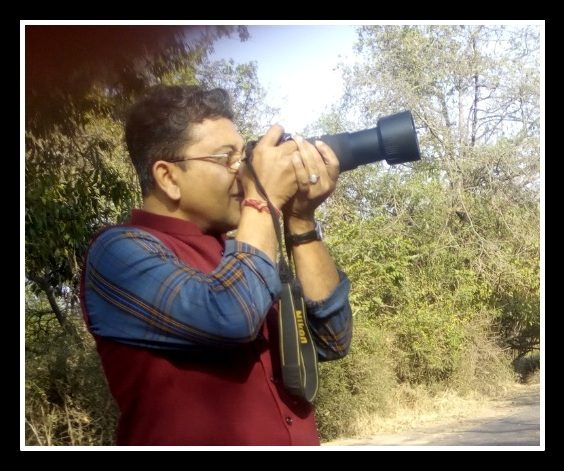


Almost for twenty years, I have heard about this mystical place which is around 109 kilometers from Calcutta, India; however, life eluded me that opportunity until last April.
Where is Sunderbans? 🐅
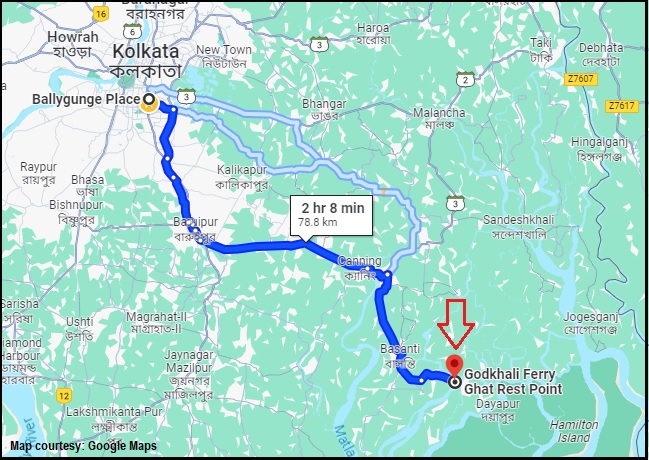
A motorist has to drive around 80 kms south east of Kolkata, West Bengal.
After parking at Godkhali, Sunderbans can be accessed by big boats or steamers that meanders another 29 odd kilometers through the greyish waters to hit the watery forest core.
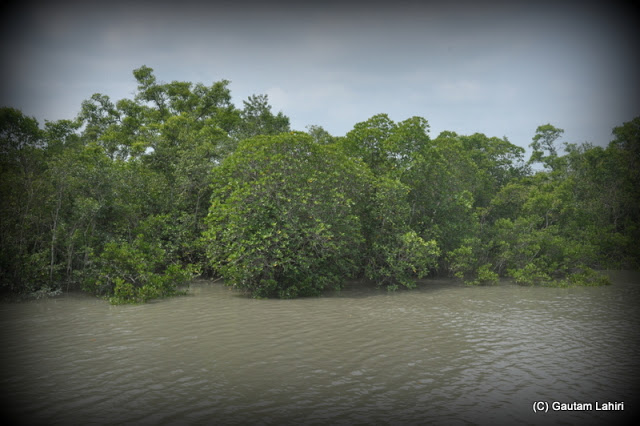
remain submerged make Sunderbans so special
A long weekend presented itself ahead and we planned to utilize it to the fullest.
I scanned the pamphlets, picked up maps, and bundled ourselves into our most trusted four-wheeler, the Swift and headed out in a southeasterly direction.
Two more routes exist – via Canning and the other one via, Basanti.
Basanti’s snaky roads🐍
Luckily, the approach road to the Basanti highway starts quite near to where we stay so we took that route.

The narrow highway which snaked its way through the green countryside of Bengal provided a good cross-section of flora that is so typical of Bengal – coconut trees hissing in the wind, dense undergrowth, and acres of green paddy fields.
As you drive, you can see an intricate network of canals running parallel to the road. You have to be seriously careful while driving as big buses that ply in this route suddenly tear down at you, miss you by inches and vanishes away.
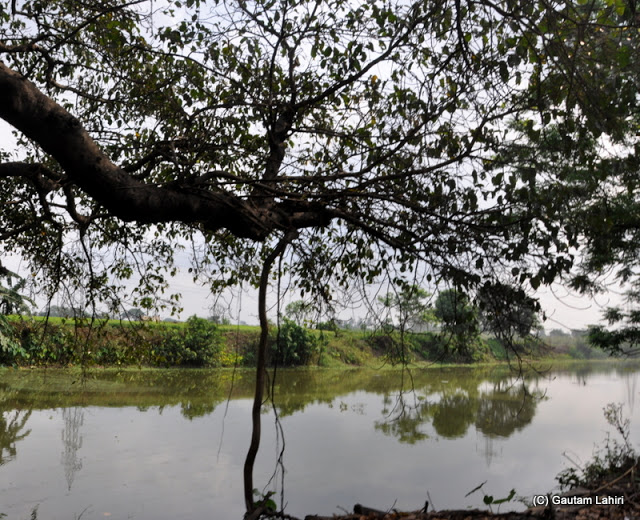
The landscape around is quite flat, slightly humid with an abundance of water bodies.
In fact, the entire place can give you a fair bit of a glimpse of what Sunderbans may look like, about 50 kilometers from here.
It will only be water and brooks around fragmented tree laden landmasses.

holding the sundari and mangrove trees are
perfect hide outs for the predators; we kept
our eyes wide open to catch any
Mud splattered shallow rivers💧
The ideal time of a visit should be between November to end February to utilize the winter and prevent the sultry weather of the summer months which makes you sweat like a ruptured water pipe.
After coasting, for over three hours, amidst a series of coconut trees that dotted the horizon, we came to a wide expanse of a piece of land where the road ended and the car travel stopped. We had reached Godkhali.
I parked the car with a local parking attendant who promised to look after her for two days and we set off.
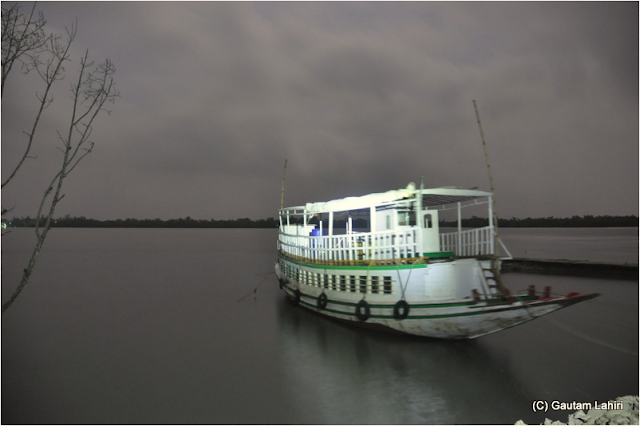
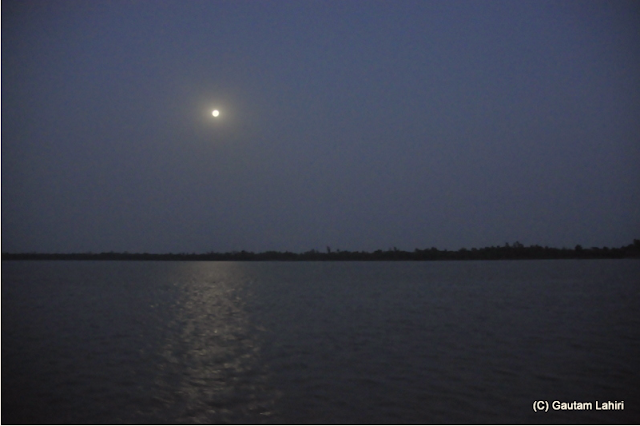
You can see the dense forest on the horizon under a moon light night
Took our travel gear and boarded the 48 feet long, about 15 feet wide diesel-powered motor launch or steamer made of wood, over a metal super structure.
The big boat was quite neat and very functional – a lower deck that allowed four people to sleep in moderate comfort. The engine sat at the stern of the boat with a kitchen right in front of the engine room. Two bathrooms, one on the lower deck, and the other on the upper deck were at the rear.
The superstructure had a handrail balcony with a short staircase upfront. The midsection had a tarpaulin covering on top which had plastic tables and chairs laid across, firmly held on the deck with ropes.
The small opening was primarily used for lunch or breakfast while onboard, the thought of having one and seeing this forested beauty passing by thrilled me and we jumped on to the boat.
Boundless adventure🚣
We had started our boat ride by visiting the Tagore and Hamilton bungalows near Gosaba.
By the time we boarded her, the sun had tilted towards the west and we were hungry like devils, The houseboat slowly chugged on the river and moored mid-stream for lunch within the confines of the Tiger Reserve.
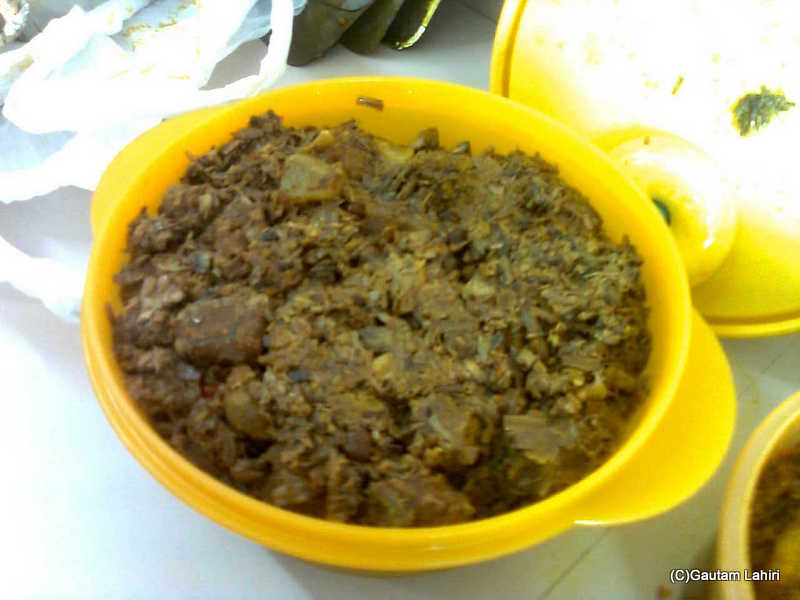
We had a sumptuous Bengali lunch with Mocha-ghonto, and ‘Mutton khosha‘, and having fresh lunch on a boat in a river getting swayed by the afternoon breeze was a feast by itself.
The boat took turns after turns as the river followed the thick forest on either side of the bank.

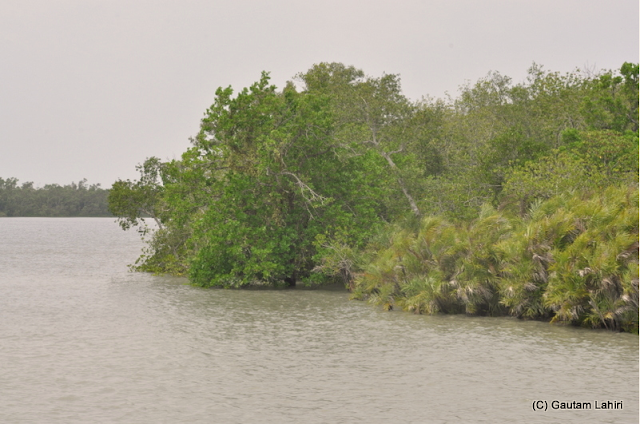
Sundari tree form a perfect hide out for the big cats
The guide who accompanied us was telling us many stories about Sunderbans and by no time, the discussion centered around the Bengal tiger and the saltwater crocodiles.
Unique red cloths⚠️
We saw something quite peculiar, when the boat was passing the forested banks, knots of red cloth tied on branches of trees.
What are those?
Well, we learned that those are the spots, indicated by villagers where someone from the village has been attacked and killed by the tiger, and the red knotted cloths were very fresh, indicated, the kills were recent.
Even today, three to four humans in a month are attacked and eaten by the famous Royal Bengal tigers.
The victims are poor fishermen disobeying government orders not to venture on their own, row their boats in the deeper parts of the jungle in search of food, and lose their lives in the process.
Thick dense forests🌳
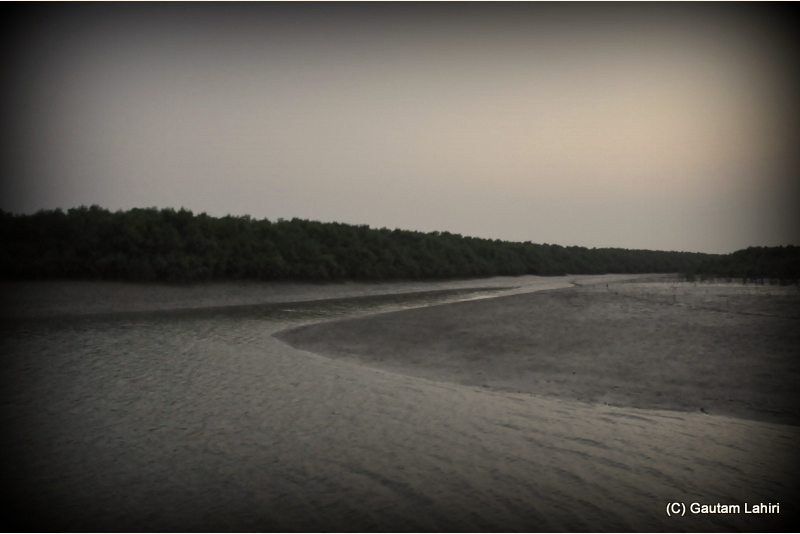
as the sun is swallowed by the rows of Sundari trees on the river banks
As the boat moved on and the stories heard, the day was coming to an end.
Our steamer moored mide-stream at a place called, ‘Pakhiralaya‘ which meant the abode of the birds.
It is like a big stream that merges with the main river system, and rows of ‘Sundari‘ and other trees had grown over the banks without an inch of space to spare. Very intense indeed; no wonder a tiger is camouflaged so well, and victims hardly have any chance at all.
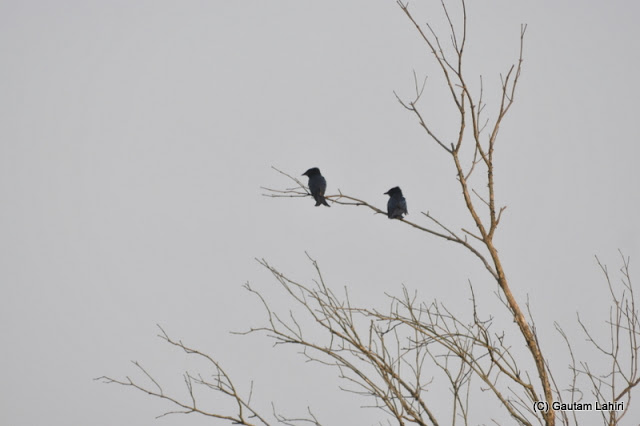
The sun had vanished and probably millions of birds were returning home, and the cacophony of their calls was like a continuous concert of a birdy Philharmonic orchestra.
Darkest nights💀
The night descended on Sunderbans, and some sort of a unexplained fear of unknown – a mix of the exposure to the wild animals, the bleak horizon, all were washing over us but an intense sense of joy filled us.
All that we had with us, was a camera, a few luggage and this house boat which was like a lifeline.
forest edge gets darker as we float mid stream, unaware of
the perils that lurk under the hull of the house boat
Suddenly, the night changed and every one hour till about 8 pm we saw various shades of sun, moon and sky getting painted by the virgin forest of incredible proportions.
Walked the wilds🐾
We returned to our cottage for the night amidst pitch darkness.
In some places, even the electricity has not reached, or the authorities could not find suitable land to erect the poles to stretch the wires.
All we had was a torch, which played dancing images on the trees around, and almost it felt like something moved without a sound.
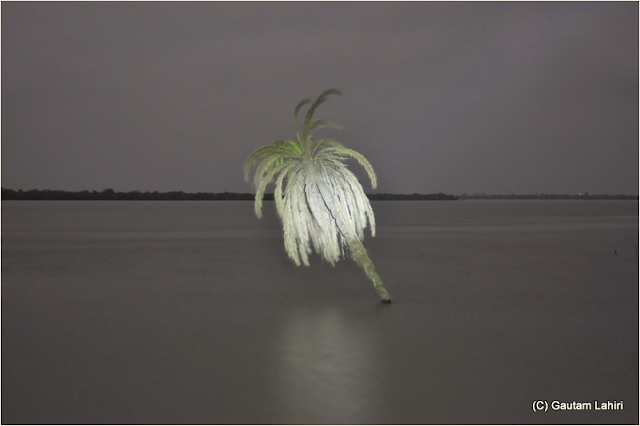
After dinner, we dared to carry out some photo-shoots along the river with two forest guards armed with a bamboo pole.
They said that the big cats stealthily comes and whisk its unsuspecting victims.
Boldly, with a deep breath, we carried on…
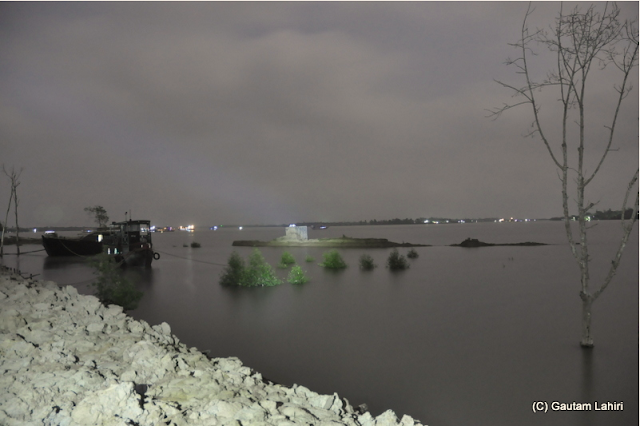
all you see is foreboding forest far away under a cloudy sky
We retired home with oodles of nervous excitement.
The day’s excitement, and the menacing night put us into a deep slumber.
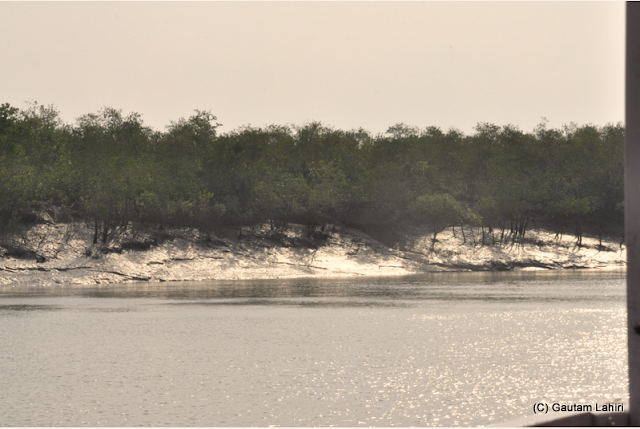
Day of exploration🌊
Next morning, refreshed after a good night’s sleep, we boarded the houseboat and explored the deeper and core area of this mighty mangrove forest.
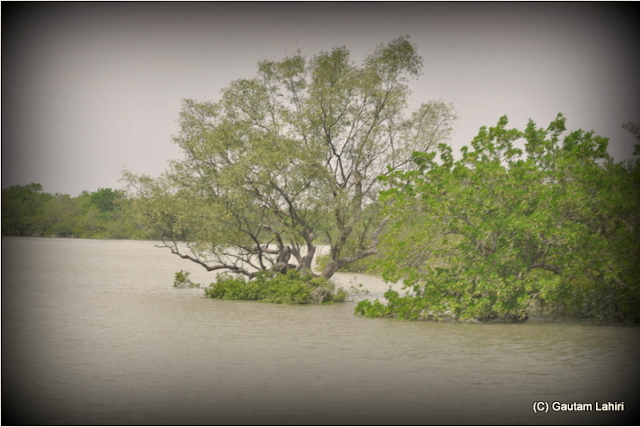
Well the tigers won’t be on the prowl but the salt water crocodiles
have a field day under the submerged branches
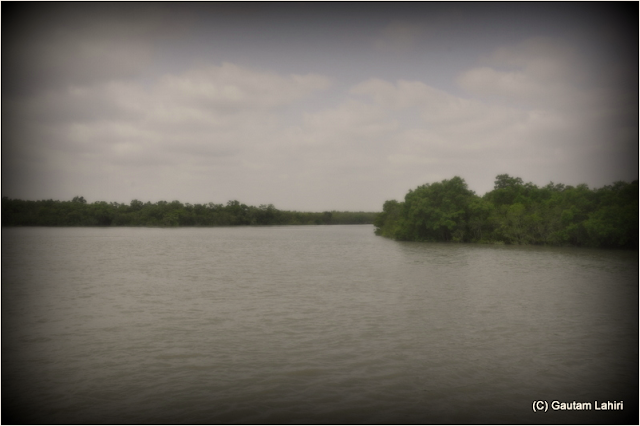
Marsh crocodiles, death machines🐊
We were on our way to Dobanki Sajnekhali watch towers and without an expert behind the wheel of the houseboat, we would have been lost in these narrow waterways.
The driver took us through innumerable creeks and in one such creek around Sudhanyakhali, not more than 20 feet away, we saw the dreaded crocodile.
Completely still as if dead, can burst into action and catch any fleshy animal that comes near it, including us.
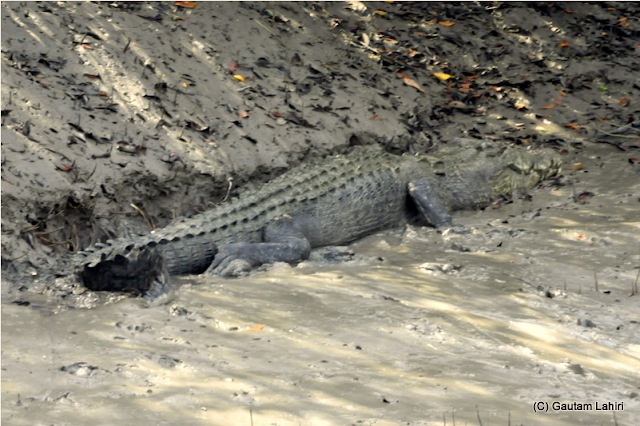
edge in the mud, caught everyone’s attention
Floating landmasses🏞️
The houseboat berthed near the Sajnekhali island and we took a breather from the continuous images of water and forest.
A few deer could be seen grazing the ground around.
They remained near humans, the reason – they feel safe from the lurking predators.
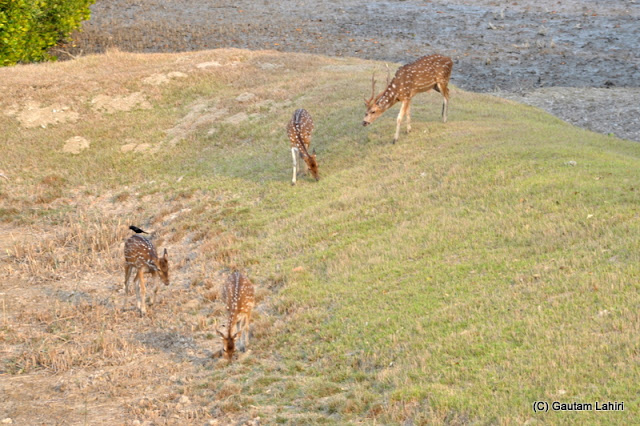
around the river banks at Sajnekhali
We saw a few villagers catching fish for a living. For them, the struggle of life and death is a way of life.
Every day can be their last day and still they continue their professional pursuit with grace.
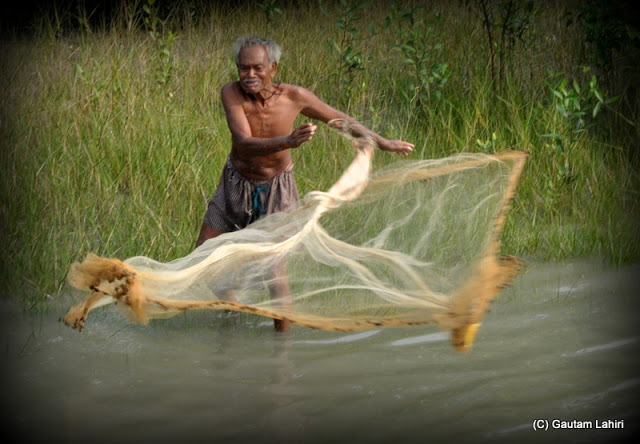
Hint of storm, Matla river🐟
After lunch, we set off to a place called ‘Jharkhali‘ which took the diesel-powered houseboat to cover in about 3 hours battling the huge waves of the Matla river.
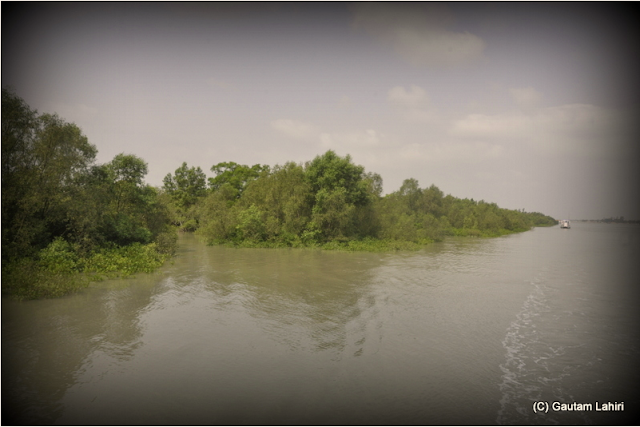
The house boat was being tossed by the river at 45 degrees on its keel as there was strong winds coming in from the south over the Bay of Bengal.
We held our breath and prayed for the land mass to appear.
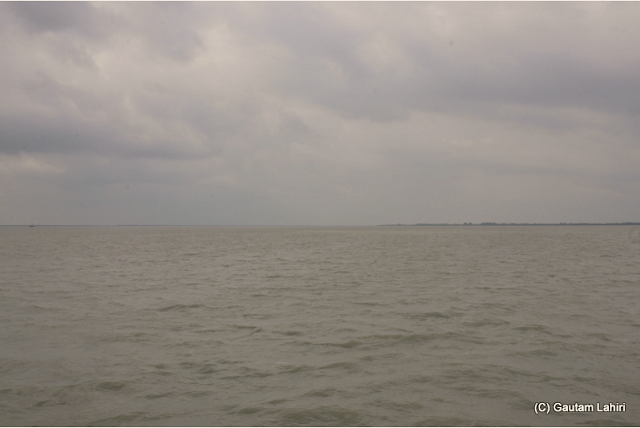
the horizon as we made our way over the rough
waves towards ‘Jharkhali’
A big surprise awaited us at Jharkhali. The government authorities have set up a recuperation unit to nurse injured animals.
Notorious man-eater🐅
Guess what we saw there. We were lucky to see a full-bodied male royal Bengal Tiger in captivity which was caught and they were treating it of wounds he got when hundreds of villagers chased it and tried to kill; however, the tiger got rescued by the wildlife officials.
This tiger is known to have attacked, killed, and eaten about twelve humans, which included four women, two children, and a few adult males. I guess, it is us, humans making the mistake of foraying into the tiger territory and trying to change the nature rules.
Even behind the thick metal bars, and the wire mesh, when we looked at the lean roaming Royal Bengal tiger, the hair rose at the nape of our neck.
What a graceful nature’s killing device, silently roamed within the barbed wire fences.
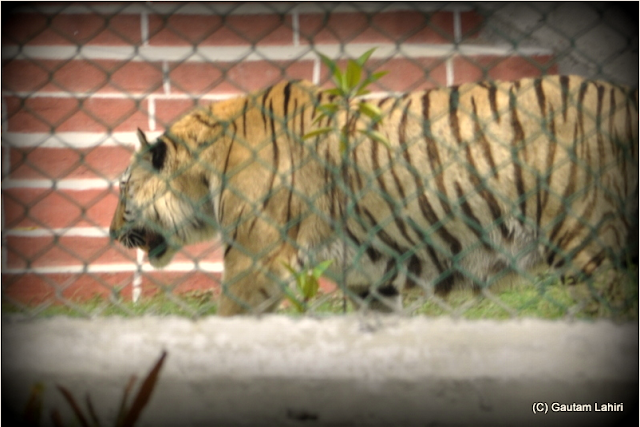
We planned to head back and boarded the houseboat which was waiting for the fierce sea winds to subside.
The wild return⚡
As we settled on the balcony holding the boat, the joyous feeling of touching the wildlife of the Sunderbans at such a close quarters filled our hearts and mind.
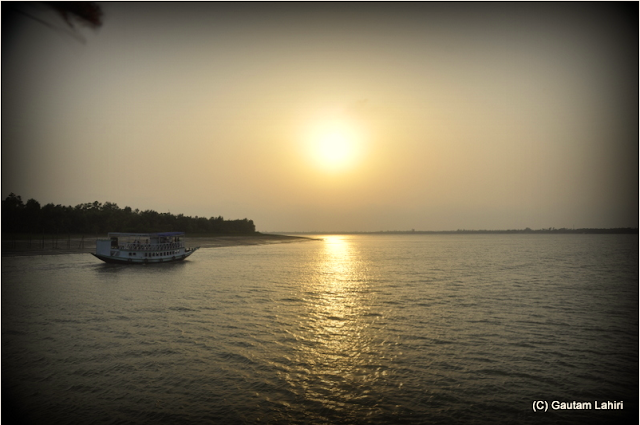
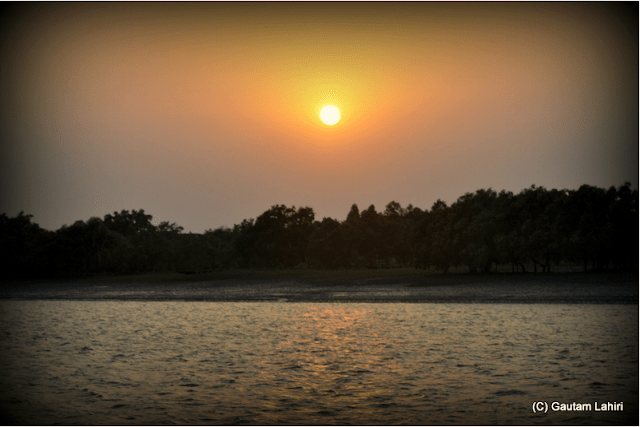
reach the western horizon
The sun came down once again trying to touch the far away horizon as the houseboat increased her throttle, hugged the muddy banks of Sunderbans and we returned to our base camp.
We remember Sunderbans with awe and deep respect and would love to re-visit this inimitable wilderness that lingers on for years.
Inference
- We saw the world’s largest mangrove forest and estuarine crocodiles
- Had a glimpse of a man eater at Jharkhali
- Sunderbans gets its name from the Sundari tree which grows in the marshland.
- We experienced the world’s largest and fastest growing delta
| Best time to travel | November to March |
| Pocket pinch | A standard package for a couple for 2 nights / 3 days, twin sharing = Rs.20,000, Kolkata to Sunderbans and back to Kolkata. Package providers arrange for transport from various city points to Godkhali. Boat cost, food and stay will all be part of the package. If self driven, you can remove the cost from Kolkata to Godhkali. |
| Car used | Maruti Swift Diesel 1.2 L, 270 kms, Diesel spent = 8.5 liters |

 SPITFIRE GAUTAM