

We were making a full circle of a drive around the historic places that dotted the land of Odisha, especially around the state capital, Bhubaneswar.
Having had our exposure to a slice of rock beauty abundant at Konark, we made a plan to see just one more ancient relic of this place as too many would dilute the beauty of history itself.
Approach to the Caves
built more than 2000 years ago
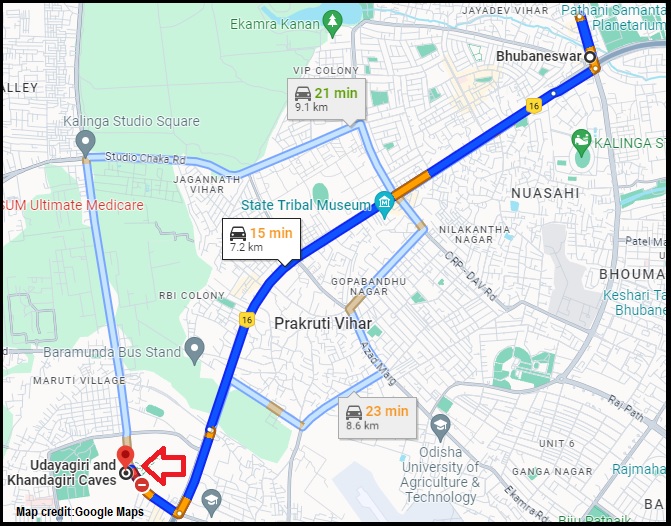
We saddled up and drove from Puri to Bhubaneswar and traveled further 8 kilometers to see these caves.
I came with my parents, about twenty plus years ago and all I remembered was the names. Little interest I had when in school so it was just like a checklist to me.
However, with the love for history slowly increasing, historical data points attracted me over the years.
Excitement was breaming as we headed to see these caves of an ancient time. We picked up the wrong time though to visit; the heat coupled with the salt and water-laden air, being near to the sea, the weather was far from perfect. The calendar page fluttered around early October.
Typically, what I have seen in India, the old historic structures stayed far from the modern cityscape. These caves stand amidst the current vibrant times and present the visitor, a unique sensibility, I presumed. We were standing on a 1st to 4th century BC rock hued outcrops and they gazed in dismay at the skyscrapers that had mushroomed around the capital city’s horizon of 21st century.
The Cave layout
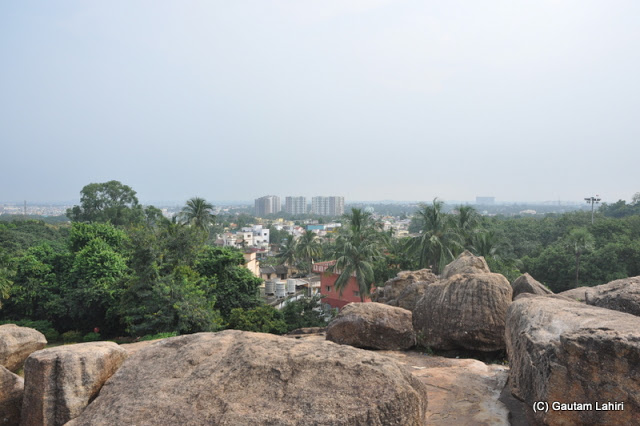
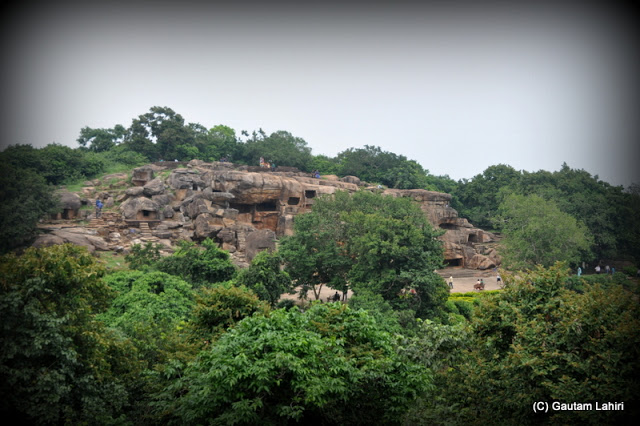
Bhubaneswar as we stood on the Udayagiri caves
As we drove down Khandagiri temple road, the Udayagiri caves fell on our right and the Khandagiri caves were bang opposite Udayagiri on the left.
It has a decent parking in front, and we parked our Swift and crossed the road.
From the road, the caves do not have any presence, all we could see was a rocky mount with lots of trees around it.
The first thing that attracted our attention was the board from ASI (Archaeological Survey of India) which welcomed you with a host of historical data.
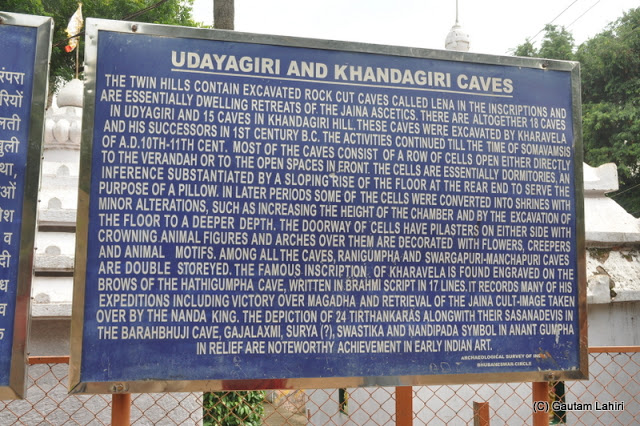
what we were about to see inside
The enclosure within which these caves resided is very neatly decorated and a rocky road with a gentle gradient, quite comfortable for visitors to walk the incline stretched all the way up to an elevated rocky cave enclosed area.

We trudged along the stone walkway that were bounded by steel railings on props.
With heavy steps we came to an opening which had a flat U-shaped structure.
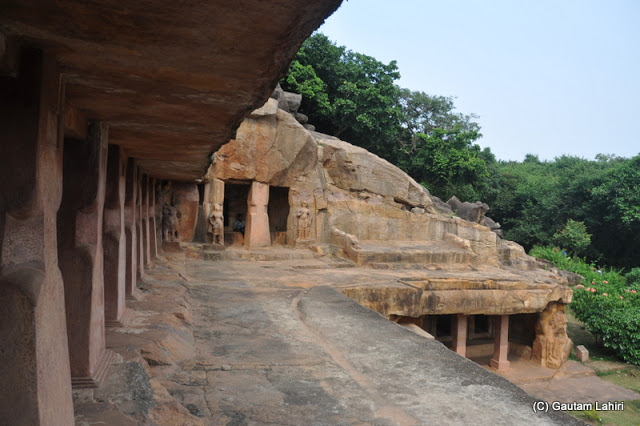
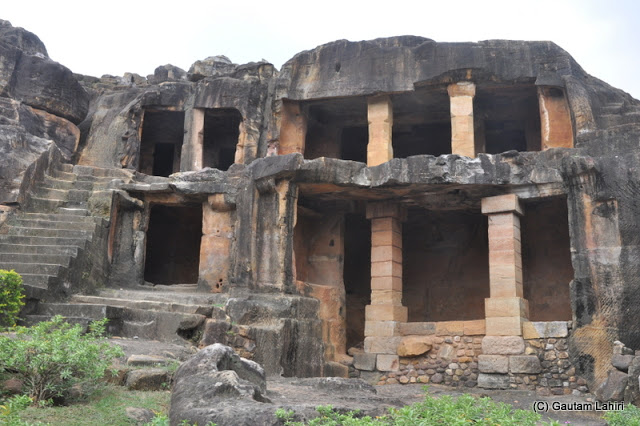
Excavated stone formations jutted out of the rocks and were two-storied tall held with evenly placed pillars that supported the heavy rock bases.
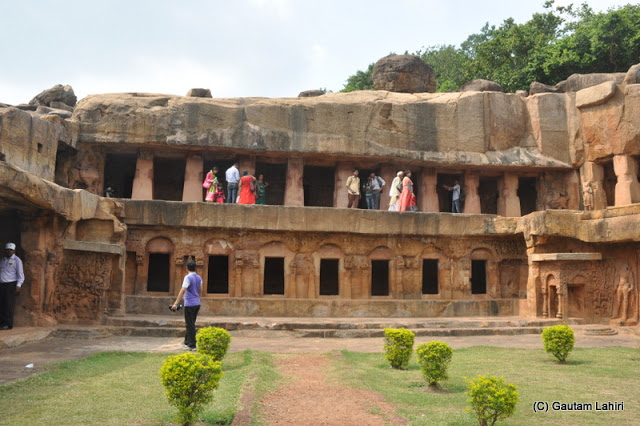
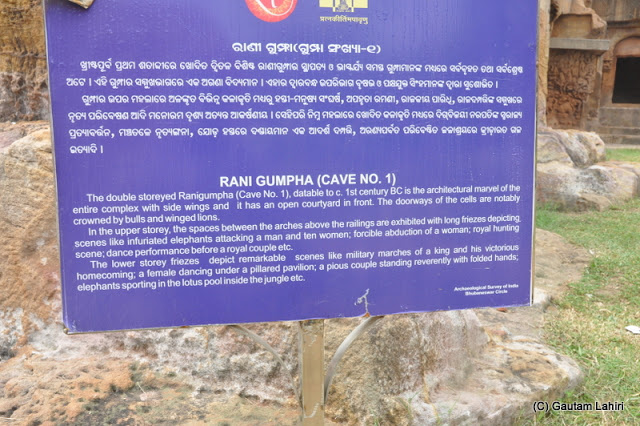
Every entrance or opening has a human structure engraved into the rock body, and our guide told us that these are ‘Dvarapala‘ or stone sentries guarding the entrance to the chambers inside for centuries.
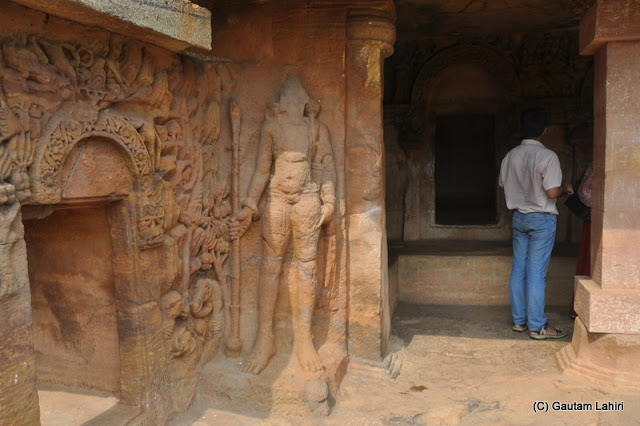
Udayagiri caves
The walls were ornate beyond comprehension, both inside and outside, some places were devastatingly beautiful.
It kept us wondering how before the metals were present, these were chiseled with rock pieces with simple bare hands.
Can you imagine?
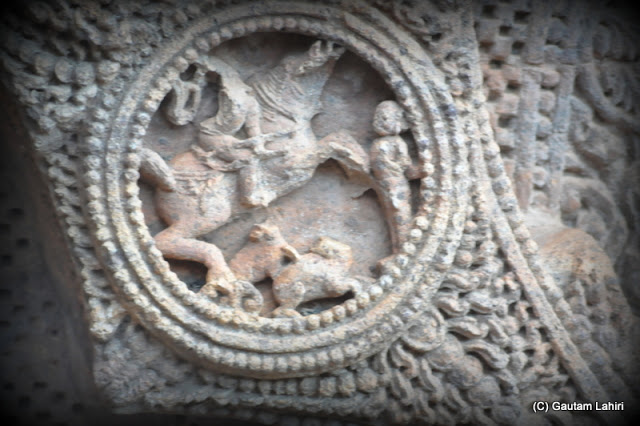
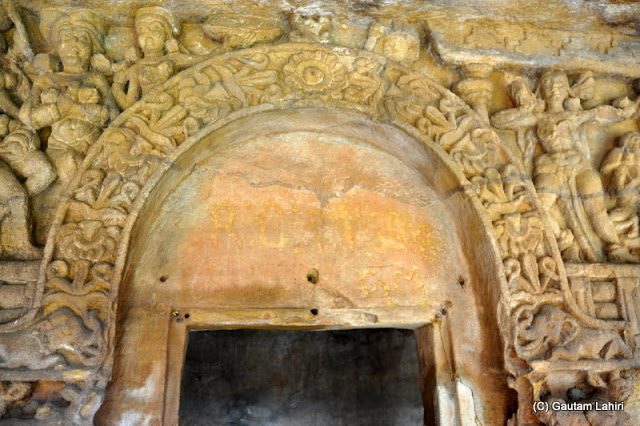
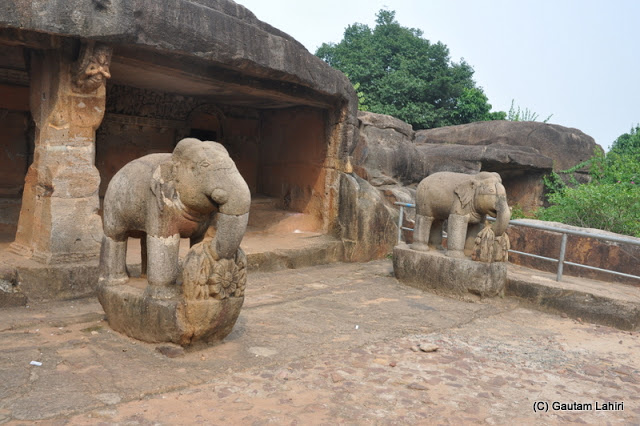
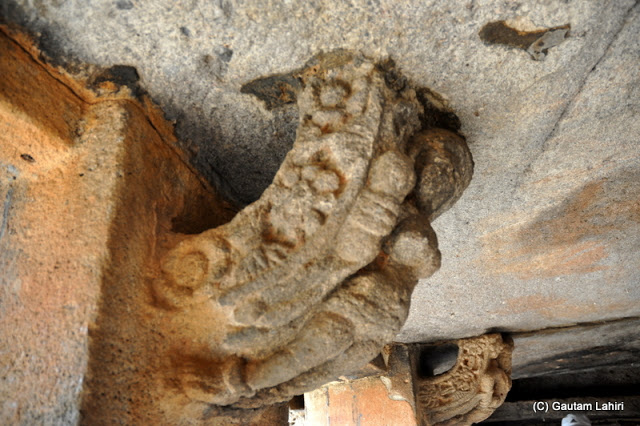
elephants, every bit still near intact and
curved with precision
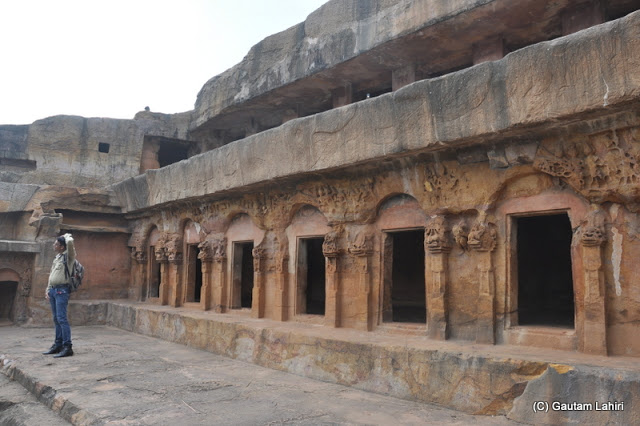
we learned acted like motels for traveling Jain
and Buddhist monks. Built by Kharavela,
the famous Kalinga ruler
The height of the caves, the space from the floor to the roof was quite less.
A tall person will have a challenge to move around. This pointed to a data point, I guessed.
The monks or whoever stayed in these caves were rater short statured.


Ancient engineering
In one room, we saw a well dug into the floor which was in turn connected to another upright passage.
This indicated the reason why the caves were so cool during the summer.
They had built, state of the art engineering in those days. By way of these passages the water was circulated along conduits within the structure and the power to circulate the water came through gravity as electric power was a far cry in the ancient days.
We were dumbfounded by the sheer scale of technical prowess.
The proof was right in front – the air was so cool when the humid sun outside ran havoc to our cooling system.
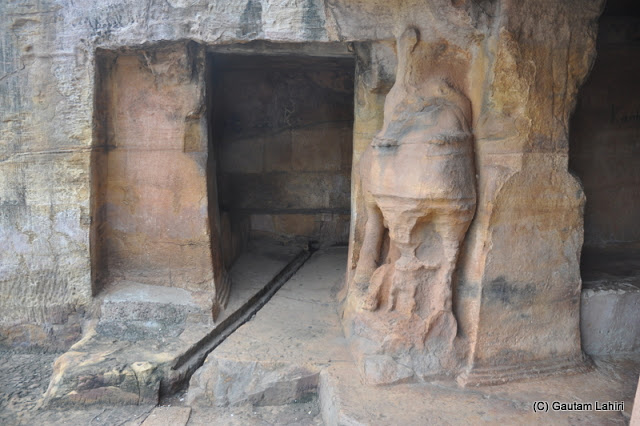
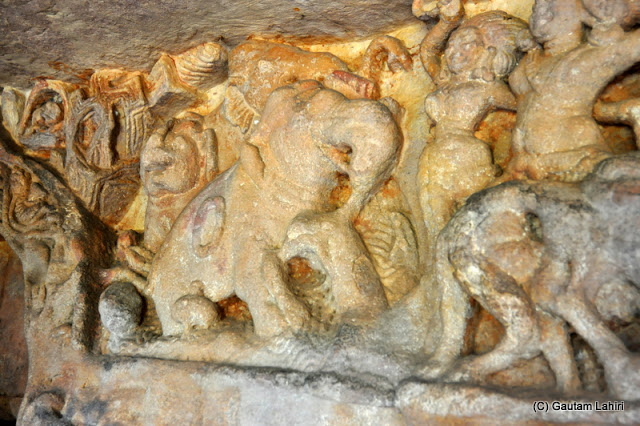


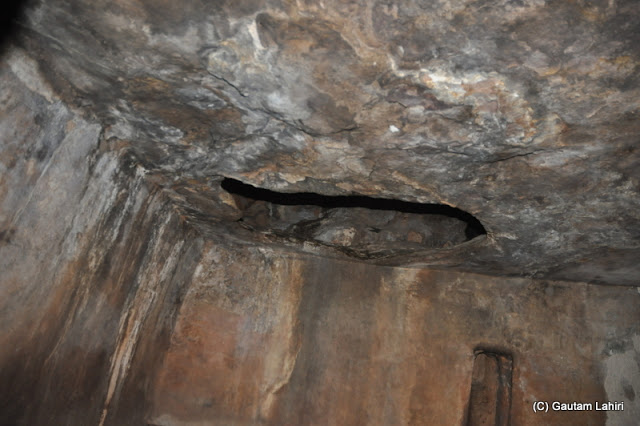
The engineering marvel that we saw in these caves were present such a long time ago shows the talents the artisans had and used to create these structures.
Even today in the heat outside rising to about 42 degrees centigrade; the caves were cooler by twenty degrees which we experienced ourselves.

as if welcoming the Jain monks who
stayed in these chambers
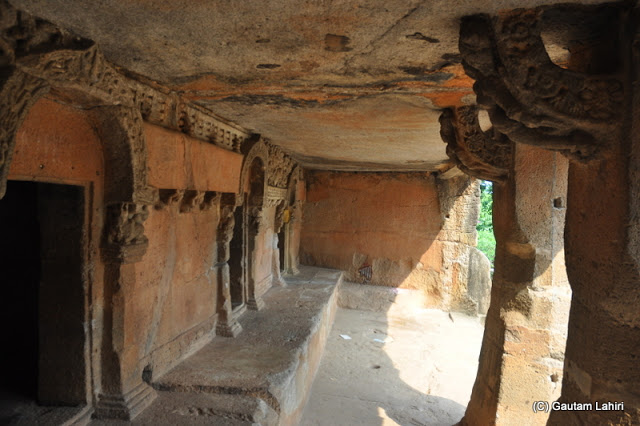
anyone standing on this bench and speaking could be heard
far away due to the resonance the sound created.
The trick was a vacuum created on the roof which
spread the sound waves

After a brilliant historical joyride through a passage of time, 2000 years ago we came to the hill of Khandagiri.
Khandagiri caves
We did not find much to be seen, apart from huge broken rock pieces. We did come across a Jain temple on the hilltop though.
We felt quite young at this point after climbing, jumping, and experiencing such a vivid sculpture on rocks.
The physical activity definitely helped all of us to shed at least a kilo of excess fat that we usually carried.

polished and tourist friendly
After having gallons of water, we retired into our metal cave of Swift and drove back to Puri.
Hope you enjoyed the eclectically designed rocky system, the dwellers carved out in an era where no one of us existed.
Inference
- At first, when you visit these caves, they looked rather simple from the outside. Acres of broken rocks, splayed out in all directions. When you enter them and explore in depth, the reality hits you like a sledgehammer.
- Astounding engineering by curving out the rocks, the stones. Angling the supports that have stood the test of time, the air inside was natural and cool.
- No mechanized electrically operated air conditioner can discharge such comfort and so economically.
You must visit these caves to experience the brilliance of an era centuries ago. It pointed to a fact of those ancient times – people were intelligent as we are, the only difference being they were far more industrious and worked harder and smarter than the younger generations of the 21st century.
Today’s artificial intelligence, if not collaboratively used by the Gen-Z, will surely widen the gap.
| Distance from Bhubaneshwar to the Caves | 8.5 Kms |
| Main places to visit | Udayagiri and Khandagiri caves |
| Time to visit | Early December through mid February to escape heat |
| Car used | Maruti Suzuki Swift, 1.2 liters Diesel |
| Pocket pinch | Rs.635 to Rs.800 (fuel), Rs.550 to 1100 per night (Budget hotels), Rs.400 to Rs.750 (non-veg) and Rs.250 to Rs.400 (veg). |

 SPITFIRE GAUTAM