

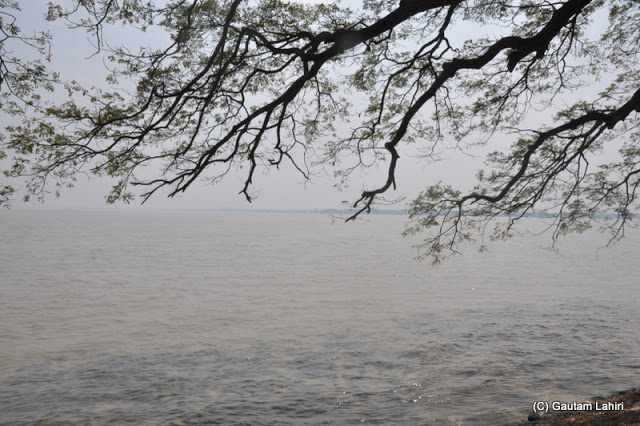
River confluences in India have an importance which is as ancient as the land itself.
Considered quite holy, and scenic, the meeting of rivers gives rise to two interlinked developments which one can see; sprouting of temples around the river banks and the prolific growth of tourism.
Rivers of India
As a result, an interesting mix of the crowd can be seen. The state of West Bengal, India, like the entire country has many such locations as the state has an incredible number of rivers, crisscrossing each other giving rise to countless ‘Sangam‘ (meaning confluence of rivers in Hindi) in the process.
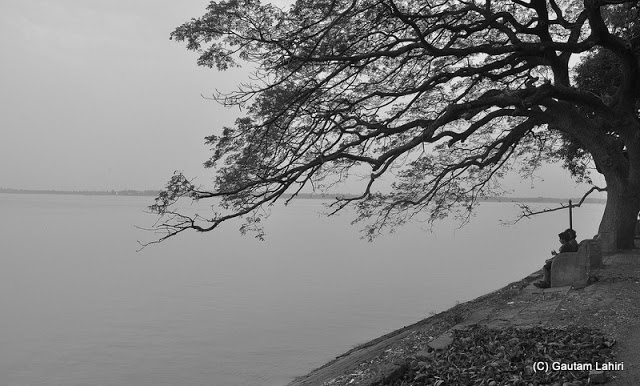
One such place where we had planned to visit for a long time got finally realized and is called Gadiara.
We skimmed the tourist information of this place and found that a trip consisting of two days one night stay is usually preferred by visitors; however, a day-long trip would n’t be a bad idea anytime across the year.
Approach to Gadiara
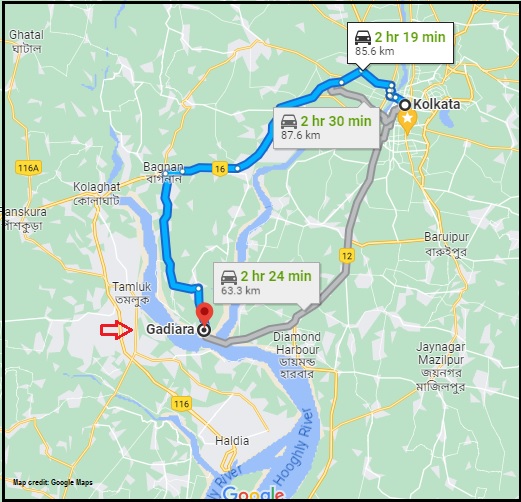
Our veteran highway eater, Swift was ever ready to take us and we filled her up to visit Gadiara, approximately 89 kilometers south-west of Kolkata.
One of the three major highways that fan out from Kolkata is NH-6. The road is, broad and smooth.
To a good extent comparable to any great highways around the world, if considered from road quality perspective and presence of driving signs that help a driver.
We started early, as we always do to avoid local traffic, around 6.30 am IST, and hit NH-6.
Bengal’s flora
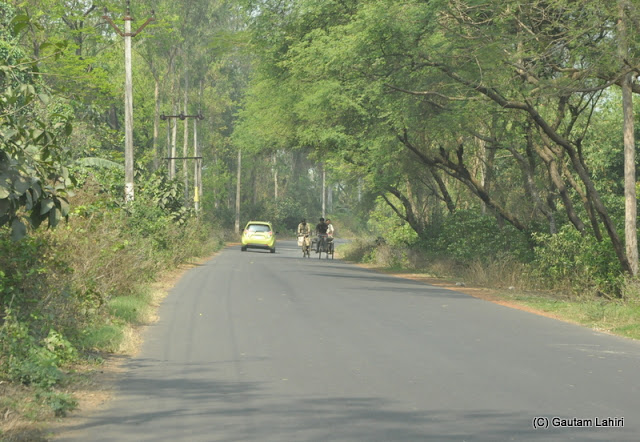
We swerved off to the left from NH-6 at Bagnan, with our odometer clocking 55 kilometers and headed south to cover another 34 kilometers.
The passage was indeed very picturesque. Early morning meant the heat was absent, cool breeze flowed in through the open windows and the sun resembled the yolk of an egg.
All we could hear was the muted hum of the diesel motor and the sound of the passing air redolent with the mixed smell of wet earth, and overabundance of trees.

The road at places was being repaired and it became quite narrow.
We were following the sharp turns and at places, we saw vendors selling green tender coconut water.
We stopped at one of them and quenched our thirst.
Momentarily, we thought everything stood still because of the quietness around. With the engine switched off, the birds could be heard squeaking as they flew from one tree to the other.
Occasional passing trucks punctured the silence with their receding roar of the revolving tires as they approached and faded away as slowly the sound waned as the trucks vanished into the distance.
Gadiara, the river town
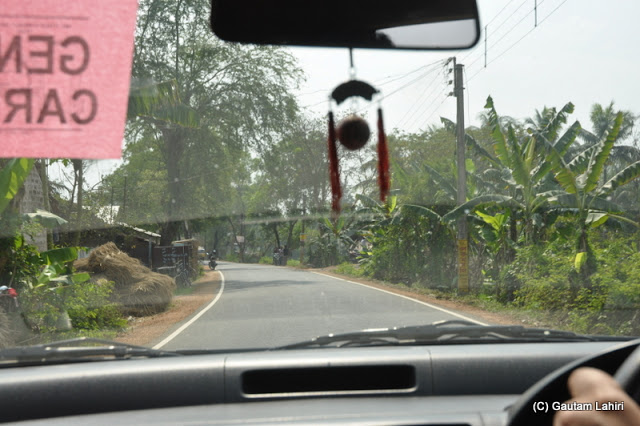
The road suddenly ended and we climbed on to a culvert hump and we were face to face with a mighty river.
The tree-lined river bank had few gaps through which we could see the wooden country boats bobbing up and down on the water.

The river was huge. We could not see the opposite bank. Far away we caught sight of big ocean liners chugging away.
This meant that the river was definitely deep enough to hold these big passing ships.
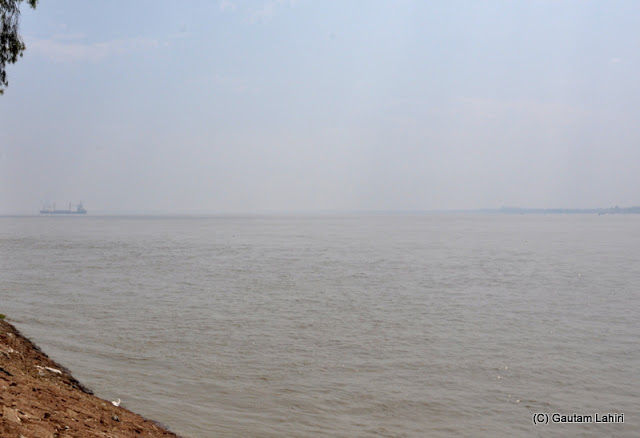
We stood completely engrossed after we had parked by the mighty river.
We were gazing in awe at the famous Rupnarayan river.
This river after flowing a couple of kilometers away from where we stood met the southbound Hooghly river and the combined water headed towards the Bay of Bengal touching Diamond Harbor where we had driven you.
This explained why we saw such a load of ship traffic as they were going towards, either Haldia, Kidderpore or Kolkata docks.
Life at Gadiara

The tranquil place had a couple of shops, selling cigarettes, biscuits, and betel leaf which are very popular in Bengal.
They are called “paan” in India and usually taken after meals.
Usually contain scented tobacco and when one is popped into the mouth, produced an aroma in the mouth which makes anyone ecstatic.
Far away the bank turned left and with a turbulence of water jutted into the river with a trickle of a jetty. We saw a steamer or a big motor launch swaying around in the water, held by its thick ropes.
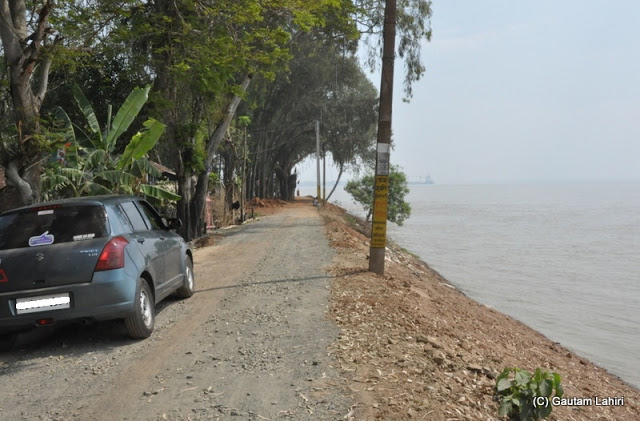
We broke the silence as the tires crunched over the loose rocks and pebbles as we made our way along the riverbank road.
The nearest tourist restaurant available was a tempting sight. We had forgotten that the day had rolled on and was nearing noon, not only we needed to have a quick bite, we also needed to park the car.
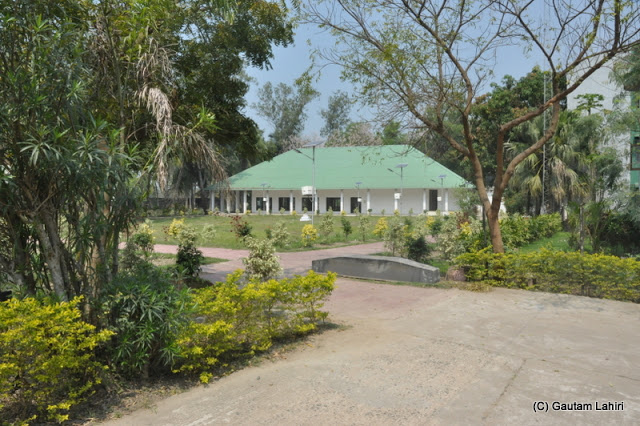
The restaurant, an outfit run by the West Bengal government called, Rupsali was in a huge enclosure, an old building, of the 1950s’, well maintained was co-existing with a modern structure where the food was served.
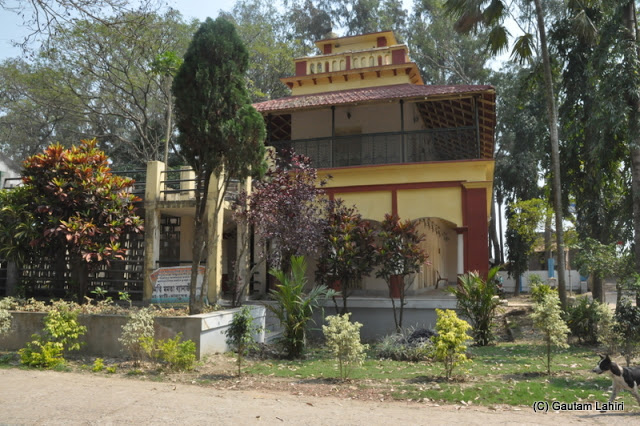
Gadiara rest house offered very delicious Bengali food at an extremely reasonable price attracting visitors in droves.
Having had one, we walked around and wanted to see the area on foot.
The tree shade and the polished cemented buttress made us languid. All we wanted to do was to take an easy chair, get in, a breath full of mild smell of a steaming cup of tea or coffee; prop our legs on a stool and read a thriller or a book of ghost stories and eventually fall asleep under the gentle care of the river breeze.
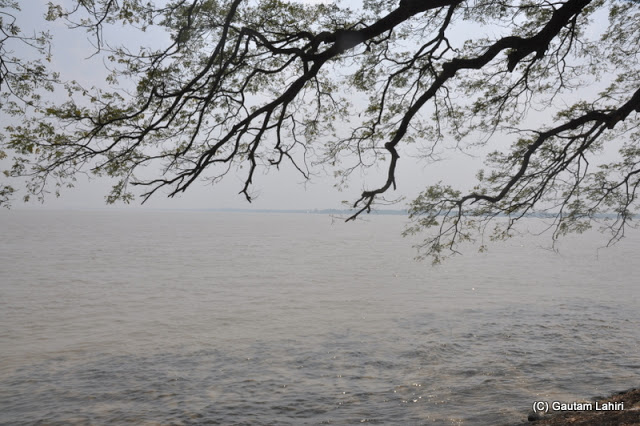
The walk along the road which was a mix of dirt and asphalt took us to the jetty where we wanted to ride the steamer which was waiting for its afternoon passengers.
On the way we stooped by to taste a couple of green coconuts; the coconut water was both sweet and delightfully acidic; nevertheless, in the light heat of the setting sun, the coconut water acted as an air conditioner.
A bunch of cocks and hens encircled us to peck away the coconut remnants.

These spent coconut shells are left in the open to get dried under the sun. After about a period of four months in that state, and getting completely dehydrated; these dried shells become the fuel for thousands of village homes to light fire in their kitchens.
The coconut trees are multipurpose and every bit of them has some use or the other for the hungry mankind.
Gadiara’s boat ride

We continued our stride on the reddish-brown soil of the bank and headed towards the ramshackle cemented pier.
I felt like spending the full day sitting there and watch the daily chores of the nearby villages and towns. We saw a family with a couple of school children headed towards their school getting on the boat.
Our sole objective was to make a river ride too.
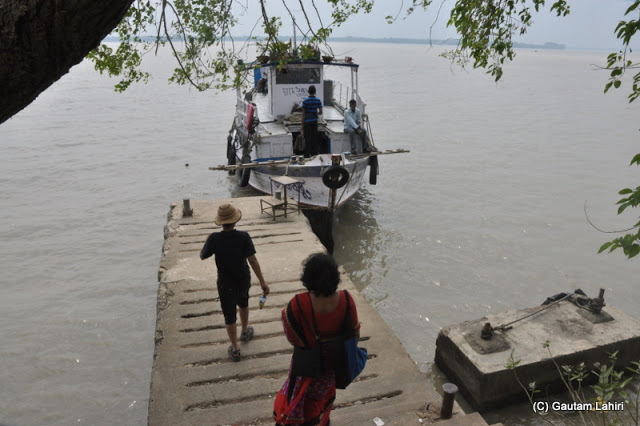
A man carried his cycle on the boat. Life went on just like the gentle river zephyr, and infectiously very laid back.
The boat had a simple design. Made completely of wood and iron girders to hold the hull, the length was around 40 to 45 feet. A railinged superstructure had the captain’s view from where he turned the ship wheel to steer.
Some effort towards beautification could be seen as a series of potted plants were kept over the captain’s room.
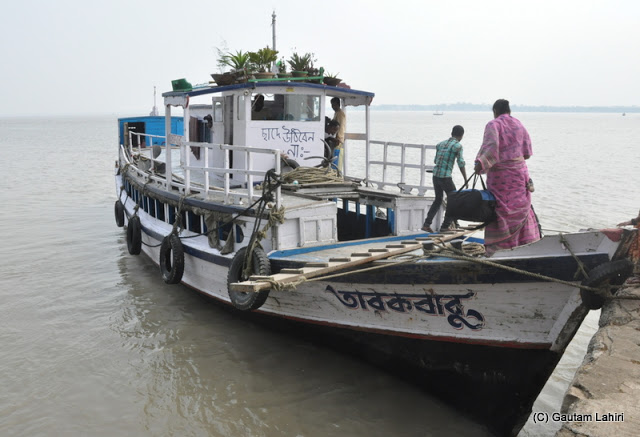
We climbed with the help of an iron stool and went into the hull or the ground floor.
The passenger compartment shared the engine room and wooden planks formed the sitting arrangement which was comfortable enough for short trips.
At the rear, a makeshift bathroom sat on the stern of the steamer.
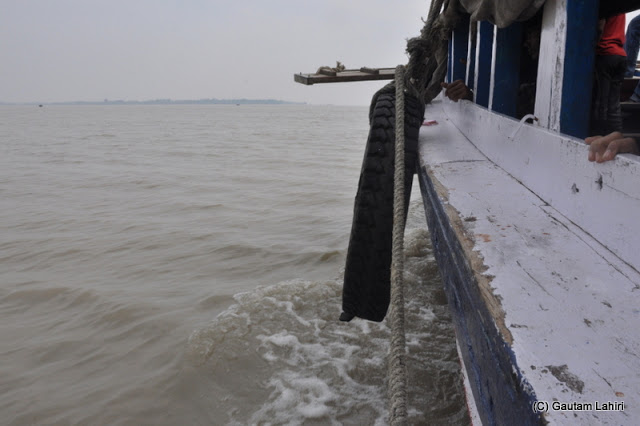
The engine roared to life and the steamer reversed and set sail towards Geonkhali, another town dotting on the other bank crossing the river.
The engine throbbed on and it was around noon when the low tide slowly came in and that reduced the depth of the river.
Gadiara’s river traffic
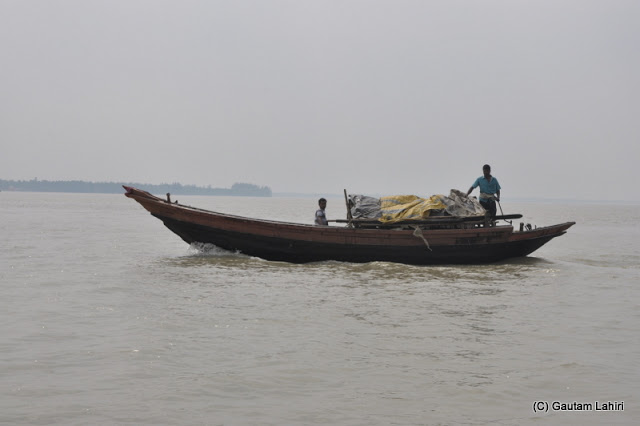
During this period, the big ships did not ply and the smaller local steamers did brisk business by ferrying people to and fro between Geonkhali, Noorpur, and Gadiara.
We came across a large number of fishermen’s boats all around us and one even carried a cow, a handful of cycles with a few human passengers.
The fading rays of the sun were prancing over the river as the boats made waves over the surface.
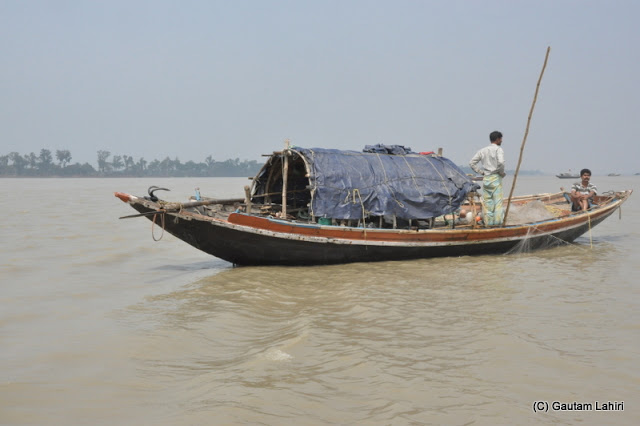
A few of the boats had their nets strung across the water and sweeped the depths below in anticipation of fishes getting trapped in the net.
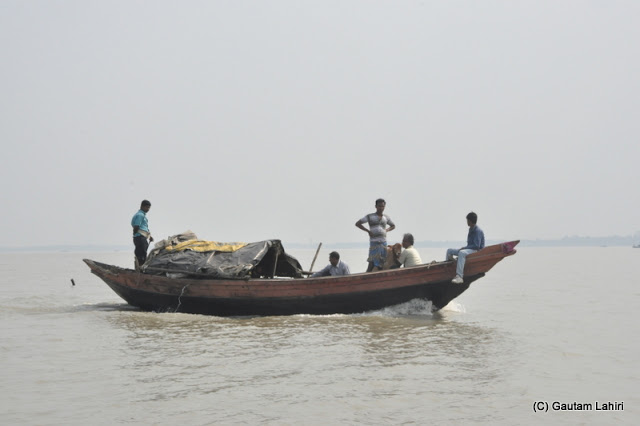
Around the afternoon, the watch dial showed fifteen minutes past four, and the river traffic dwindled. The water started ebbing.
We got back to Gadiara after a brief stopover at Noorpur.
The water level was falling drastically and if the boats stopped, we would have had a tough time crossing the river as the car was parked on the opposite bank.
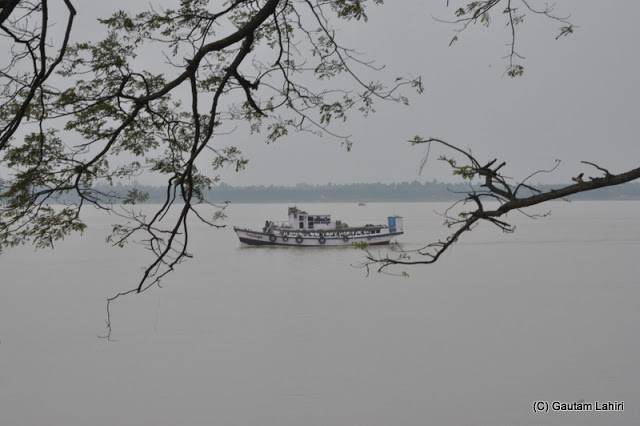
Luckily the water god was pleased with us and let the steamer crossover. We had a hectic day of walking, crossing, riding the boats.
When we felt tired, we sat on the stone benches facing the river and savored the mixed wafting air and looked at the evening lights that started to glow for the night ahead. We saw a mobile tea vendor and he was offering lemon tea with a dash of masala or rock salt with which he served.
Extremely tasty and within seconds our energy levels were restored and we headed back to our Swift.
Inference
- We experienced the confluence of two mighty rivers.
- Rupnarayan and Hooghly rivers which gave us the knowledge of the life of the inhabitants, and the natural beauty around them.
The diesel engine of our Swift coughed into life, and the destination changed from Gadiara to Kolkata bringing to an end to a modest and pleasant day long river life.
Hope you enjoyed with us the river experience.
| Kolkata to Gadiara | 89 kms (One way) |
| Time to visit | Early morning |
| Car used / Diesel burned | Maruti Swift 1.2 L Diesel, 7 liters, total distance = 201 kms |
| Objective | A perfect getaway for a day |
| Pocket pinch | Rs.675 (fuel),Rs.300 to Rs.400 per head (local budget restaurants),Boat ride:Rs.75 per head |

 SPITFIRE GAUTAM