

We have toured south of the state of West Bengal, India and had taken our readers to the point where Hooghly river empties itself into the Bay of Bengal.
Calcutta or Kolkata have exceptional places, that dangle like pearls of Euro-Bengal beads on the riverine necklace and are draped in great history, of both British and Portuguese dominations.
These places lay along the watery ribbon of river Ganges slightly to the north, between Kolkata and Varanasi.
Approach to Bandel
Having drenched ourselves in the natural beauty of the places around the Gangetic delta, we thought of driving up north about forty to sixty kilometers to see what were in store for any motorist who was hungry for history, and wanted to savor the natural or man-made townships that sprinkle this unique state.
I distinctly remember, years back when my father gave me history lessons from the school book; he mentioned about a place called Bandel.
Years passed; however, my quest for acquainting this town never shrunk. I wanted to learn more about this historical place that grew up around the river bank.
Care to join me?
It was March, the weather was still comfortable and the heat was bearable. On a bright Saturday morning, we jumped into our most honorable travel companion, the Swift and started for Bandel, to feel the culture, read the history and now share with you what we learnt.
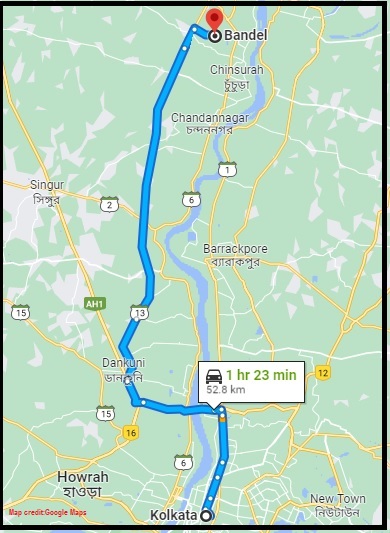
We took the NH-2 highway and reached Dankuni after crossing the Vivekananda bridge at Dakhineshwar.
Before reaching the queen of the highways in West Bengal, Durgapur Expressway, we veered off to the right and took the old Delhi road or the terribly congested GT Road and drove towards Bandel covering about 58 kilometers of bumpy, unruly traffic infested road.
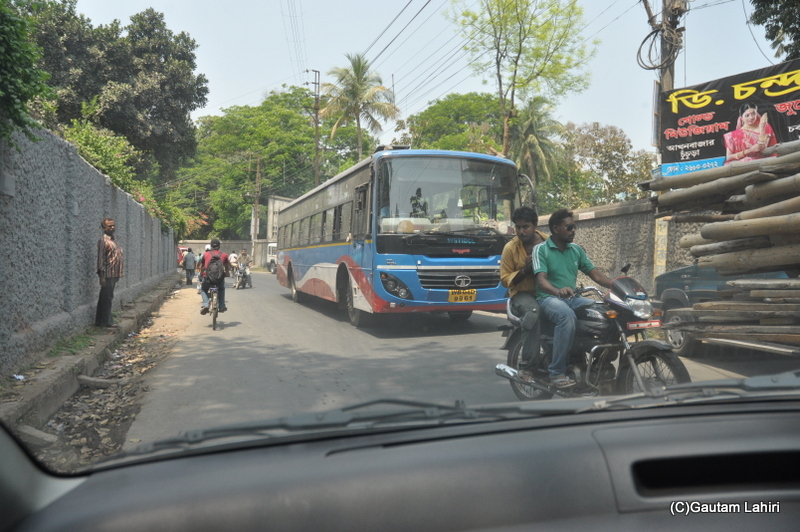
On our way, I picked up a college mate who happened to have his uncle’s house at Bandel.
Who else can give an account as good as a resident of a place?
He was our travel guide and we followed him to soak the nuts and bolts of Bandel.
The Bandel town layout
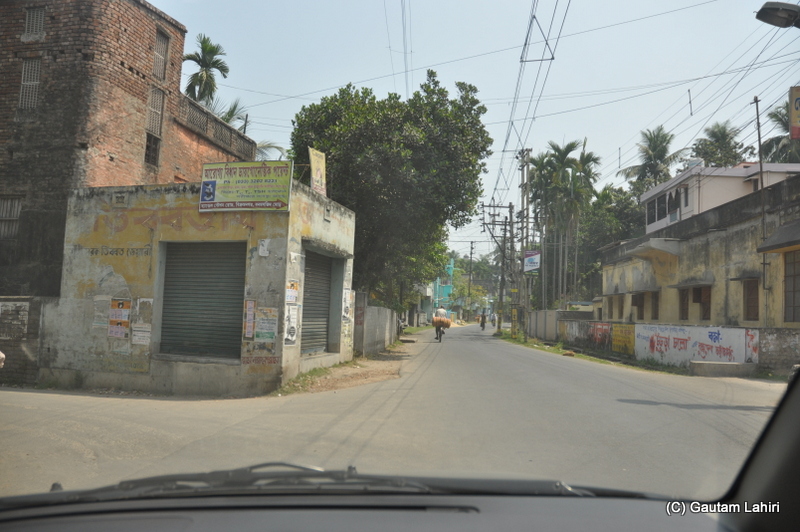
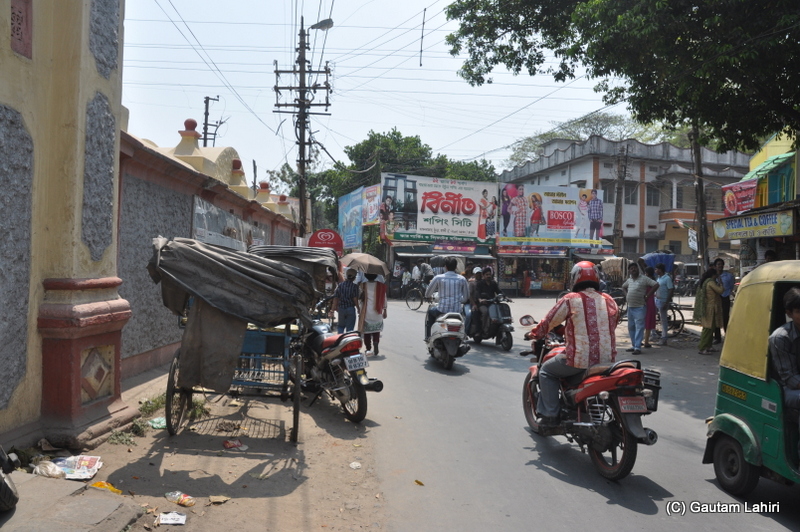
Bandel is just like any other town in Bengal. Narrow and crowded streets form the circulatory system of the old town. A motorist has to battle out through a maze of rickshaws, hand carts, buses and people who follow one standard philosophy in life – never look left or right when crossing a road.
It is the motorist; whose duty is to stop and let them cross and we patiently bowed to it and reached after two and a half hours.
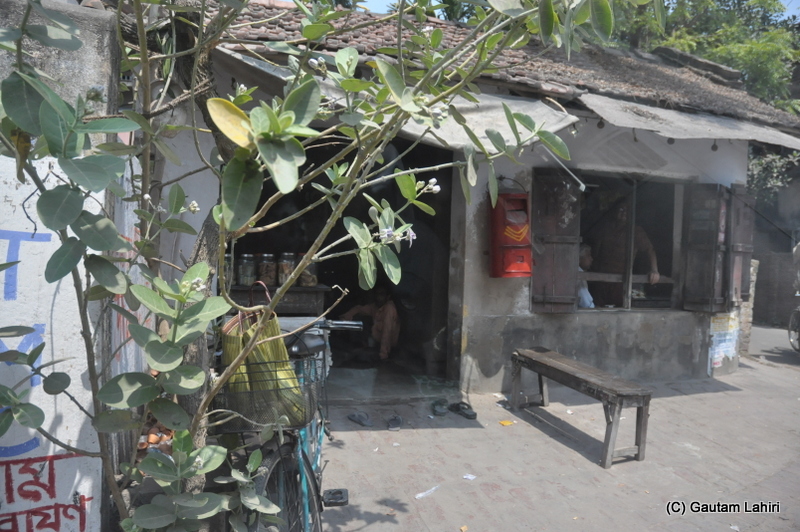
We stopped to ask for directions, and the shop where we parked was straight from a history book.
Nothing had changed much, the shop was about 70 to 80 years old, long and lanky sitting stools adorned the front, a British built red postal metal container hung beside the shop which was the local letterbox.
Fifty years on, the same process continues. A cyclist, an official would make his morning or noon round, pick the letters in a sack and ride to the nearest postal office for dispatch.
After driving through a labyrinth of wide, and very narrow roads, we closed in on our first place of interest – the Bandel Church.
Having parked, we entered the church compound.
Historical Bandel Church
The history of Bandel Church is mesmerizing. I am sure it will take your breath away.
I have to dip you into a bit of a history to give context to what we learned.
In 1498, Vasco Da Gama, a Portuguese explorer came to India and anchored at Calicut or Kozhikode in Kerela.
Ever since then India had seen Portuguese settlements across the Indian subcontinent. Bandel church has its design from Portugal.
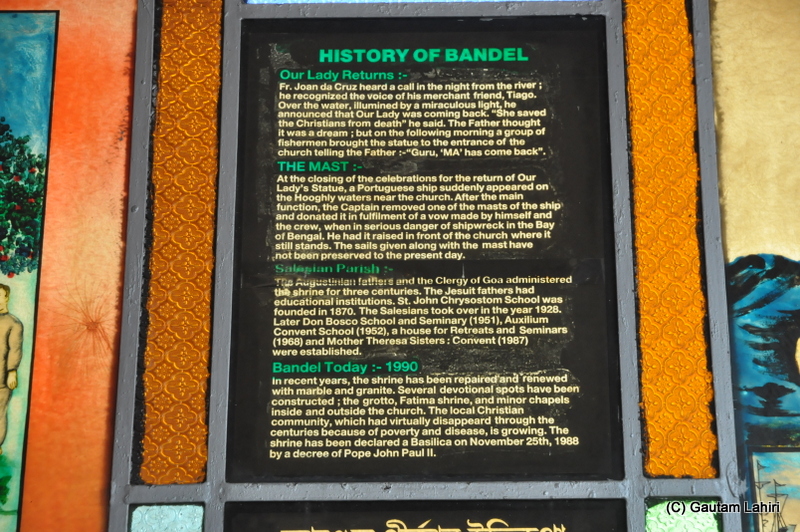
One of the oldest churches in India; dedicated to Nossa Senhora do Rosario, Our Lady of Rosary was presented to the visitors in the year 1650 by the Portuguese. It was founded, way back in 1599. Every room, courtyard we visited, pages of history unfolded.
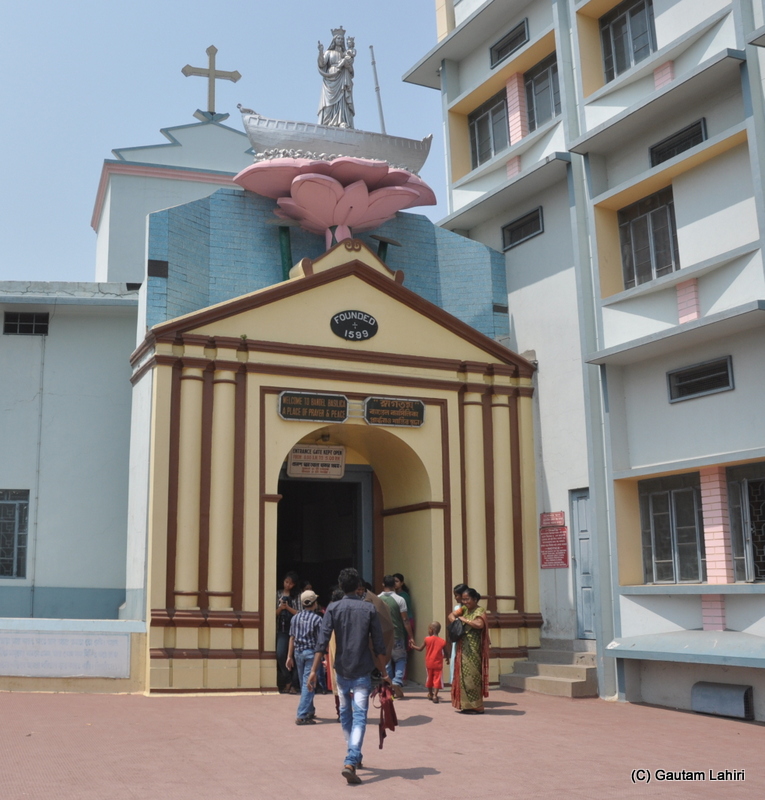
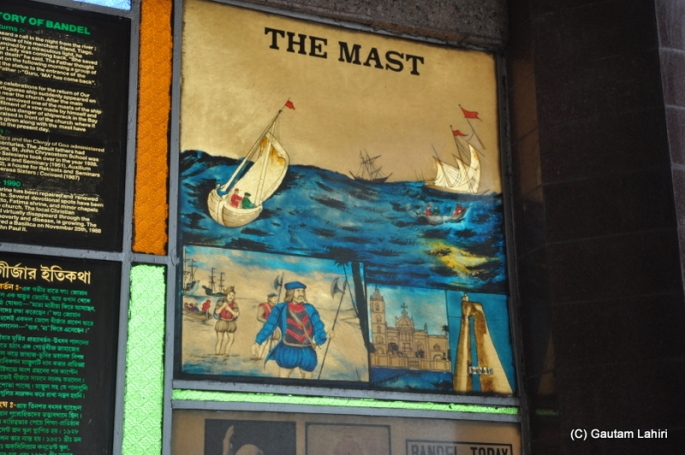
It is said that a Portuguese ship met near disaster of getting sunk into the sea.
The ship’s captain prayed for safety for his ship and men. He promised to bequeath a mast of his ship to the first church he sees and it was this church which he caught up with.
Till today, the mast of that stricken ship can be seen in the church.
However, unfortunately, we could not see it as the mast was blown away in a local cyclone in 2010. Fables also say that the word “Bandel” possibly, meant “a mast of a ship” in Portuguese.
The best way to explain, perhaps, is to give you a pictorial trip of the church.
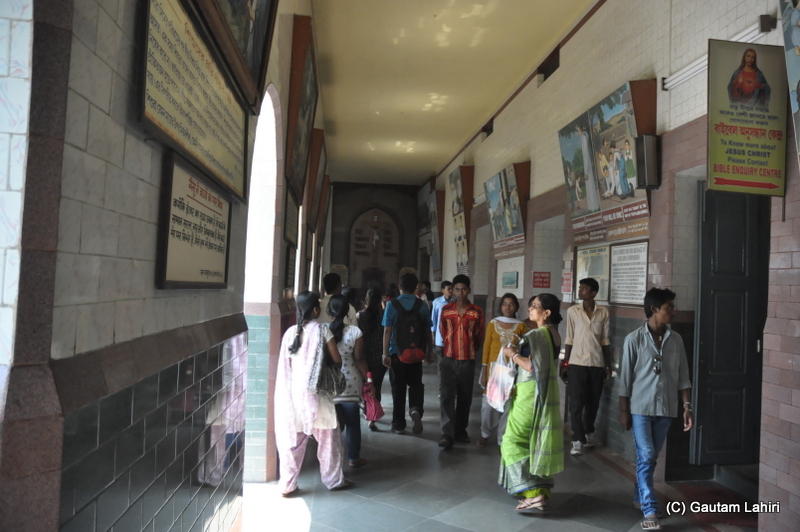
Arched openings from within the church took us out to well-manicured gardens with images and idols of biblical origin.
Neatly done, colored glasses along with wrought iron chandeliers embellish the tall ceilings and wide arches.
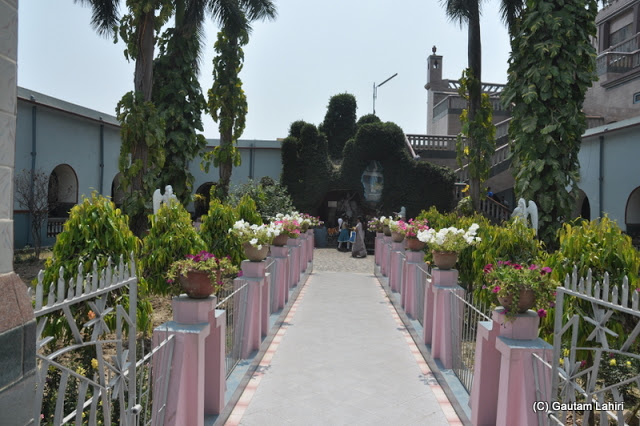
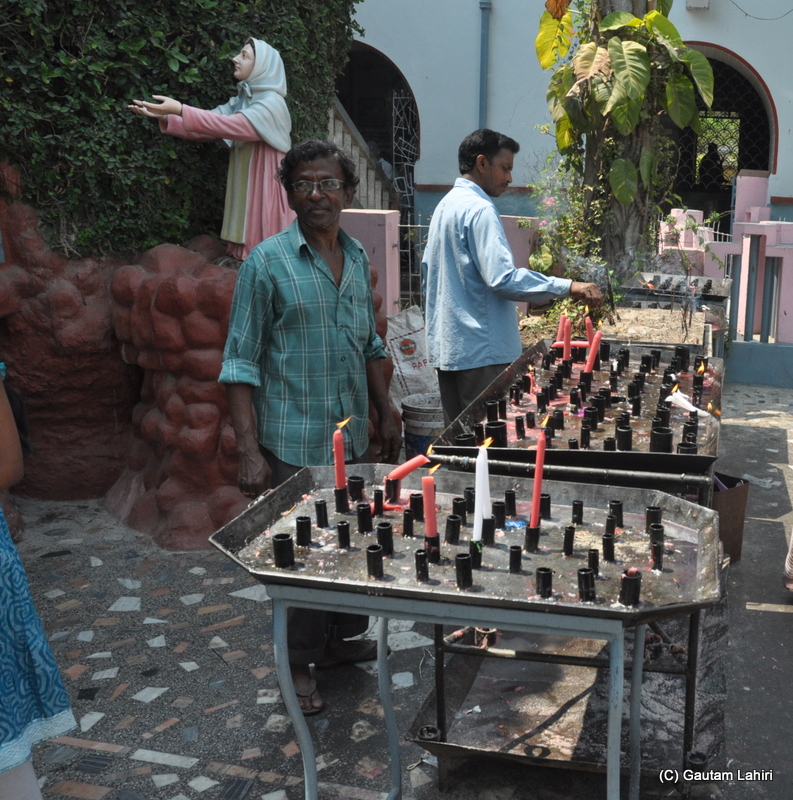
Along with hundreds of visitors, we walked corridor after corridor and came across magnificent stories and paintings that made this church so famous and unique.

The story of the church has been wonderfully described with paintings and images.
Presenting you a quick capture as I had panned my camera.
Mughals met the Portuguese
The Mughal emperor, Shah Jahan in 1632, attacked the Portuguese settlement at Bandel. In the ensuing battle, the Portuguese were defeated and both their fort & Church were destroyed.
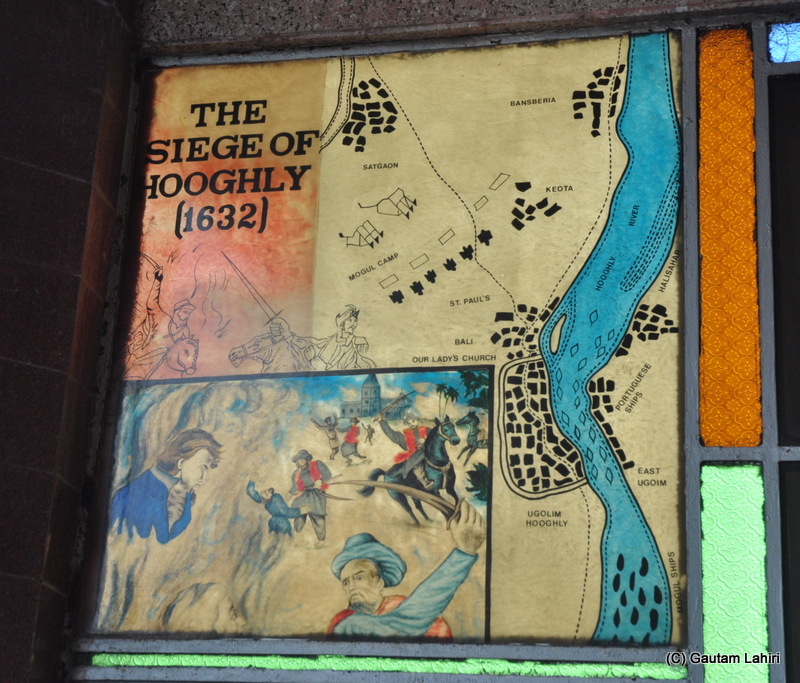
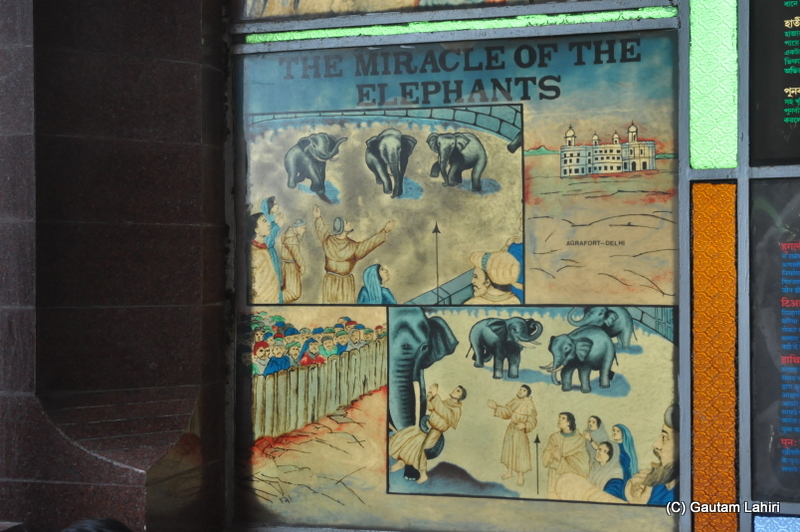
Mughals took Father Joan De Cruz from the church, as a prisoner and took him to Agra.
An interesting event took place as the fables go; father Joan had to face a savage elephant. Everyone thought the priest’s end was near.
Amidst the cheer, and in front of the Mughal emperor, the elephant instead of attacking the priest, lifted him with its trunk and placed him on his back.
Shah Jahan in the inset, seen awfully impressed at the elephant’s exceptional behavior. The king set Father Joan and his men free.
The Mughal emperor also provided land at Bandel without attracting any taxes for the rebuilding of the church.
Bandel church fables

When the Mughals attacked Bandel, it is believed that a local Christian called Taigo, wanted to save the statue of Mary, jumped into the Hooghly river along with the statue.
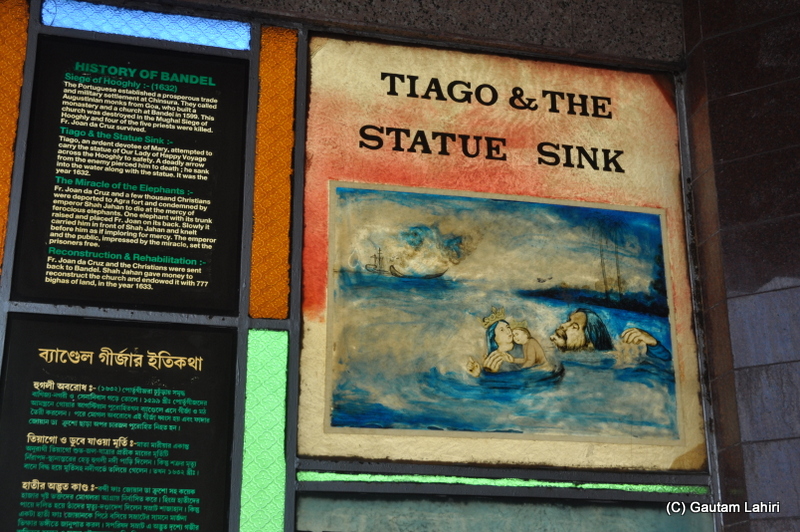
Interestingly enough, on the inauguration day of the church, the statue was seen mysteriously, on the banks of the Hooghly.
Ever since, then, the statue has come to be known as “Our Lady of the Happy Voyage”
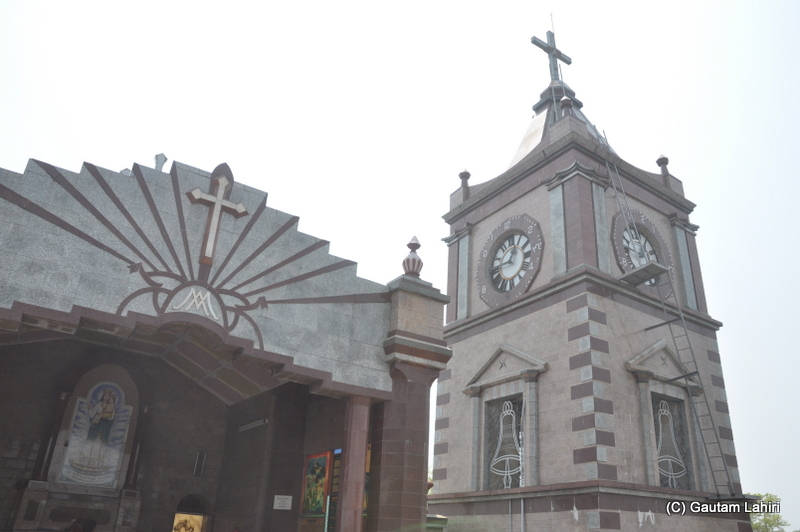
We climbed the steps which led to the roof of the church where the clock tower stood gallantly on one side.
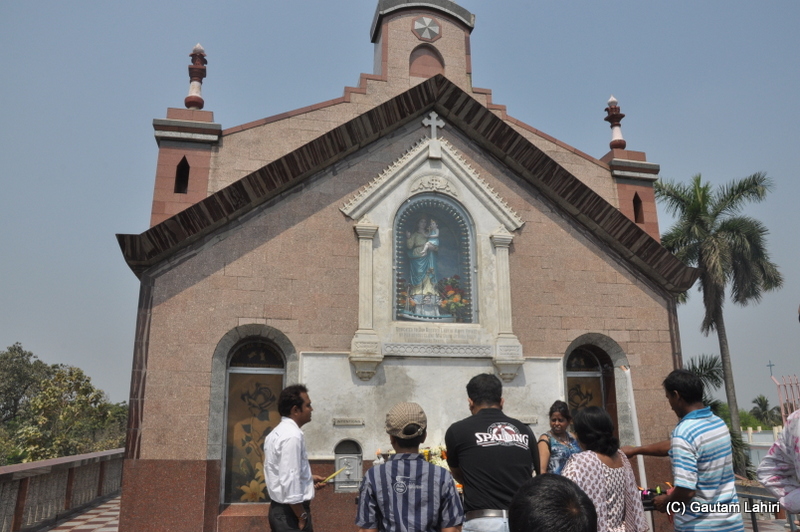
We saw the altar for the visitors where we saw people praying.
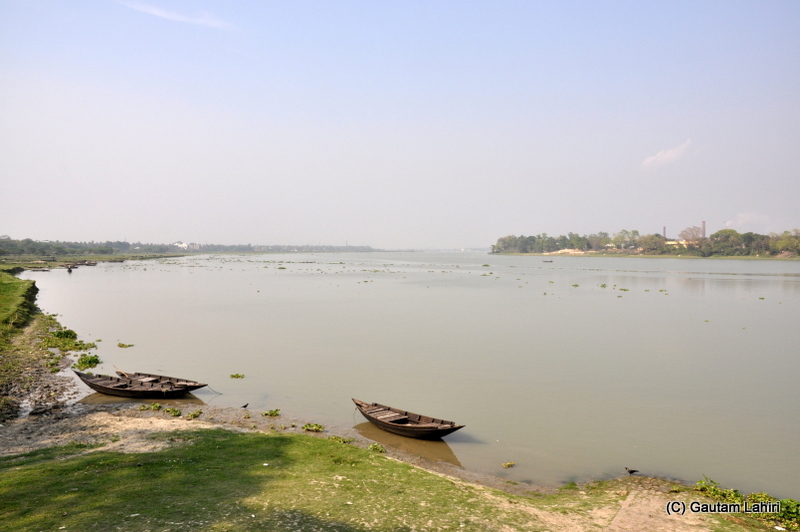
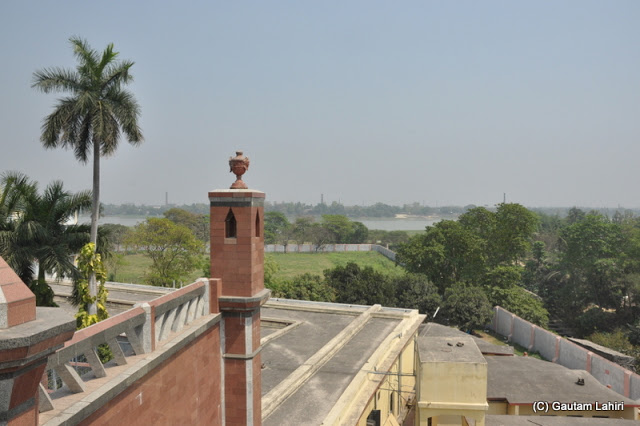
From the rooftop, we were able to see the river Hooghly silently flowing past.
It was getting hot as the sun was at the pinnacle and we also felt, the need to take a short break before we could drive down to one of many historical edifices that festooned this little town.
The local lunch
The locally made lunch consisted of Bengal’s standard afternoon meal, terribly tasty – white rice, pappad, soup of lentils, spicy egg curry and tomato chutney. We surely needed the strength to see more of Bandel and needed every bit of the grain on offer.
My friend had kept only one place for us to drive to and that was visiting Bandel’s famous Imambara.

Famous Bandel Imambara
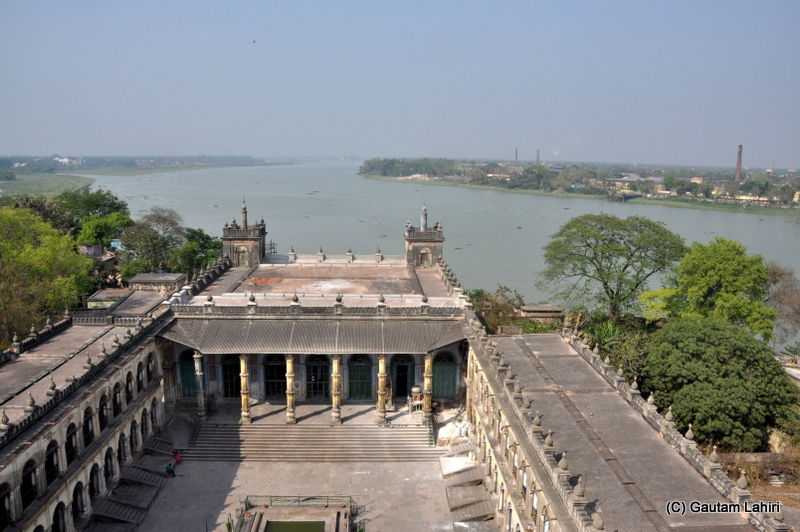
Imambara too resided along the Hooghly river and is an engineer’s delight.
It was created in the memory of a great humanitarian, known as Hazi Muhammad Mohsin.
We learned from a local visitor who was gracious to take us around and explained the remarkable building complex.
The stately structure was crafted by Keramtulla Khan, an architect by profession around 1860.
The complex comprised of a two-storied very long halls, or corridors probably. At the center, there existed a fountain, not operational now, within a rectangular pond. A huge courtyard housed all of these. What I found most impressive were the twin tall towers that stood above everything.
Each tower had spiral staircases and both served the same purpose of providing a visitor of the most panoramic view of the river and you can see miles into the horizon.
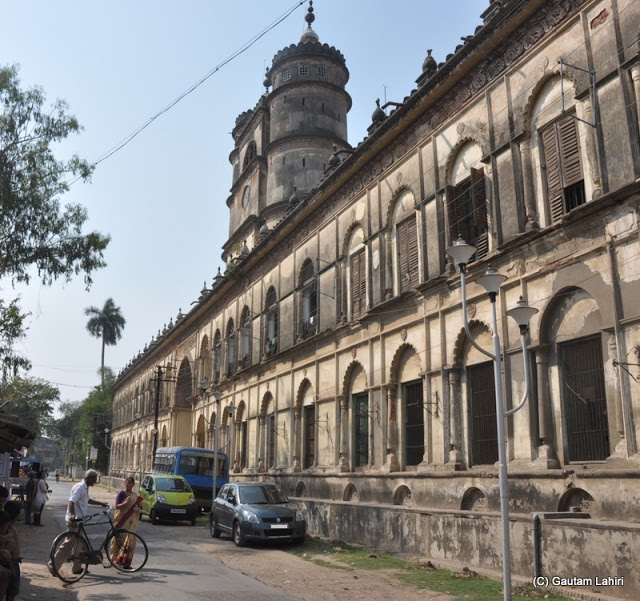
As I moved the camera from one side to the other, the famous Jubilee bridge over the river was caught in the frame.
Tall twin towers over a flat structure looked very different than the surrounding building structures, exuded excellent design.
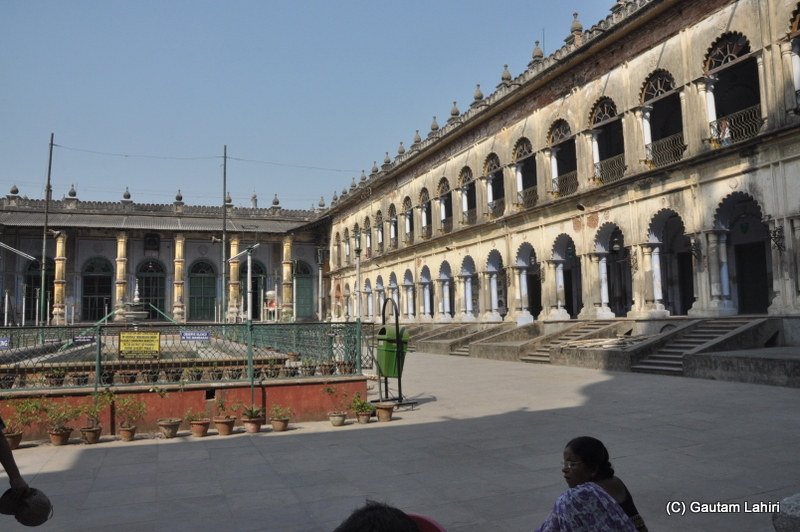
The central rectangular courtyard had construction all around with stepped structures that took visitors into the building.
Artistic minarets could be seen on the roof edges and they looked beautiful.

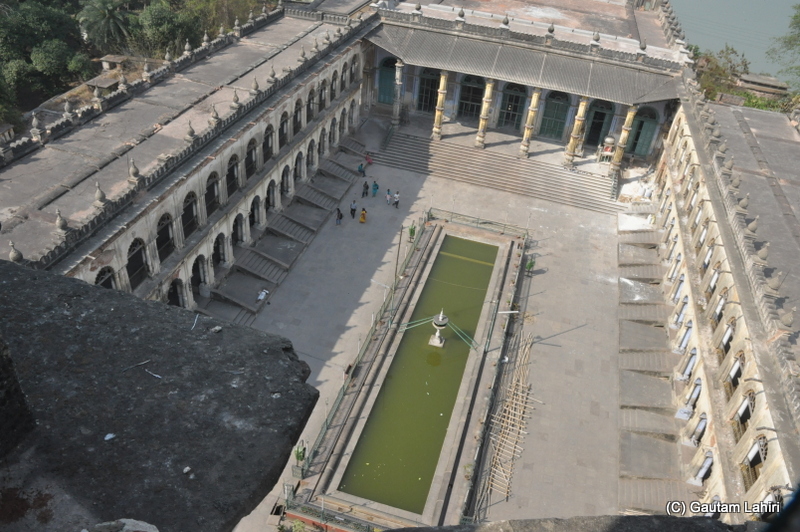

Far away, we were able to see the famous Jubilee bridge that connects the two banks of the river Hooghly and provided critical railway connection between Bandel and other places far and wide.
The incredible Sundial
We came down and visited the rear part of the complex which opened into the river and here I saw the most spectacular piece of engineering, – the sundial.
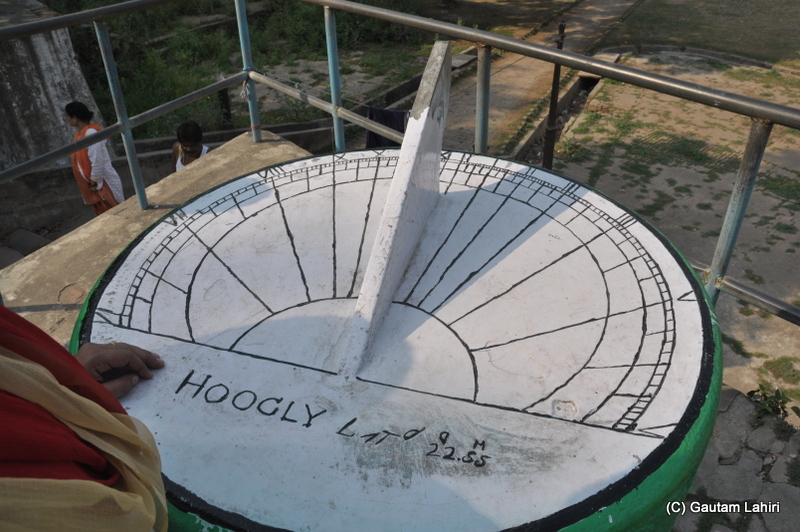
The local guide taught us how to read the sundial and trust me, this alone was the climax of our Bandel visit.
Look at the figures carefully.
Do you see the shadow line of that white angular structure falling on the dial?
The shadow has crossed the Roman III which meant it is past 3 pm.
If you see more closely, where the shadow ends… over two small black lines from the Roman III and each small black line is approx. 5 mins, so this sundial is showing 3.10 pm.
My digital camera when I took the above picture showed the recorded time.
An example of fascinating engineering of the yester years. Such accuracy without digital revolution!

Drove to the nearest tea stall and had two earthen pots filled with hot steaming tea.
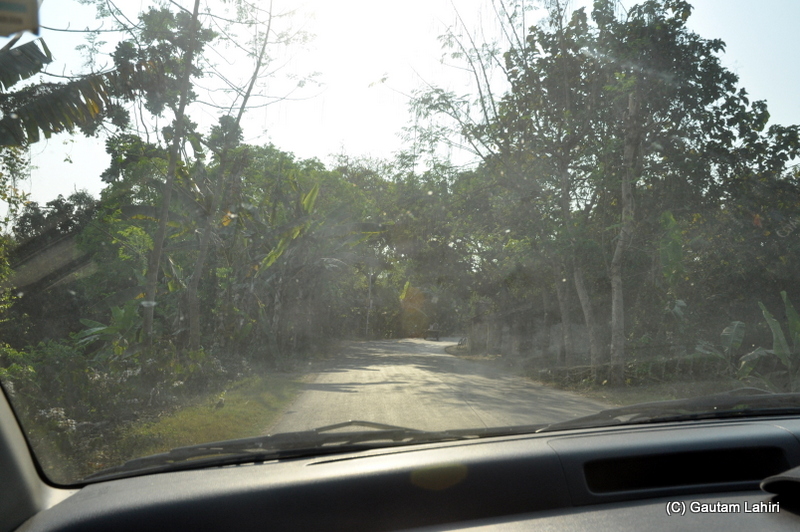
We looked back at the magnificent structures behind us and climbed back on another historic highway, the Grand Trunk road and gunned the engine towards Kolkata.
Facing the western sun, our Swift started eating kilometres as we headed back.
Ages back this same road was used by horses and the cavalry speeding away. Today she feels the tires of the fast moving mechanical machines ..
I wondered how does the road feel? It has seen them all. Perhaps smiles at us.
Inference
- We had a great historic visit of Bandel. We saw the famous church.
- Witnessed the calm and slow-moving Hooghly which has seen all the pages of history with her passage.
- We saw the splendid engineering of the Hooghly Imambara.
- A relaxed trip of the past gave way to the much-awaited tranquility.
- We absorbed the enormous data which we were exposed to at Bandel.
| Distance – Kolkata to Bandel via GT Road, travel time: 1 hr 45 mins | 53 Kms (one way) |
| Places to see @ Bandel | The Bandel church, and the Imambara |
| Car used / Diesel burned | Maruti Swift Diesel 1.2L, 4.2 liters @ 28 Kms/litre |
| Expected tour duration | 8 hrs |
| Pocket pinch | Rs.380(fuel), Rs.250 per person (local restaurant food) |

 SPITFIRE GAUTAM