

The plan was to finish the breakfast, pack and leave the Joypur resort after a three-day sojourn. We had experienced the nature’s glory which was well sustained by the lesser mortals. All were happy with the travel exhaustion.
A faint thread of sadness prevailed too as we had to head back home.
Old airfield location

In a matter of hours, the car would put miles behind us from this cornucopia of greenness and bliss.
The harsh cemented behemoths, of glass and metal structures of the city, will soon make us wear the mantle of androids who would animate under orders and lead a dreary life…
Well, the destiny had plans of its own.

The resort manager who was away during our stay returned. A smiling, pot-bellied outspoken person inquired about our stay. We nodded with a smile when he banged the table and asked us …
“Have you seen the airfield…?“ “Airfield!, what about it..”, the three of us, die-hard aircraft lovers beamed with joy.
Hunt for the airfield
The manager informed that about thirteen miles due north-west, there existed an old British made airfield of second world war within the forest cover.
He did not get a chance to finish his sentence.
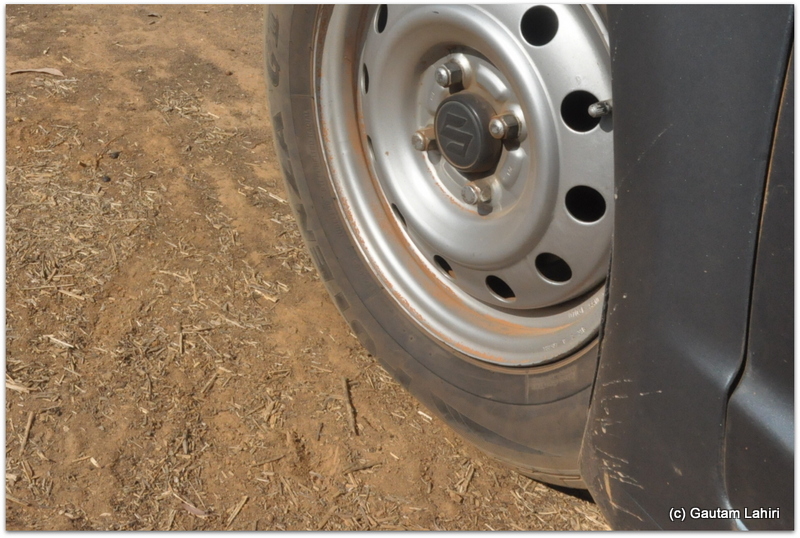
the seventy-two years old tarmac of the
Royal Air Force airfield. Excitement knew no bounds
The three vehicles, a Toyota Innova, and two Swifts roared their engines as we bolted out of the resort and took a left turn and headed for the abandoned air station.
At about eight kilometers towards Bishnupur, we veered left off the state highway 02 and bounded over the red lateritic soil of the dirt track.
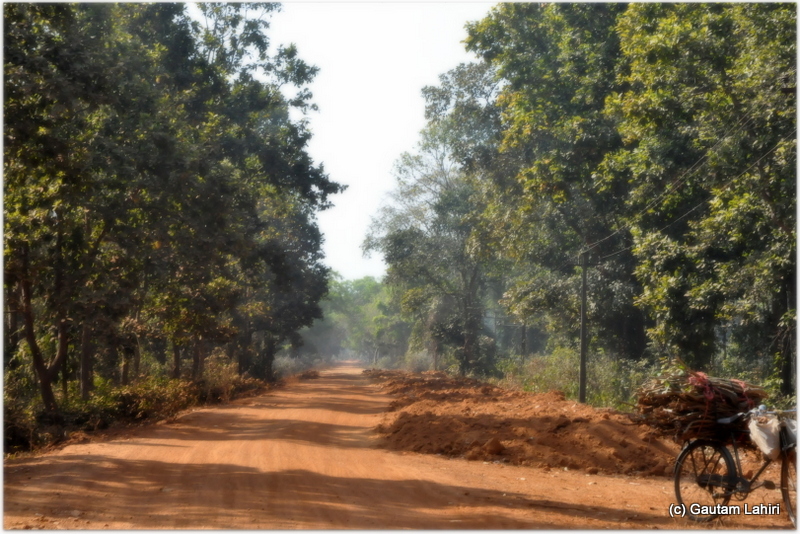
There was no road, a clearing among the woods that crossed a level crossing and meandered its way deeper into the greener pastures.
Are we in for a bigger surprise of seeing wild animals? Excitement numbed my senses and I eased the right leg off the accelerator.
The Innova led the brigade throwing a pall of reddish dust in front. Our smaller cars ran in its wake.

make adjustments at the slightest danger
Remember, we were daring to drive into the wild territory. Animals had the right of way, and not us. The road climbed and fell.
A dried upstream bed ran across the path which had created short gorges and the Swift bounced as we crossed them.
Drive through dry woods
The forest was so deep at this point, that the horizon had obliterated itself.
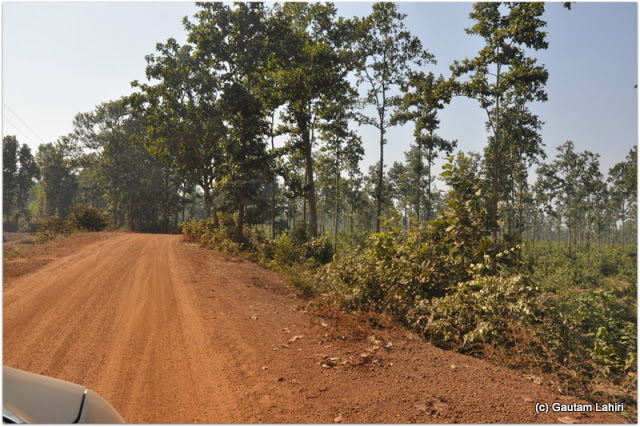
window to catch slightest of any movement ahead
The sound of the crunch of tires over the loose gravel and stones were enveloped by copper colored dust was a spectacle to remember.
Passing woods fascinated us. Kept a sharp eye behind us if anything other than a car followed us.
The road was quite narrow to make any J-turn, in case of an exigency.
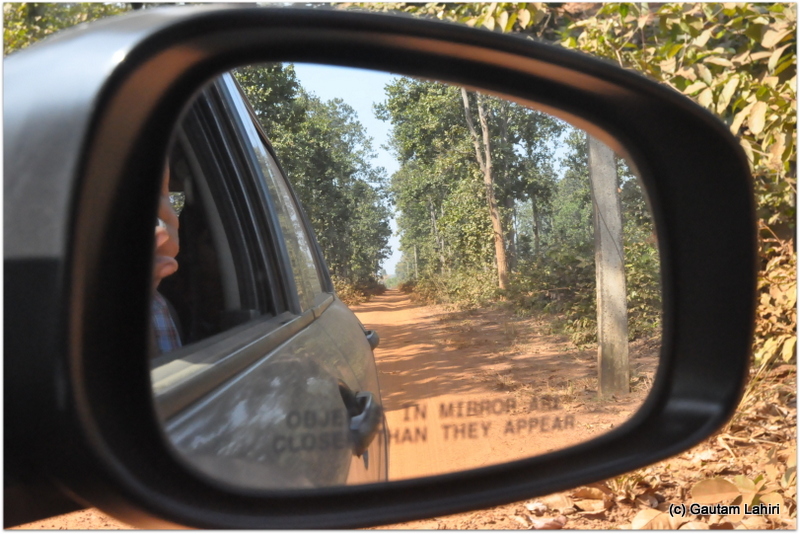
distance was not an animal but the shadows cast by the trees
About fifteen minutes into the drive, the road started to become narrow and at a place, it disappeared altogether. We now had no tracks to follow.
Driving through the thin line that lay ahead we reached a sharp right turn which brought us on a high mound of hard mud ridges.
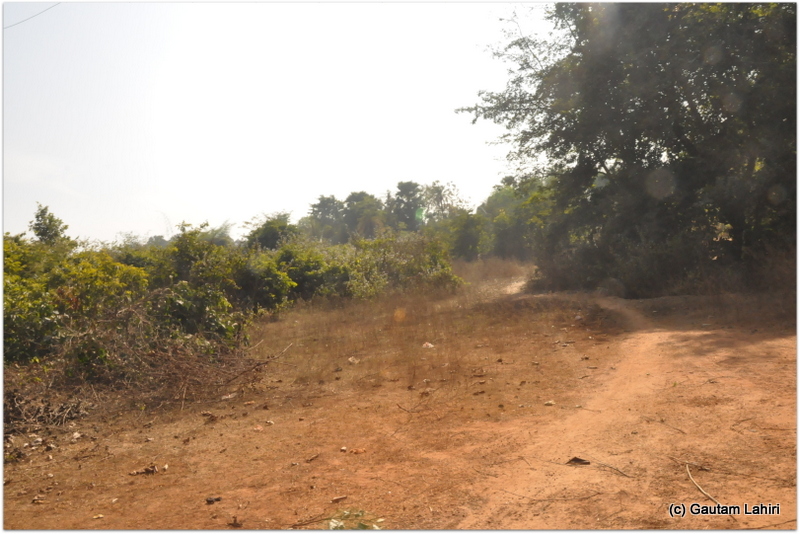
trees. We were on our own
We saw a man-made structure, a hut.
Good! So there were humans around. We can approach them for directions.
The Google maps failed us and started recalculating, our onboard technology was a mute spectator.
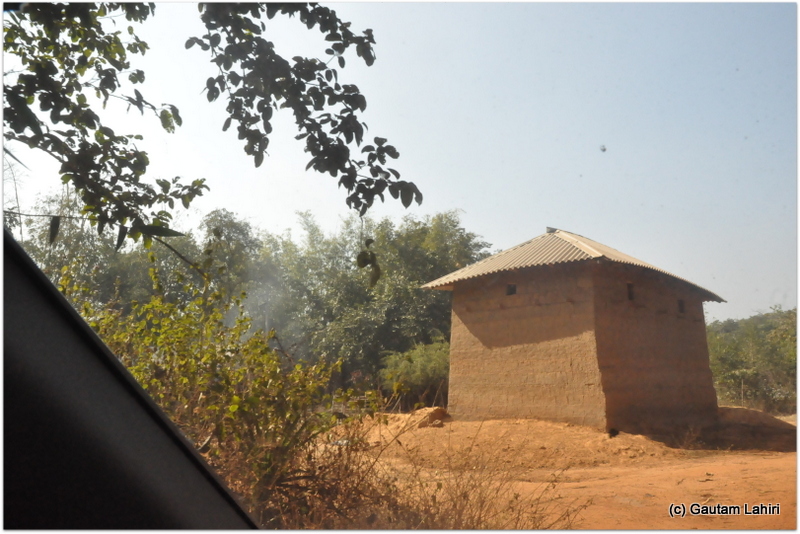
We heard the beat of a motorcycle engine. We had company. The leading Innova exchanged pleasantries with the rider and he most graciously accepted our request to show us the airfield.
Our initial excitement was back. We had a guide to fall back on.
Bush lined old runway
And, suddenly, the forest receded away and we screeched to a halt on hard man made road. We had reached the airfield.
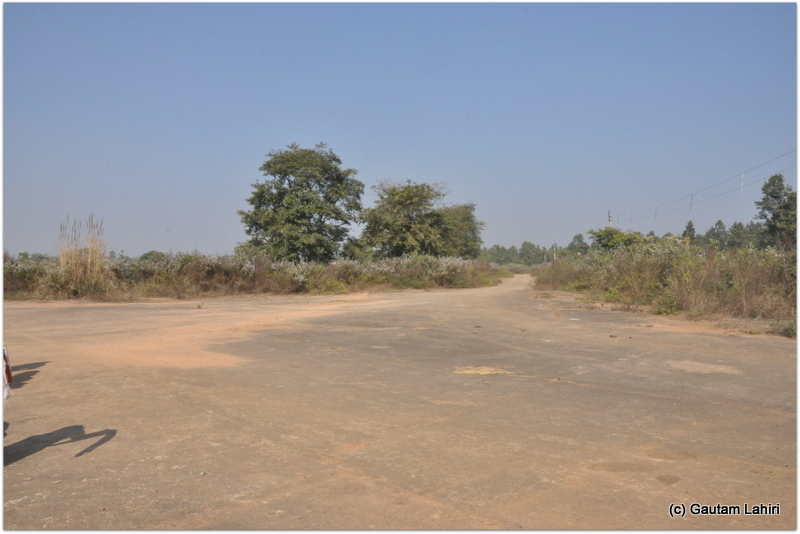
The tarmac was so brilliantly built that even today, the robust patchy surface can easily take the pounding of an Airbus A320 undercarriage.
We were awe struck at the engineering and the quality of the materials used.
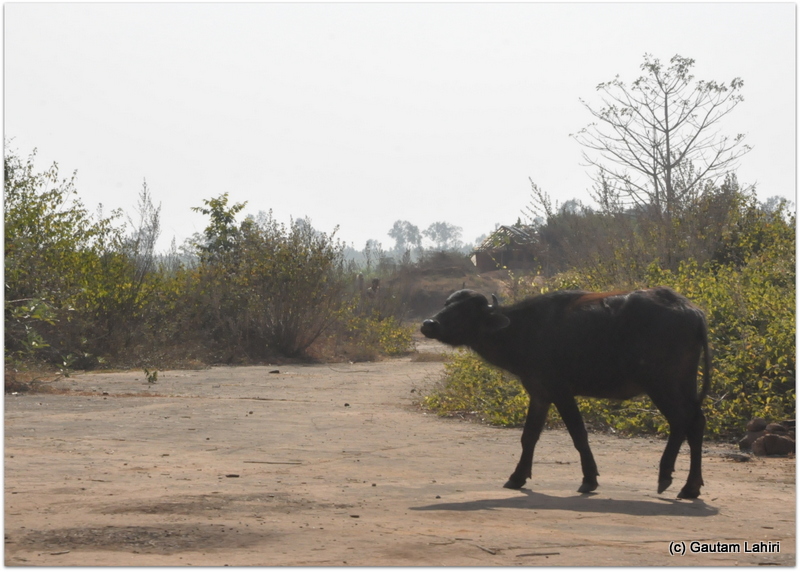
or pilot officer but a lone buffalo happily grazing
in solitude with a muted bellow
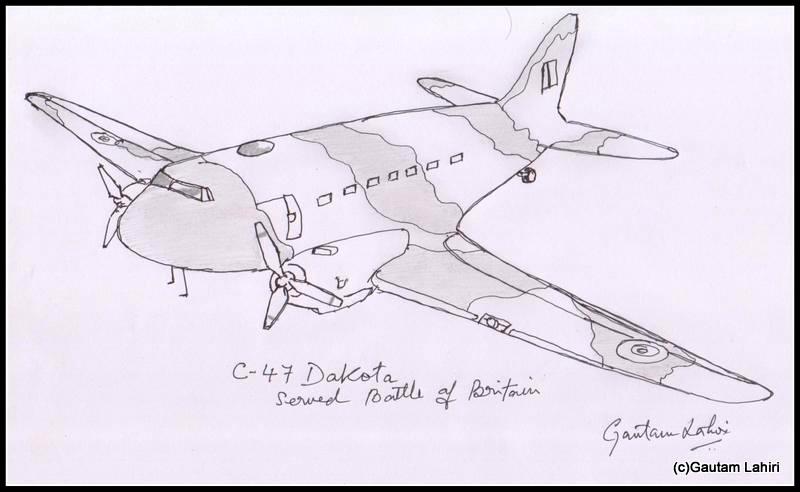
The airfield was large and was about three kilometers long. Perhaps it flew Supermarine Spitfires ,Hawker Hurricanes or Douglas DC-3 Dakotas.
This was not made for large aircrafts. There were patches of vegetation where the tarmac had given way to the soil beneath.
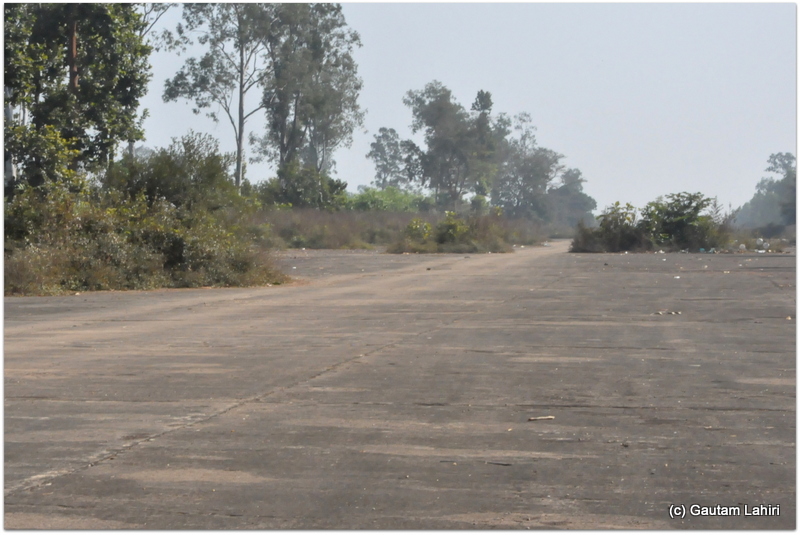
Imagine, we were standing on an abandoned airfield. What kinds of aircraft flew in those days. The area may have been busy with young flying officers, air traffic controller, radars.
All gone now. What is left is the land on which the fighters and transport aircraft landed and took off. For some fleeting moments we thought to be in two Spitfire fighters and a DC-3, Dakota as we saw the field from within the car windshields.
Airfield layout
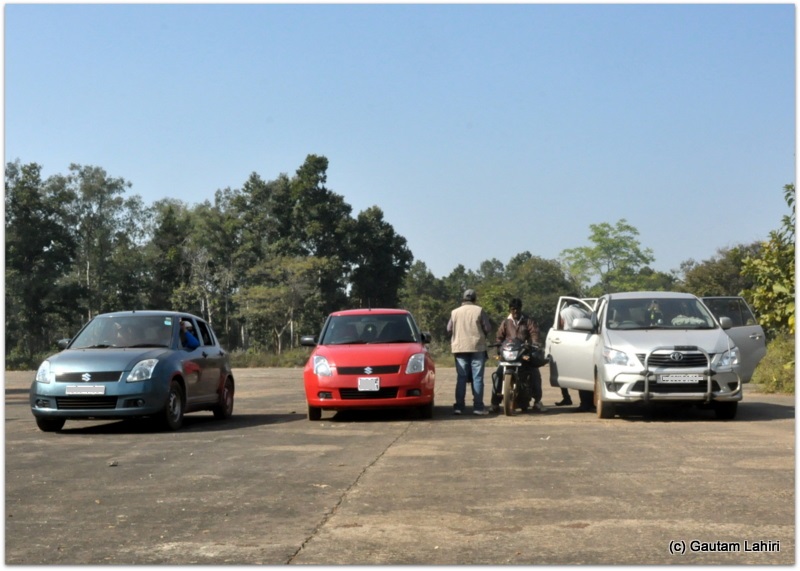
of the sorties we had to make over the enemy territory
We lined up our vehicles and made a dash towards the farthest end, as much we could drive and then spread off to stop and make a U-turn.
All that we did not have were polyhedral wings attached to our vehicles of the second world war airplanes. We stopped after our childish rounds to see what else lay in store.

had sentries perhaps guarding the airfield.
After making a turn, we stopped to catch the all round view from atop the tower.
The jungle was intimidating with its thick scattered growth of bushy trees.
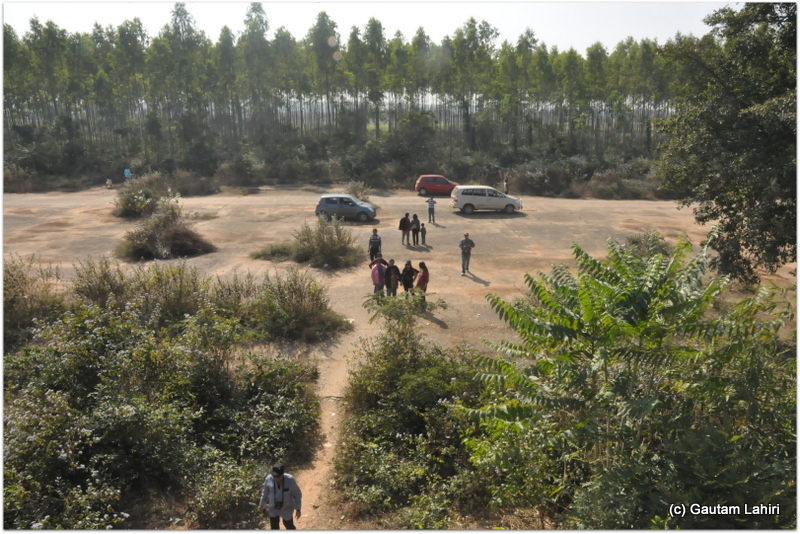
The tarmac and the taxiway merged all into one. This was definitely the main runway which the fighters used for take off.
Interestingly, there was no other structure that was visible.
Our Air flyers
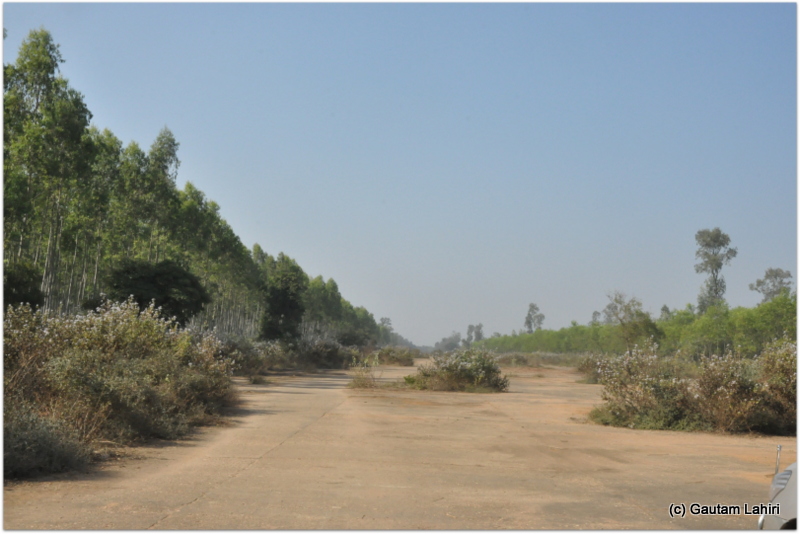
the take off run. Our excitement was at its zenith
Let me present you, the car based flying crew who made it this far..
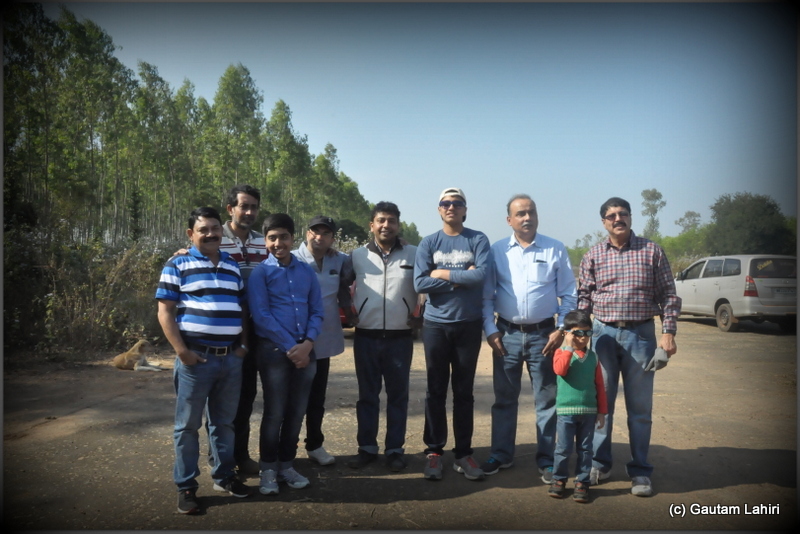
the aircraft without wings
The ladies flying team who pitched in as pilots in case the main flying force diminished.
They also responded to the logistic support calls of the grounds team.
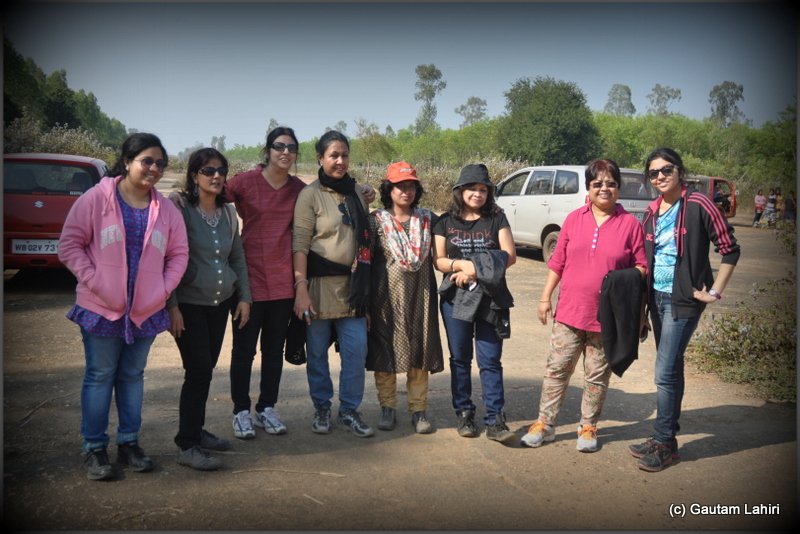
the DC-3 transporters ☺️
We spent about two hours, on the old airfield and kept on thinking about the conditions under which the the RAF (Royal-Airforce) operated.
What aircraft they flew? Surely, trucks and CJ Jeeps may have been driven all over the area.
All gone now and what is left is the virtual canvas with paintings that came from our memories.
I, felt very nostalgic, as the place made me remember the “Commando” classics that I used to read in my child hood days.

I still read if I can get my hands on them.
Having had an incredible time of adventure, pure fun with friends, we set our course ten degrees East to head back home.
I climbed back into my Swift or should I call, a Spitfire.
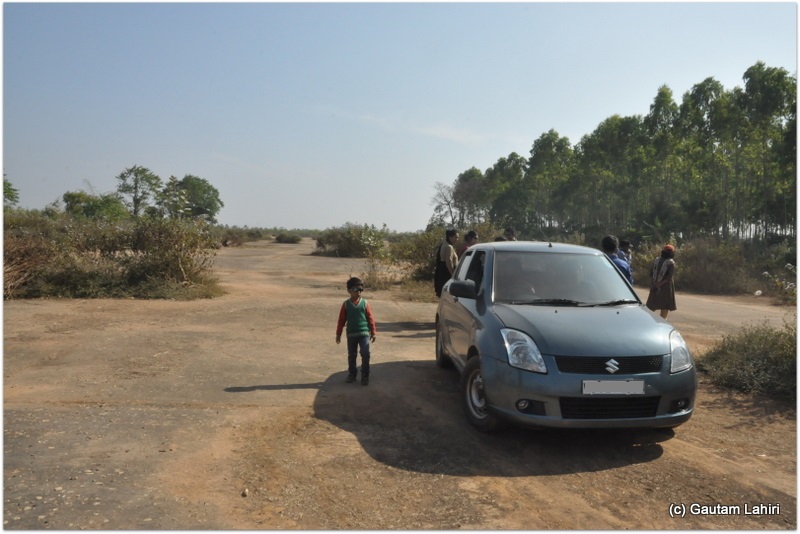
I looked at the watch tower or the ATC (air traffic controller), requesting permission to take off.
The four cylinder engine burst into life.

meant, the night was not far away
The three cars made their way out of the historic airfield, sailed smoothly on the seventy years old concrete air field, with a coat of bygone dust.
Turning right as the convoy hit the State highway 02, the vehicles gunned their engines.
Six hours of drive and the windshield view of the British airfield was replaced by the looming structure of the second Hooghly bridge over the river Ganges. We had reached Kolkata.
Inference
- We saw a British airfield of the 1930s’ or 1940s’ which was 13 kms away, North West from the resort.
- This place should be explored in the day time as the area is densely forested.
- Chances of getting lost is quite high, visiting in a group is advised.
- Winter should be a preferred time of the year as sun blazes down.
| Places to see around the forest lodge | Forested trails, the highway, water bodies, small hillocks |
| Time to explore | Early morning in groups but not around late afternoon for its remoteness |
| Winter clothing | A light jacket with a pullover. It gets hot around noon |
| Distance from the Joypur resort | 13 Kms North West |
| Pocket pinch | Rs.1250-Rs.1300 (Fuel), Rs.3000 Per Night (Standard Room), Rs.7500 Per Night (Deluxe Rooms), Non Veg Dishes Range Around Rs.320 Adding Up To Rs.400 Per Person. |
| Part 1 – Joypur forest refuge, an unforgettable drive | https://wp.me/pbXnOA-CP |
| Part 2 – Ambling around the Joypur forest resort | https://wp.me/pbXnOA-Co |
| Part 4 – Self sufficiency turns Joypur, a fresh heaven | https://wp.me/pbXnOA-zV |

 SPITFIRE GAUTAM