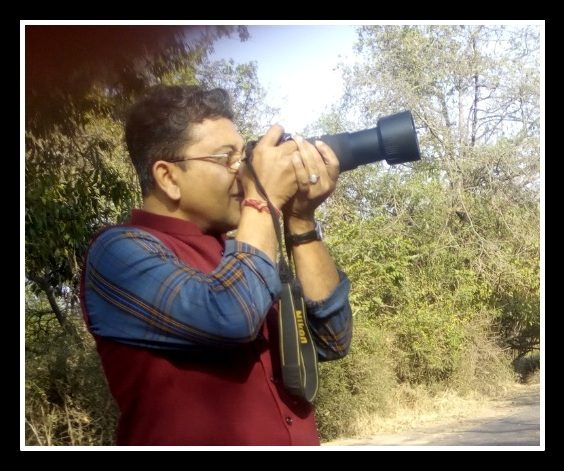


After our thrilling experiences in meeting the felines, which I am sure you follwed us in Part 3, we had the Kanha museum on our radar.
It usually gets difficult to speak when tongue fights a pathetic battle to concentrate both on the food that was being savored and the eagerness to talk at the same time. You just eat …
Deep forest excellent food😋
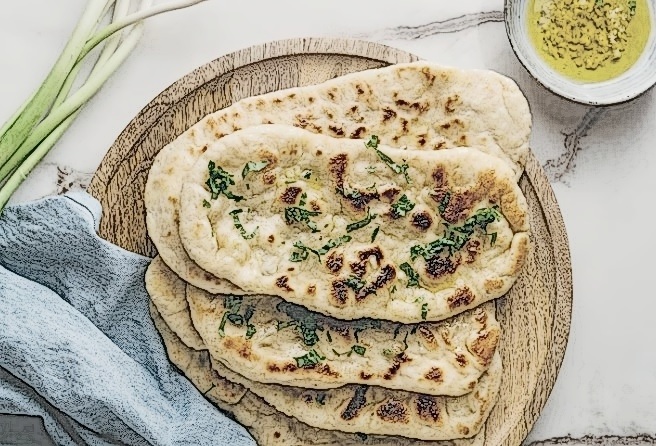
This was so true, when the ‘aloo paratha‘, our bread dish for that morning met the spicy and extremely well-made egg curry.
Our salivary glands were working full steam. An inexplicable bliss within the mouth reigned high when a spoonful of mango pickle was added to the cauldron of tastes.
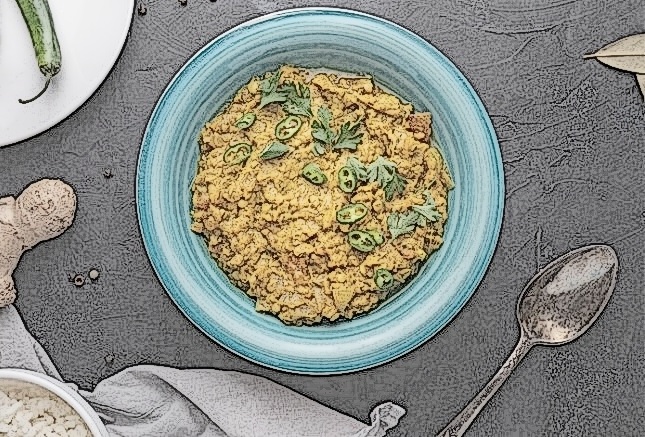
We devoured the concoction at the Kanha’s cafeteria which had been offering mouth-watering dishes since we visited the national park.
Our tour manager gave us ten minutes to be ready from boarding our old warhorse the Gypsy which would take us for the last time through the rolling grassy meadows of Kanha to the museum which awaited to tell the tales of wildlife.
It was our last day at Kanha and we wanted to absorb every bit of this fascinating Wildlife Sanctuary Kanha.
Forested tracks, Kanha 🌿🍃
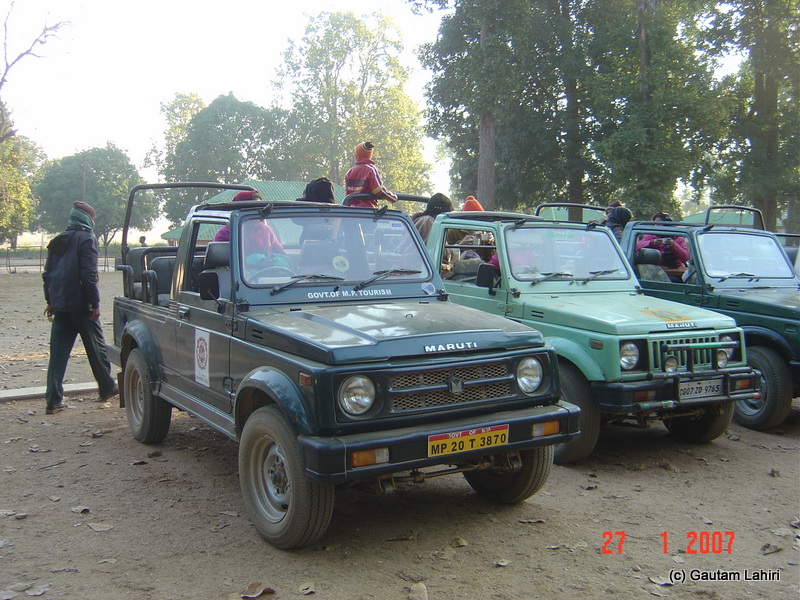
visitors got a chance to see the natural life that existed in Kanha
By now we had acquired the knowledge of the jungle roads to quite an extent. The dusty roads fanned out of the Kisli gate entry into the wilderness.
The forest museum at Kanha was not very far off at least that is what we learned from a fellow traveler. To remain dipped in the Kanha’s flowing beauty of nature’s bounty, we requested the driver to reach the destination taking a circuitous route at the wildlife sanctuary Kanha.
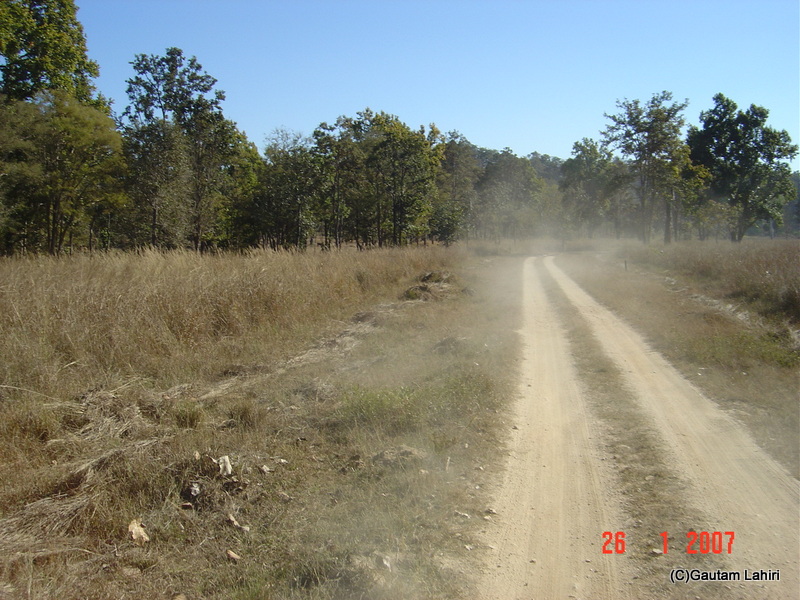
The unmistakable valleys covered with vegetation soon started passing our three hundred sixty degrees view as our heads made continuous scanning arcs.
Winter added a great flavor to the tour with its crisp early morning breeze.
Peering wildlife🌿🐾
Gypsy is an open car, and when we stood out or faced the wind square on, the driving air made our noses and cheeks numb with cold, or more appropriately by the cool thrill which always built up when the forest presented itself around.
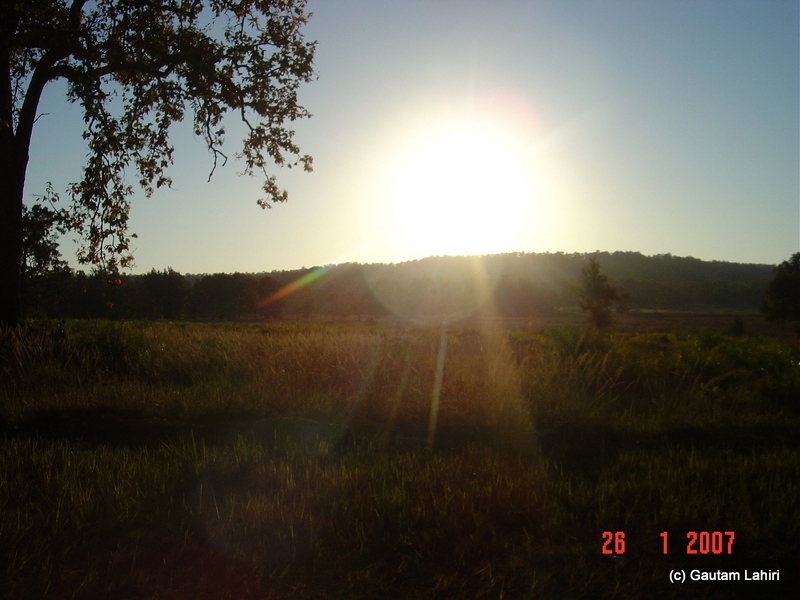
drenching the tall grasses and trees with a mix of crimson and green light
At every turn of the road, an expectation existed to see something different.
On our way, we saw horned bystanders who ran right in front of us into the thick undergrowth and once undercover strained their necks to gaze back at us.
A couple of sambars gave us company for a while.
Mid forest museum🏛️🦌
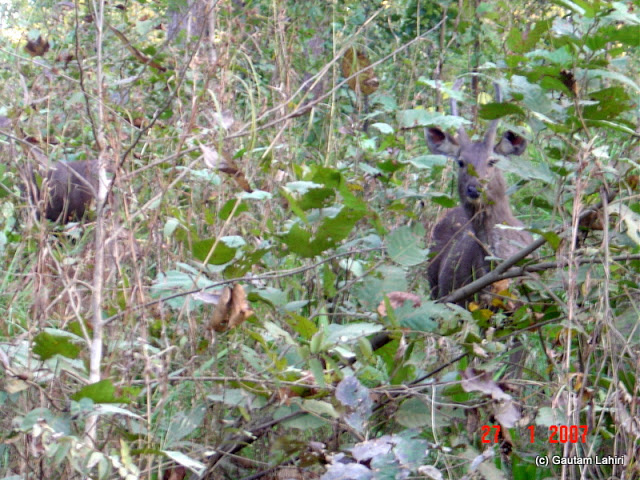
The dark coat of its hide giving way of its presence
We finally reached the museum. It was nestled in a sprawling area. Tall sal and mahua trees ran wild around the parking space.
We made our way into the flat single storied edifice nestled among rows of tall trees.
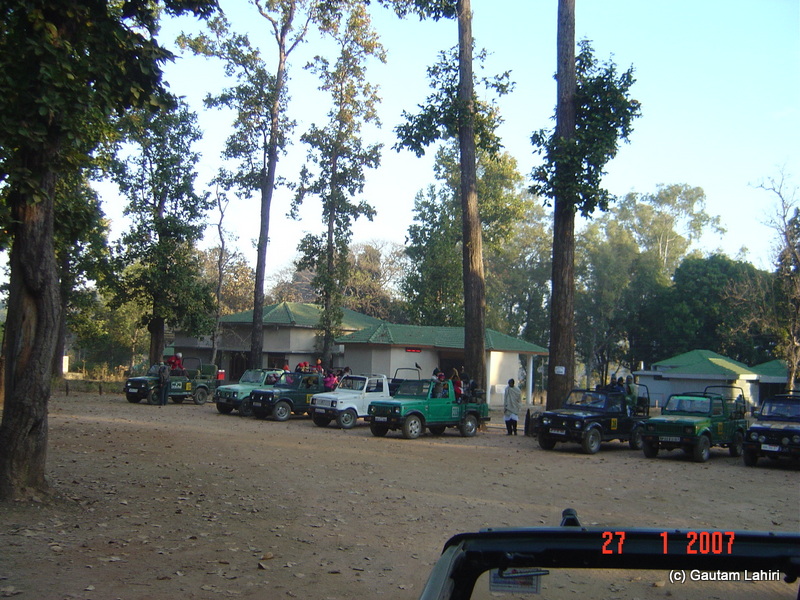
Neatly designed, the green colored slopped roofs were propped by gothic pillars.
With due permission, I trained my camera on to a few snaps that were quite unique. A section of the stone-laden pathway was created within which skeletons of the big cats were kept. An interesting assemblage of the animal framework on display.
Modelled wildlife🖼️
Descriptions and annotations were everywhere for the wildlife exhibits & artifacts .
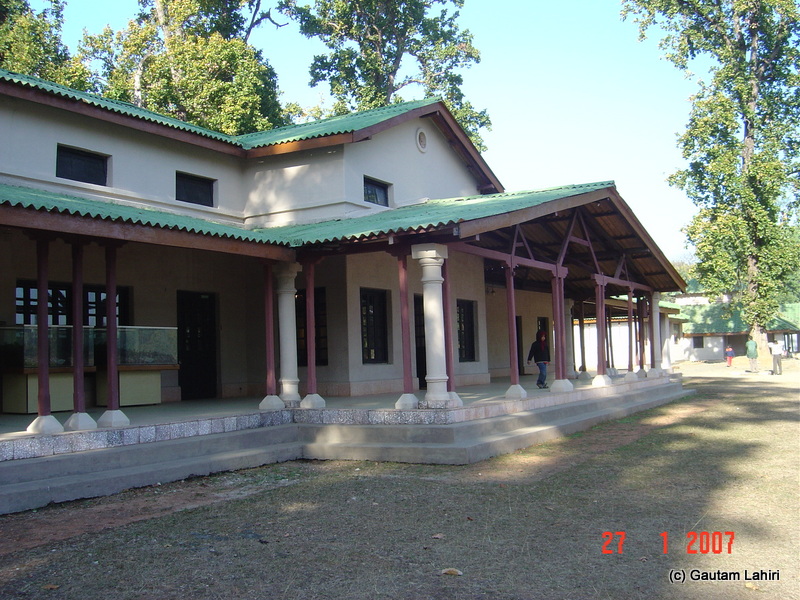
remained under shadows of gigantic trees
A few exhibits caught our attention and they looked so terribly real. I found a man-made replica of two deadly snakes that abound not only the forests of Kanha but the entire Indian subcontinent.
The guide told us a few morbid stories of humans losing their lives when they inadvertently crossed their paths.
Creepy reptiles🐍
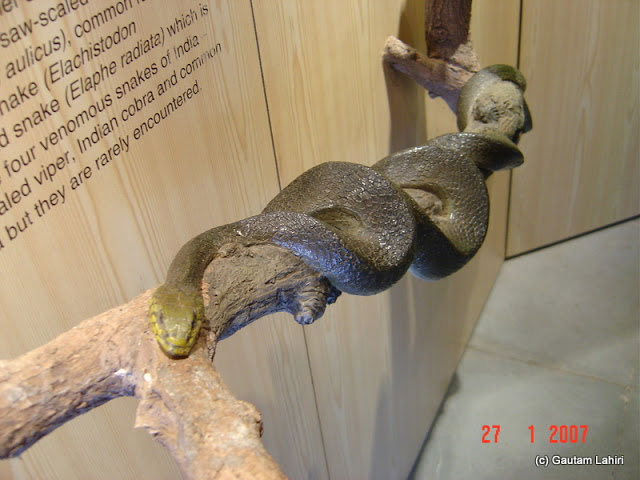
A cobra, a bow constrictor or a rock python can be as lethal as the big cats. The only difference is a cobra does not eat humans but kills.
However, pythons are known to have crushed humans and devoured whole.

artificial rock created atop which it was rested looked
uneven and flashed the display lights above
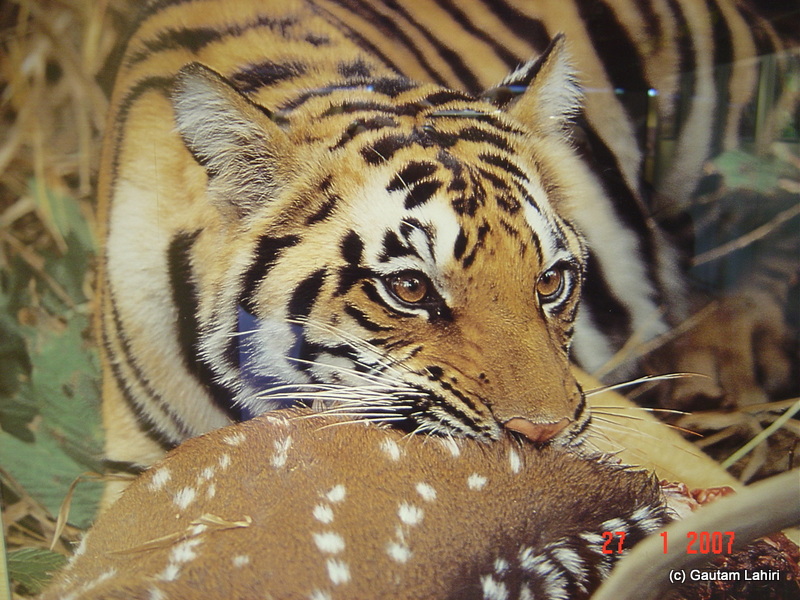
As my camera panned from one item to the other two very different images of a tiger presented itself.
A picture showed the tiger attacking or grabbing a deer.
Cat kills🐅💀
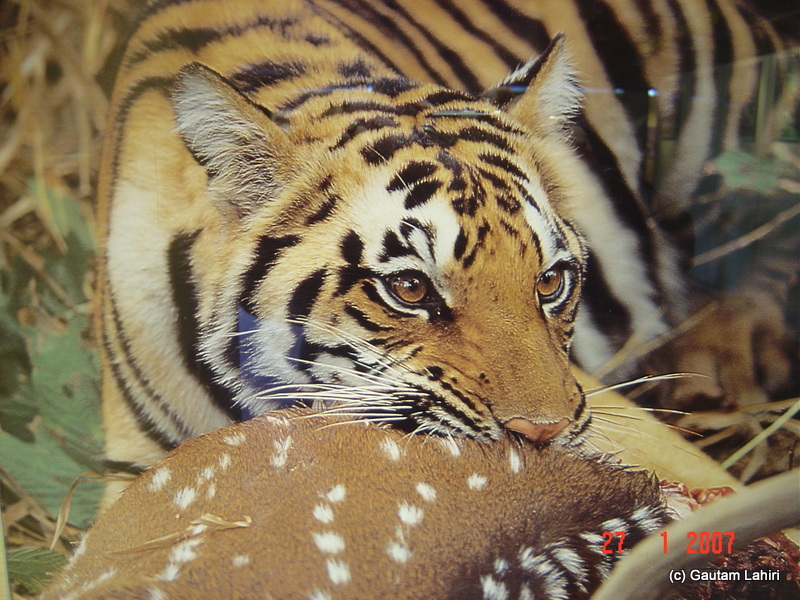
by the picture at Kanha’s museum
The other one was quite gruesome. A half eaten wild boar; a struggle between the life and death in a jungle.
It is the battle which has been raging since, time immemorial.
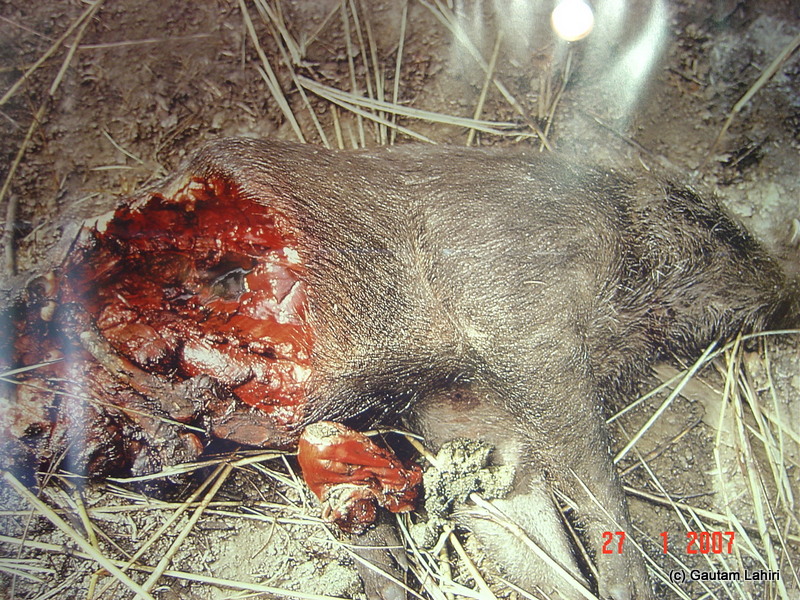
rear eaten away caught every visitor’s attention
A great account of tiger’s pug marks was on display. I wished I had the time to read the exhaustive documentation and the process by which a pugmark of a tiger is identified.
It is indeed a science by itself and zoologists or veterinary specialists do not have to memorize the ways and means of identification.
Every pug mark was distinct and unique.
Museum encircle🦉📚
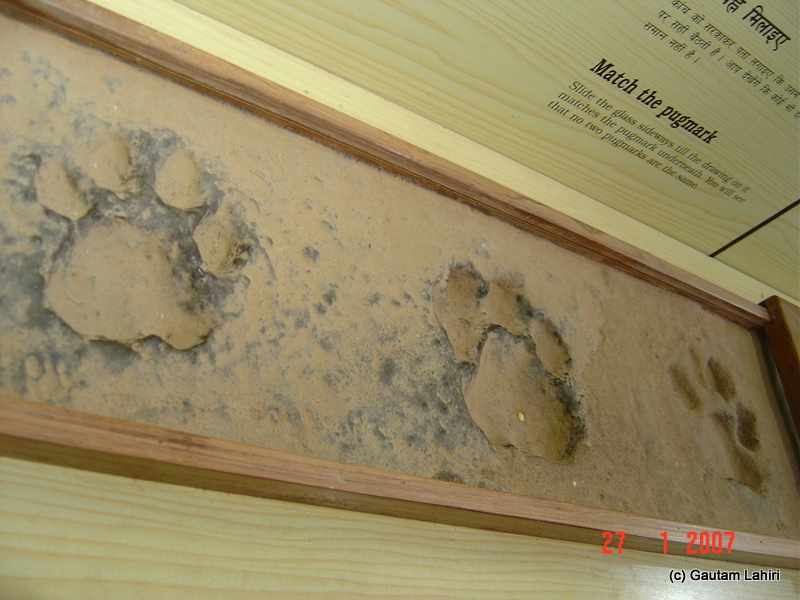
The only give way to a tiger’s presence
We had completed our tour of the Kanha’s natural archives and walked to the rear of the museum to catch some fresh air.
There was a stream which ran at the rear of the building. A small clearing of grass and shrubs leading to one of the innumerable water courses that feed the bigger water holes of Kanha.
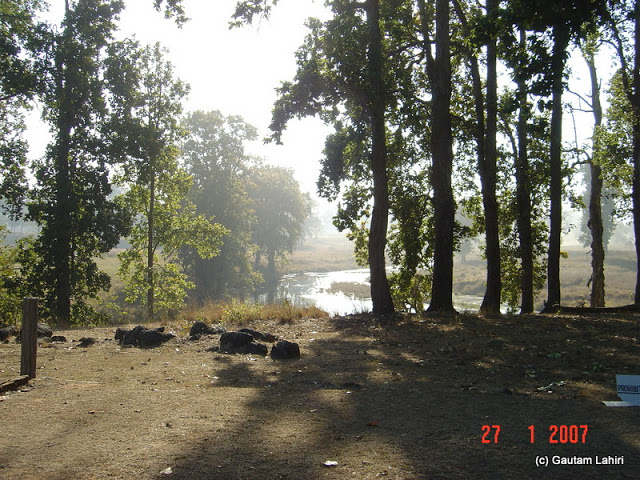
The colossal trees cast their shadows on to the ground with the faint white glow of the rising sun washing the surrounding countryside was a spectacle that soothed both our eyes and soul.
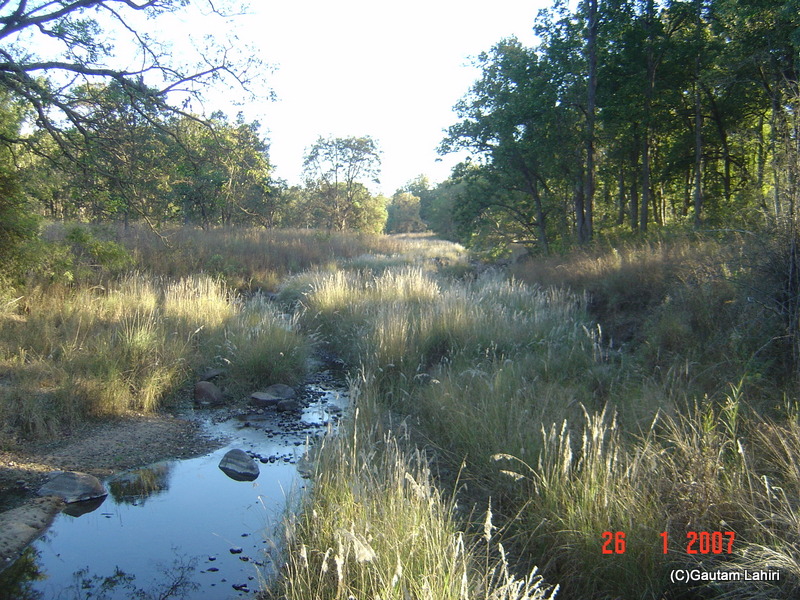
Echo tourism at its best. After spending about two hours, enjoying the museum literature and documentation, we felt as if we were true experts of wildlife.
However, the forest and its nuances are fathomless. It takes years of exposure and study to even come close to knowing it.
Late afternoon recce🕵️♀️
This time we had our lunch packed with us and was not the full course meal we had gotten used to. We snugly sat in the Gypsy and finished our lunch amidst the open forest.
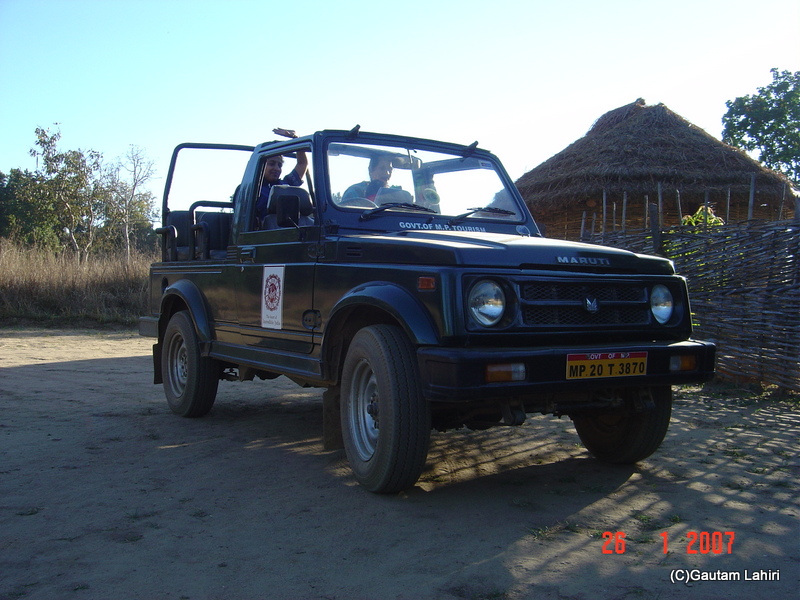
The light cold breeze swept over us putting everyone in a contemplative mood.
Our final passage of Kanha’s exotic flora and fauna, woodlands were yet to come and we eagerly waited to start the drive.

We will meet you soon as we would be driving over the uneven roads through the brown dust haze whipped up by the spinning wheels, refracted by the fiery sun in Part 5 to see more of the spellbinding wildlife.
Inference
- The museum provides the information about the park topography
- It has the details about all the species in the park
- Best time to visit the museum is in the daytime
- Timings > 9.30 am to 6 pm
- No entry fees
- You should keep at least an hour to cover the museum
- Two other museums located around this – Rani Durgawati Museum and archeological Museum near Mandla, Madhya Pradesh
| Part 1 | Part 1 – Just 45° ↗️ to the northeast lies our gateway to the wilderness of 🌳 Kanha Wildlife Reserve 🦌 |
| Part 2 | ✨ Part 2 – Thrilling Drive through the Dense Jungle Trails of Kanha 🌳🚙🐅🌄 |
| Part 3 | 🌿🐅 Part 3 – Up Close with the Majestic Tigers of Kanha National Park! 🌳📸 |
| Part 5 | 🌳 Part 5 – Kanha’s Last Wild Passage Before Reaching Pench 🐾🦌 |


 SPITFIRE GAUTAM