

The rich notes of the sarod, the string instrument from India hung over my senses. The increasing and melodious music filled the chamber in which I was seated.
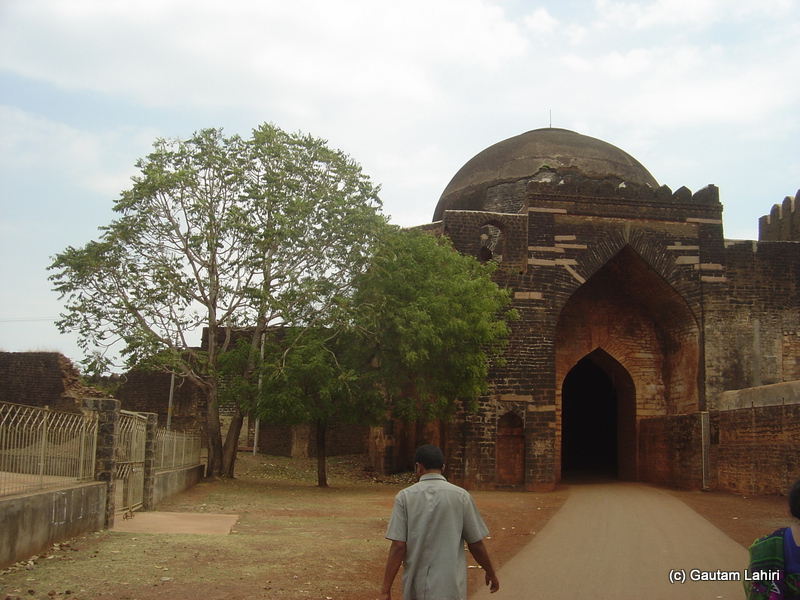
What my slightly parted eyes saw was the ornate terrace with small honeycombed and globular structures on the BIDAR fort’s long walls, creating the silhouette of their own against the crimson western sky.
Fort’s mystical powers
Forts have an incredible impact on me and I cannot but like them for what they are.
The music that ringed around me and managed to numb my senses was Tarana in Milan ki Malhar (in bidar style).
The palliative sound was getting subdued momentarily as flocks of flapping pigeons flew from one wall crevice to the other as they prepared for the night ahead.
Stunning stone phantom
The music, the accompanying stupor perhaps due to driving fatigue and the surrounding burned fort rock with its cordite smell glided me in a fantasy world woven to extreme levels by my mind.

rocky edges of the broken fort walls
As the sarod string resonated, I heard a sound not part of the music but that of light jewelry which was approaching and then, receding into oblivion.
Was it a couple of bracelets that were falling on each other; a heady smell of rose and wine dipped in a penetrating perfume made its steady entry around me. I was not under control. Something extraordinary was happening which I could not fathom. Just then I heard the sound of a light laughter or the sound of a innocent giggle.
Hypnotic rock woman
I tried my best to see through the clouds of fading light the source of the glee and started to see a form which looked like a swirling hand.
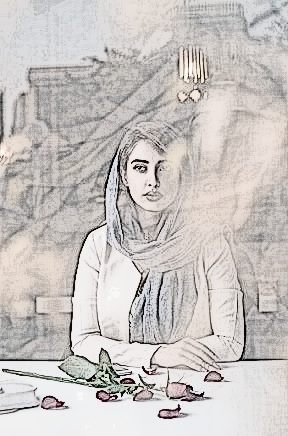
image of a beauty took shape
A very fair hand, shaped to perfection, was delicately wrapped in a blueish white dress appeared in front of my eyes.
The multitude of rings and wrapped ornaments hugged the slender arm. My exploring eyes traveled along the shoulder to see its owner. Stupendously beautiful, with high cheekbones of a harsh mountain country, an aquiline nose met a pair of joined eyebrows. The grey eyes sparkled under the long eyelashes.
Romantic melancholy
For a fleeting moment, our eyes met. They were like dark pools of deep brown and light grey shinning wildly. The look was searing and ran a warm glow along my spine. The base of her nose cleaved into the most artistically drawn parted lips, smeared with reddish pink.

The white teeth that tried desperately to hide behind the lips, failed to disappear and showed itself partly and that was the source of the laughter or the smile.
Who was she?
Her jet black hair formed coils that hung like tendrils of a pea plant over her velvety skin that covered her forehead and danced a playful tune over her light pink cheeks.
A silver trinket sat exposed from within the parted hair studded with the precious stones.
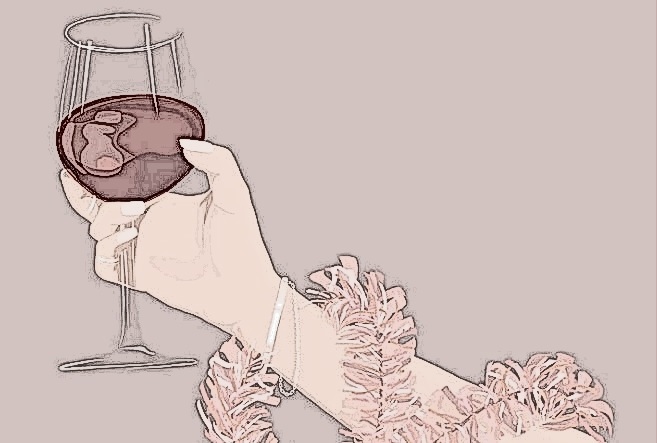
The yellow light of the fading sun was able to wash her with the short burst of flashes.
The intoxicating jasmine ‘attar’ perfume she wore, exuded with every sweep of her hair brushed over me, waves of hot air seemed to have been warmed by the dried fort walls.
Splendid metal artistry
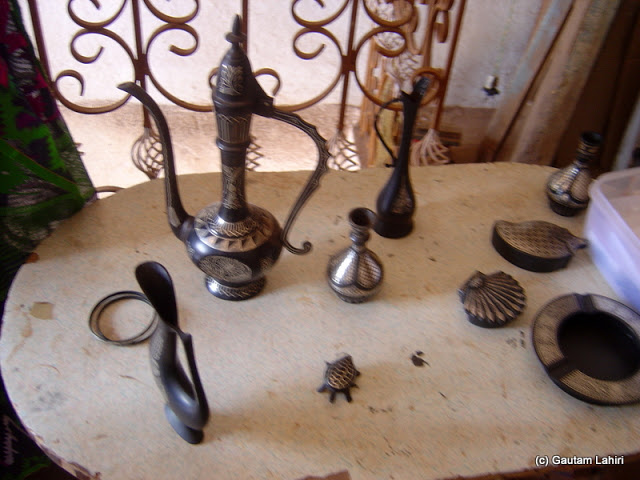
The shapely hands held a brilliantly crafted black wine decanter that gleamed in the unseen light. The slender mouth of the container arched upwards was dripping the dark mahogany colored red wine as she poured with firmness and pride.
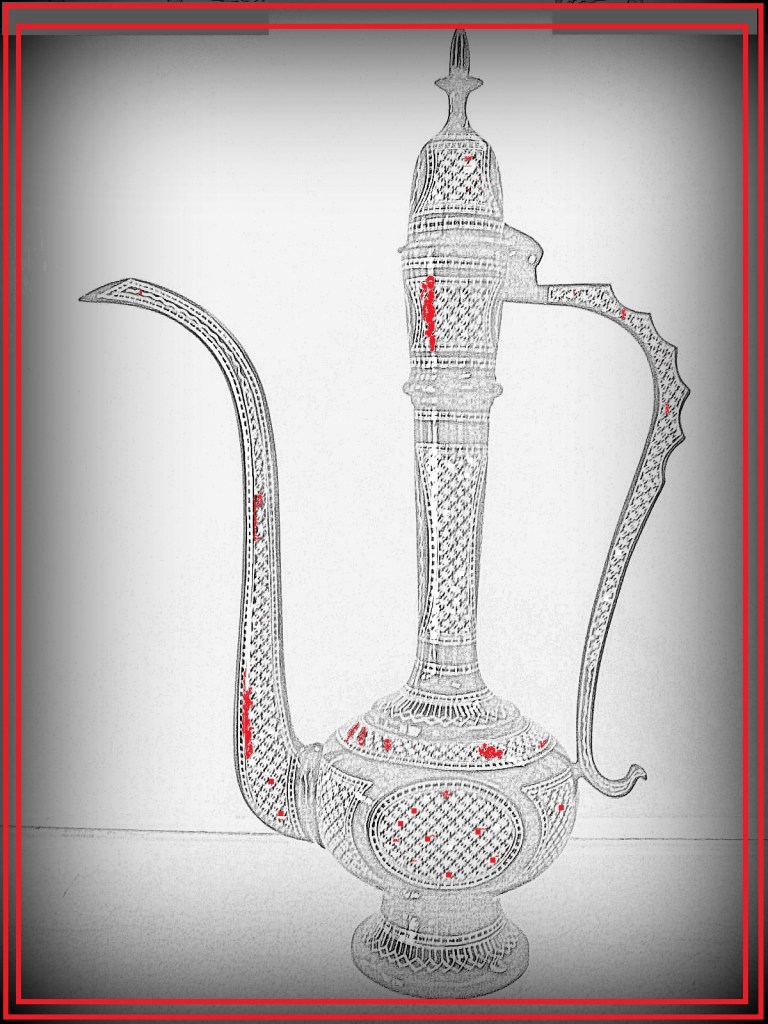
My eyes, and senses competed with each other to snatch a glance at the exquisite art on display.
One was created by human hand and the other by nature.
I drifted further with her and she disappeared like the white fluffy clouds that scudded away above me. She was gone with the same pace at which she had appeared.
Well, my story is not about the beautiful damsel who shimmered within the fort walls, but about the curvaceous metal container that she held with such delicate care.
A violent jerk brought me back from the 14th century to 21st century. I found myself seated on our metal horse, the Wagon R, and the afternoon sun was playing naughty over the fortress. I remembered now, I had dozed off after my tour of the Bidar fort inside my car.
Imaginations had grown wings of creativity.
BIDAR’s metal wonder
The last leg of our tour was to see the exquisite work of Bidriware, the metal craft that was unique and shamelessly stunning.
Kings and emperors who ruled India over the centuries have always left a mark of their own. It can exist in the form of huge forts, or immaculately designed beauties like ‘Taj“.
Over and above the edifices, the other aspect of life which they touched was the world of art and culture.
After our survey of this historic land, we drove through the narrow roads of the BIDAR town in the Karnataka state of India to visit a shop that for generations were building and selling these tasteful objects that may have decorated hundreds of house of both common man and millionaires.
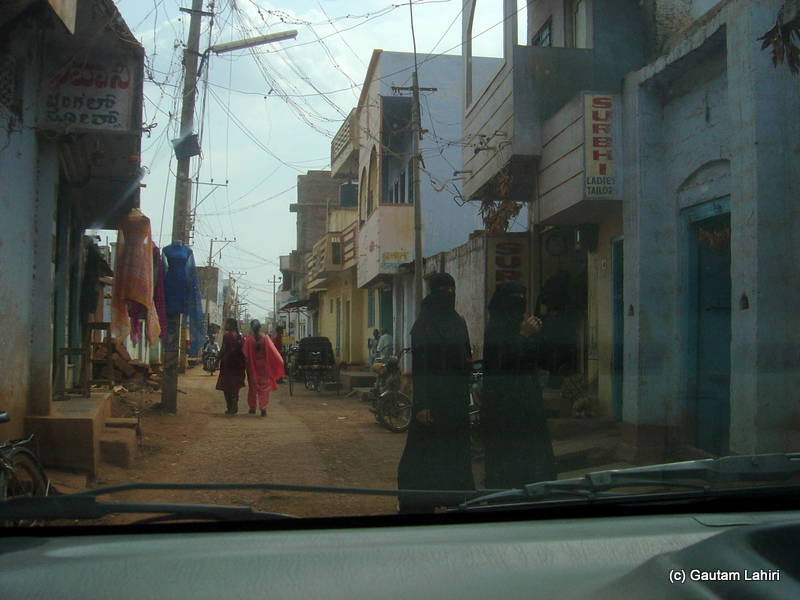
Our guide, Jamail, had been as attentive as ever. We walked into a biscuit colored two storied flat house. A ten stepped staircase took us to a room which was filled with the clanking of metals and rhythmic beats of a hammer.
We reached the citadel of the ancient artwork.
Jamail introduced us to Kaseem who was the sixth generation descendant and held the hammer that shapes the metals. He was courteous and asked us to be seated on a pair of wrought iron chairs.
The story of the black metal had started…
The Metal’s saga
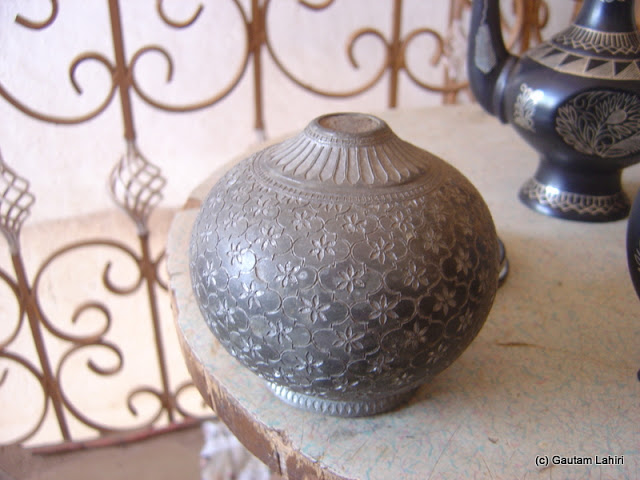
before the Bidar fort’s dust filled its indentations with a blackish glow
This unique craftsmanship hailed from Persia or modern day Iran.
What I gathered, the artwork came to the Indian subcontinent with Moinuddin Chishti, the great saint who touched from Iran to India in between 11th and 12th century. This art came to prominence under a flamboyant Persian leader, Abdulla-Bin-Kaiser.
Kaseem continued.
Grandeur of Bahamanis
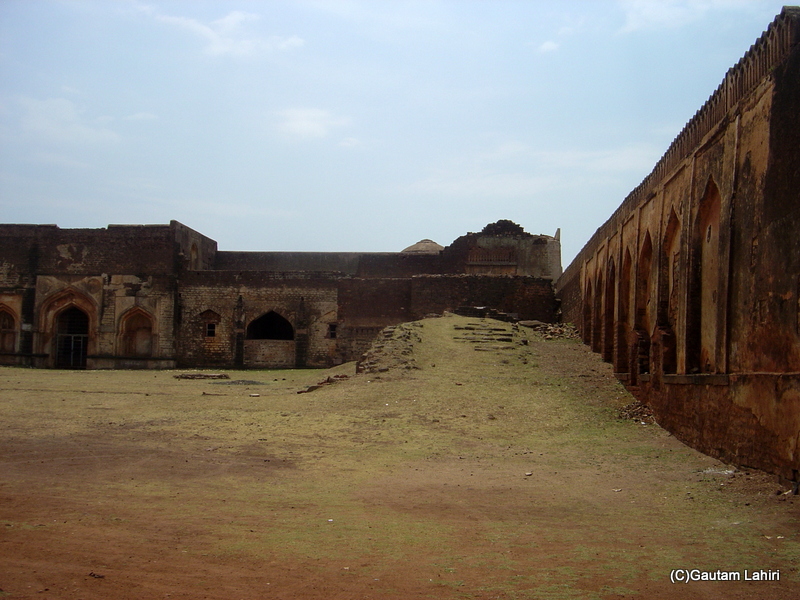
materials for the Bidar’s artistic metalwork
Bahamani kingdom profusely embellished their environment with the power and grace they possessed.
Sultan Ahmed Shah Wali Bahamani was touched by Abdulla’s fabulous creations and he is known to have trained the local artisans, the technique, and engineering of bidriware.
Where else the teachings and training were rendered? Mahmud Gawan Madrasa became the seat of learning for this art.
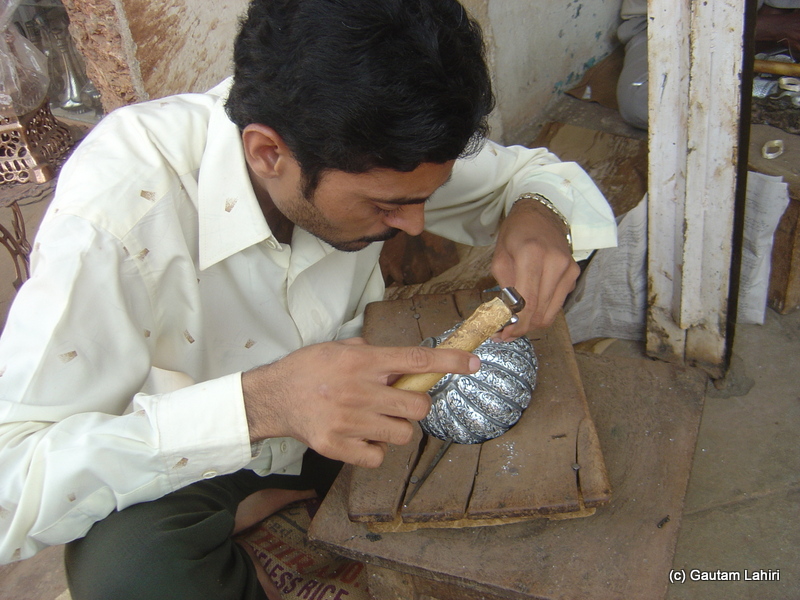
Kassem showed us how he did it. Within minutes the object started to shine.
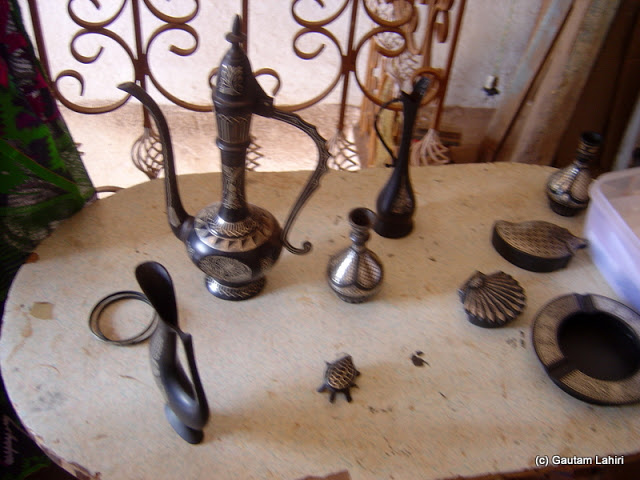
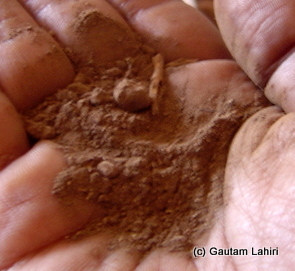
transforms the dull metal to its electrifying texture
Kassem showed us what they do. It all starts with inlaying or putting a pattern of either gold or silver on a steel or copper foundation.
Well, silver, gold or steel in today’s world are darn expensive so the replacement is an alloy of zinc and copper as the base.
These skilled hands draw complex designs of either floral or geometric figures on the lusterless black surface using a sharp metal that puts the lines on it.
Not sure, what degree of truth existed in the use of the soil or broken rubble from the Bidar fort for the art to flourish.
Fort’s unique properties
Kaseem told us a remarkable story –
The fort soil, especially the ones found in the interior chambers of the fort have been transformed by sun and rain for centuries.
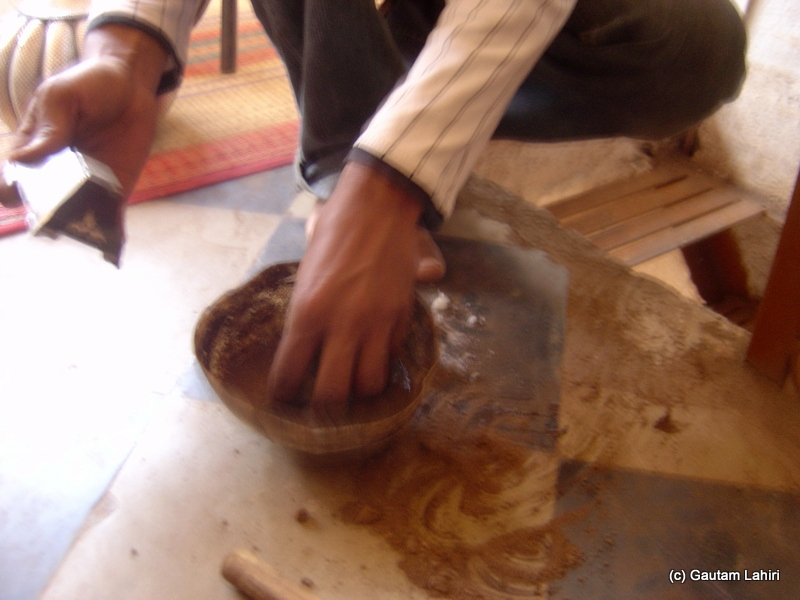
The soil has acquired a unique and strange power to make the metal objects shine when rubbed over them.
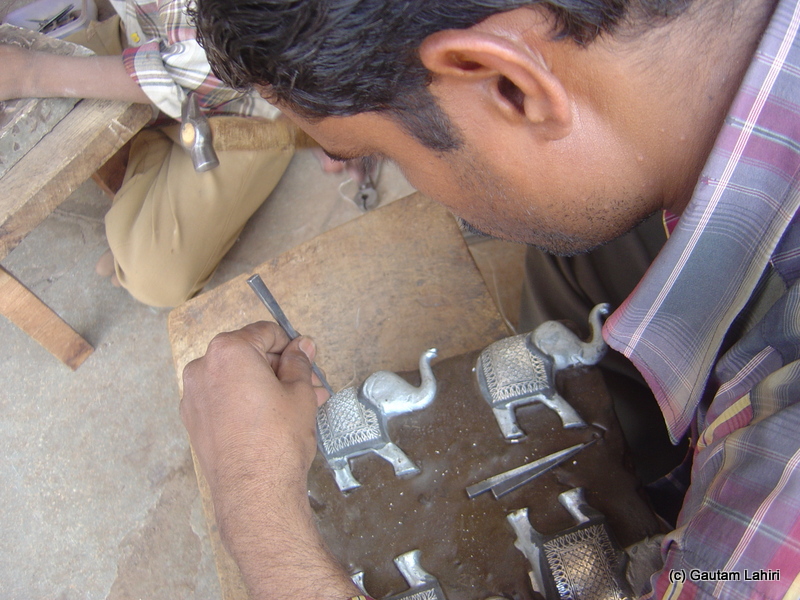
A gap not more than a millimeter where the hammer made its mark, and the flat metal surface took the form of a figure.
These were not products of computer-controlled numerical stylus that was made the figures stand out.
They were curved out by lean, and veined hands of these eclectic personalities.
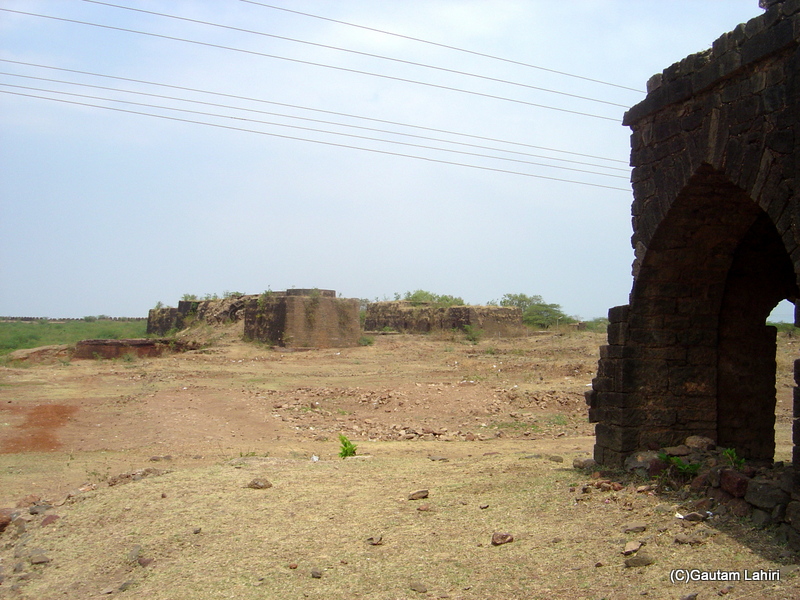
they now provide the backdrop to the great history
Engraved objects were being polished as we wanted to wind up our incredible journey of Bidar.
Kaseem the man in charge got up and offered us the famous Hyderabadi Irani tea, made with loads of sugar and milk. He was pleased to see our interest.
He told us that the new generation is not that attracted to this art anymore and are making beeline for the cities to be part of the modern lives and learn new skills that comply with the modern world demand.
This art cannot die. It is laced with mysticism and has the depths of experience that are centuries old.
We winded up our tour of the place called the “the city of whispering monuments”. I thank you for giving us company to a slightly long account and having shared my feelings of this evocative fort.
Inference
- Bidriware, an ageless and profound craft of inlaying pure silver & gold wires in metal
- The uniqueness is in the soil found at BIDAR fort, which exhibits magical oxidizing properties when dipped, it turns Zinc, the base metal into sheer blackware, and pure Silver inlay shows its original color.
- Founded in the 14th century C.E. during the rule of the Bahamani Sultans
- The term “bidriware” is born from the township of BIDAR, chief center for the manufacture of the unique metalware.
Our BIDAR FORT exploration is a series of three:
| Part 1 – Road to history’s melting pot, BIDAR | https://wp.me/pbXnOA-yM |
| Part 2 – Magical experience over the ramparts, BIDAR FORT | https://wp.me/pbXnOA-y5 |
| Part 3 – Enigmatic apparition held BIDAR’s shimmering black metal | https://wp.me/pbXnOA-xO |

 SPITFIRE GAUTAM