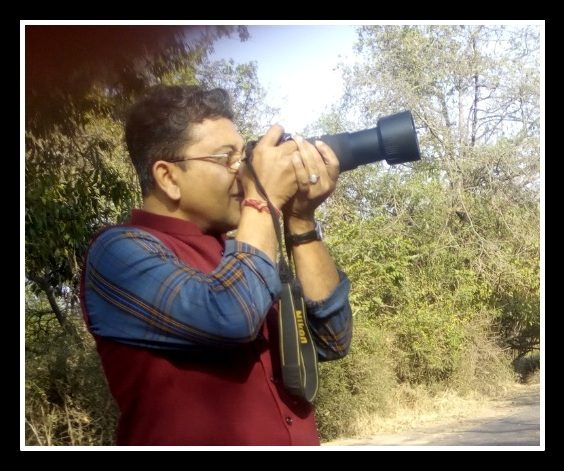


Chunks of history abound the areas that are dispersed around Calcutta, West Bengal India. With the invasion and subsequent settlements by the Dutch, French and British invaders from 1602 AD through 1757 AD, numerous structures, like forts, buildings, hospitals, armory; were built and they still stand across the length and breadth of the state of West Bengal, India.
Where’s Chandraketugarh?
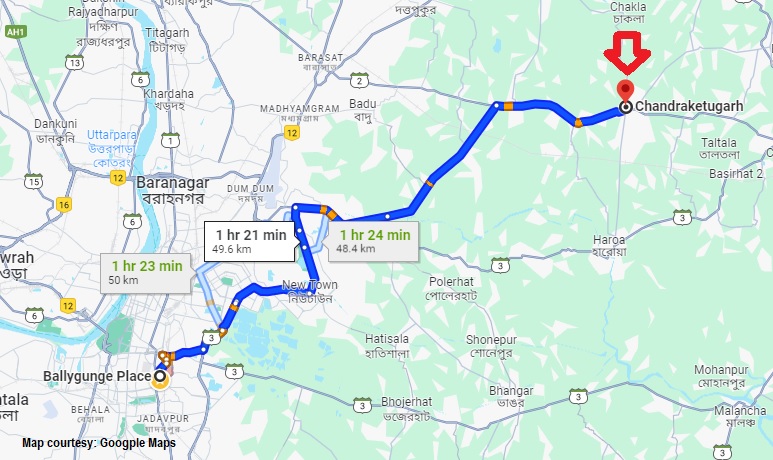
Kolkata to visit Chandraketugarh
Surprisingly, some of the historical structures are still part of the mainstream Bengal as they function as offices with the government machineries.
A few have been closed down; stand derelict as mute testimony to those eras.
Ancient bricks
I was scouring the history pages on a bright weekend, a small piece of data caught my attention. Not far away, within a range of seventy kilometers from the city of Calcutta to the northeast, lies an area near the banks of Bidhyadhari river, where excavations were carried out over five decades ago in search of a past that was not two hundred years old but dated back as ancient as 700 BC.
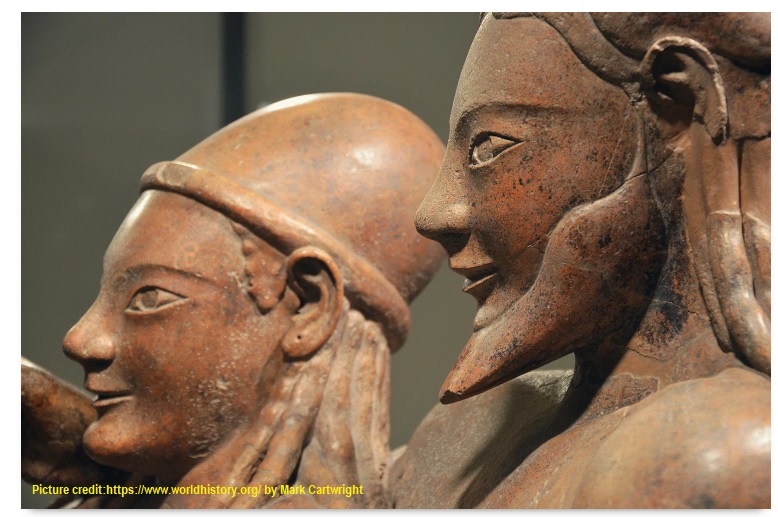
So, what we saw, existed when end of the Villanovan culture in northern Italy was seen and the Etruscan civilization rose to prominence. Phew!
That definitely needed some bit of exploration.
Gathering notes, maps and driving directions, we planned to head out. Being travel-ready, we jumped into our trusted four-wheeler, the Swift to spend a day and dipped ourselves into those times that remained caged in the history books.
Advanced and Ancient
The place we had on our radar was known as Chandraketugarh.
We were slightly upbeat as the distance what the maps told was about forty kilometers which meant , a full day can be dedicated to surveying instead of being on the road.
We chalked out the route and started our drive.
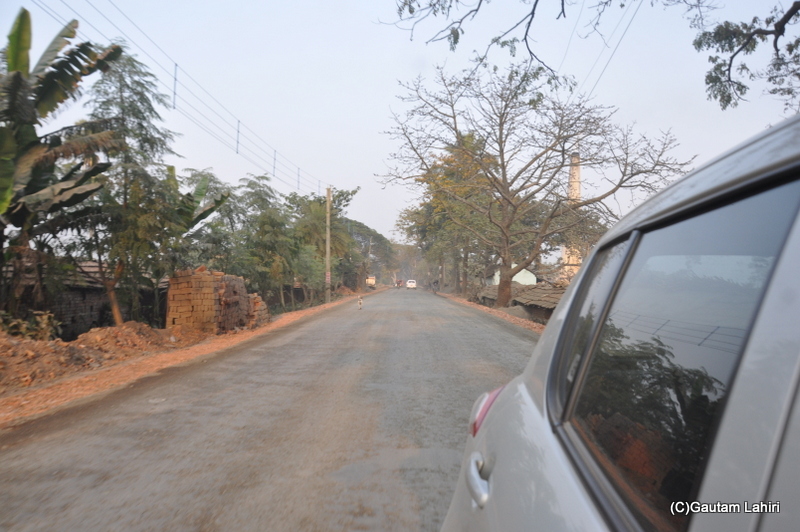
Interestingly, this very old place was quite near to the Calcutta’s most advanced Information Technology hub, Newtown, Rajarhat.
The very new and the extreme old lived next to each other. The city drive till Newtown had nothing new. Crossing a congested section we passed Azad Nagar and hit the road to Kalaberia through Kharibari road.
As a motorist, I felt sad for the car as this road was in a deplorable state.
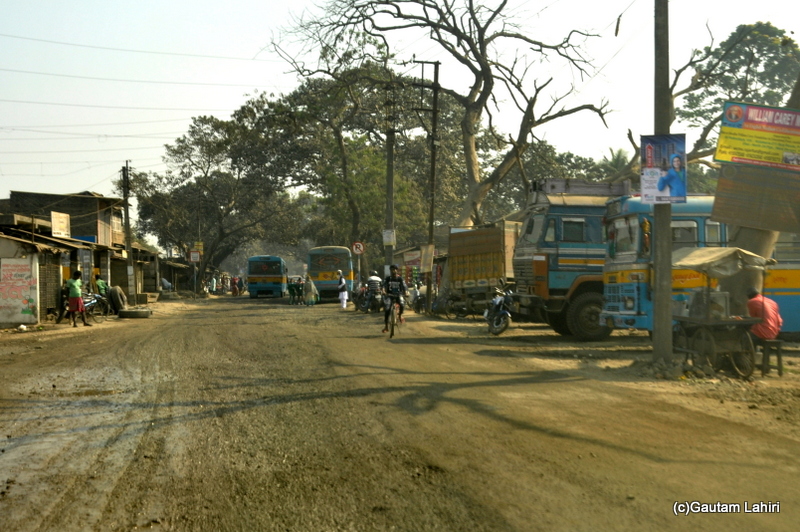
speed coming down to ten kilometers an hour
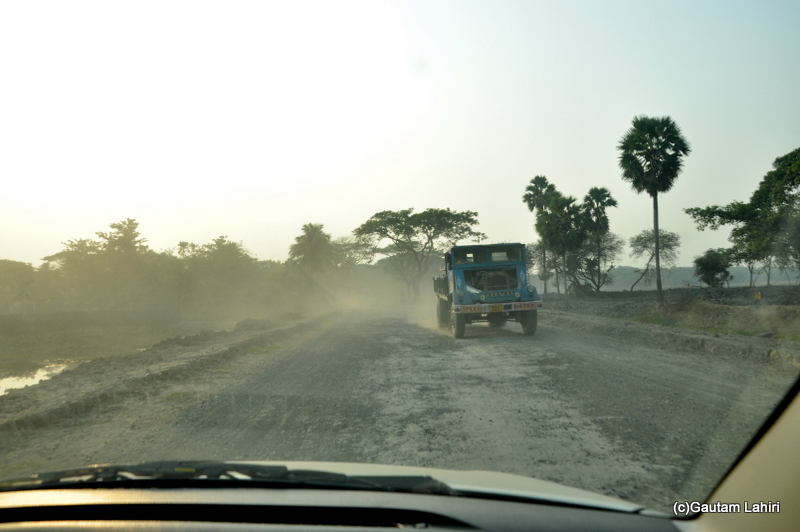
The asphalt was scooped out and layers of dust settled over everything, the houses that lined the road, the trees, even the parked buses and cars were not spared.
I wondered how the residents of that place stayed alive with their lungs clogged.
We pushed on…
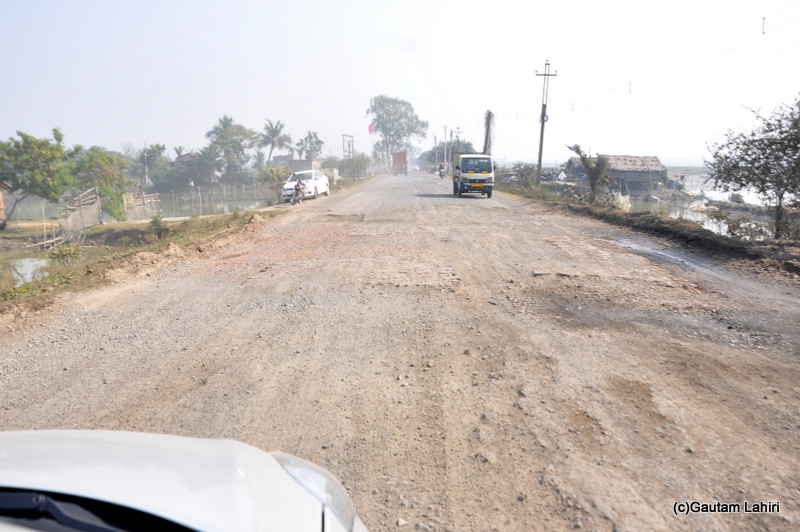
pain the car’s suspension
Broken and dusty
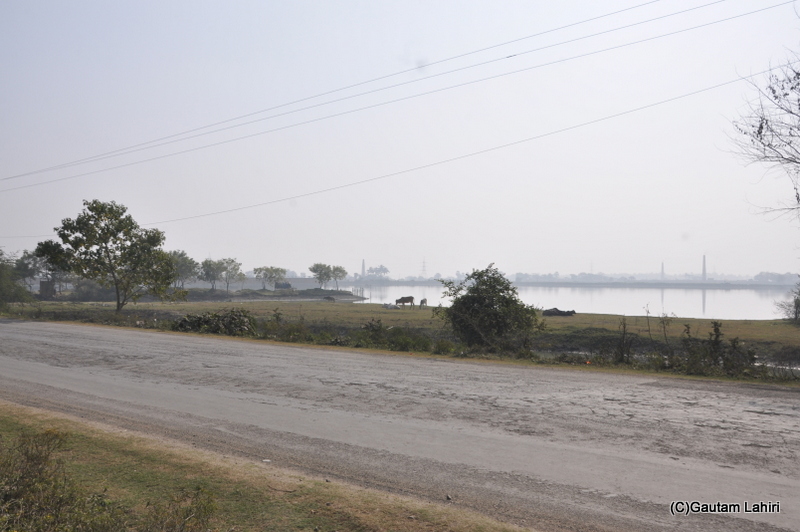
After about forty minutes of battling the potholes, with pained elbows swinging the steering, we came to a slightly better stretch with big water bodies that were present on either side of the broken road.
These waterholes supported the economy of the place by being part of fisheries which were abundant.
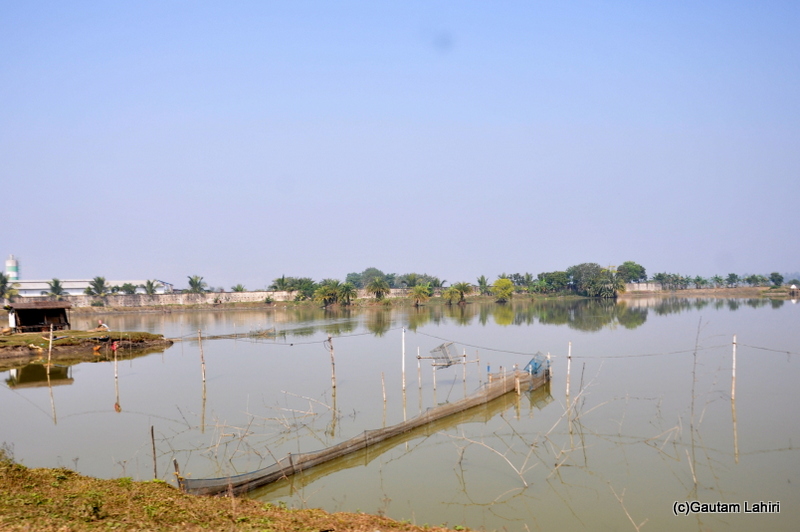
The area was developing. Houses and a few skyscrapers came into view.
Very soon last vestiges of green would be wiped out with the all-pervading concrete jungle and these pictures would be telling the story of the evolution.
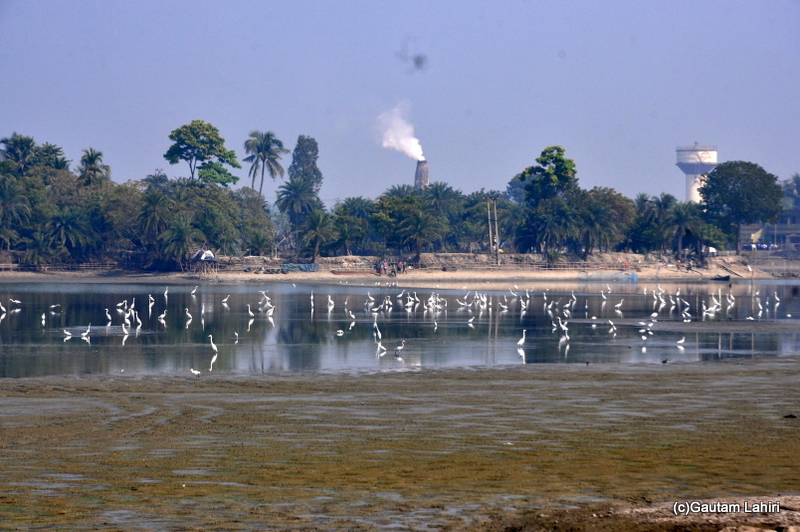
the lake surface with the fishes around
About twenty years back, these were perhaps marshlands and disorganized business ruled the roost.
With the proximity of Rajarhat computer empire not far away, rapid development has made the city dwellers looking for greener pastures.
Evolving countryside
The other small-scale industry that was seen were the age-old brick manufacturing units with their chimneys gushing out smokes working overtime to feed the needs of the high rises.
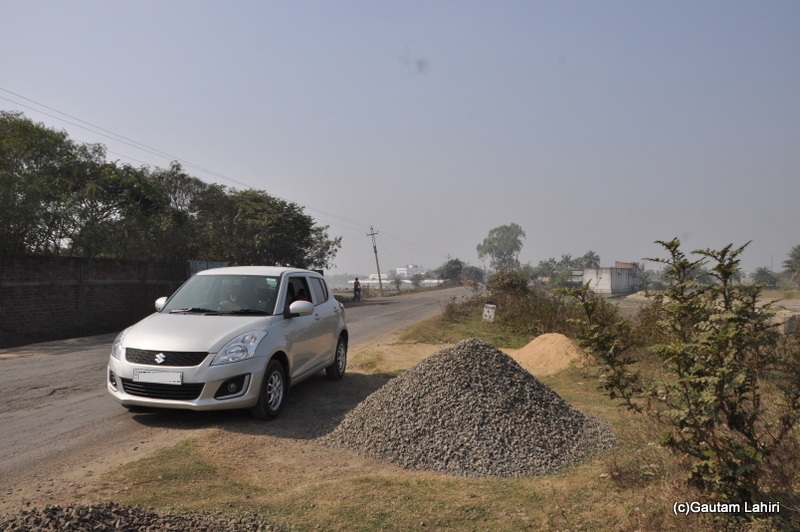
After a brief spell, the cavernous road came back and our drive came to a crawl.
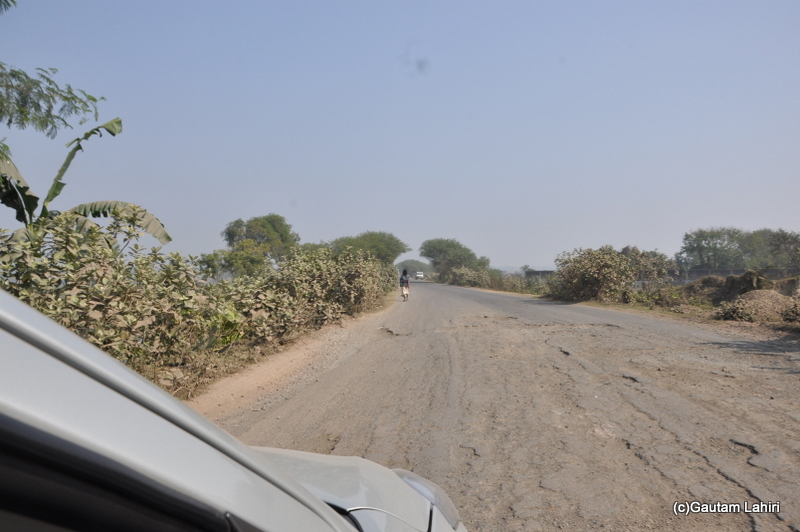
The main culprits which destroyed the roads were the huge trucks and earth dumpers that shuttled across these areas carrying cement and building materials and the absolute apathy by the city administration to keep it in good condition.
I wondered, tons of money we pay as car owners in the form of tax, how can they fall short by this margin.
With a grumble, we drove on.
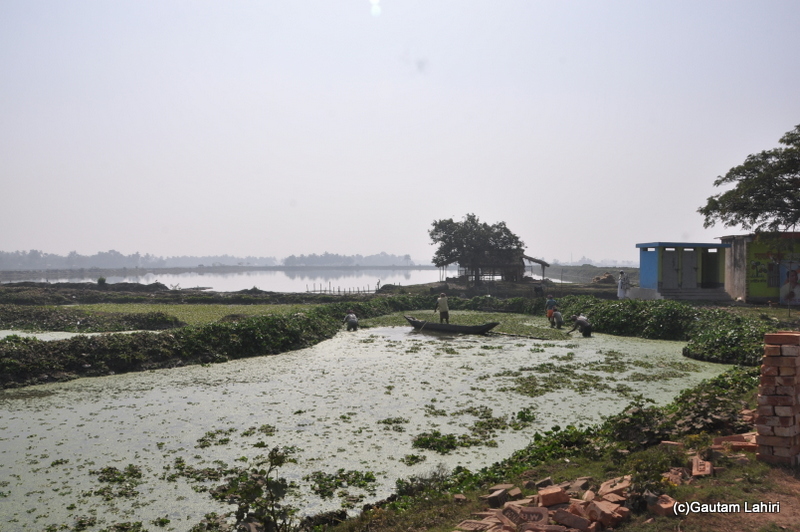
From Kharibari to Berachampa, the road became decent and the surrounding countryside changed.
Patches of green paddy fields interspersed with yellow mustard fields soothed the city eyes.
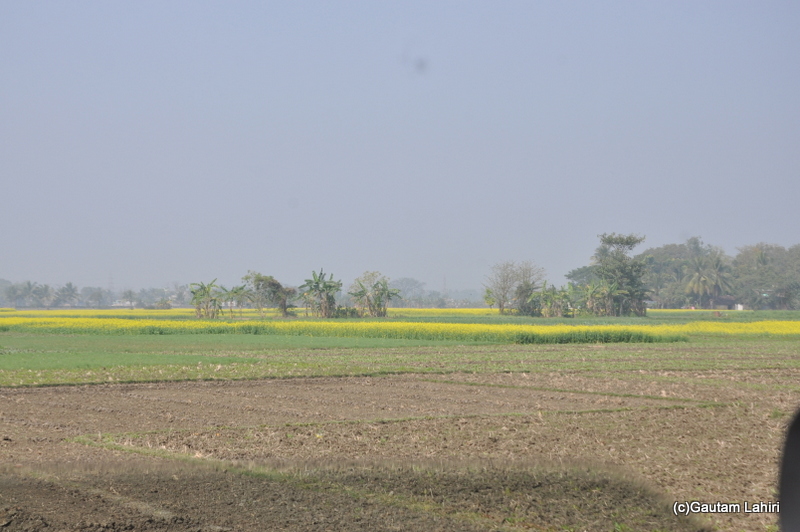
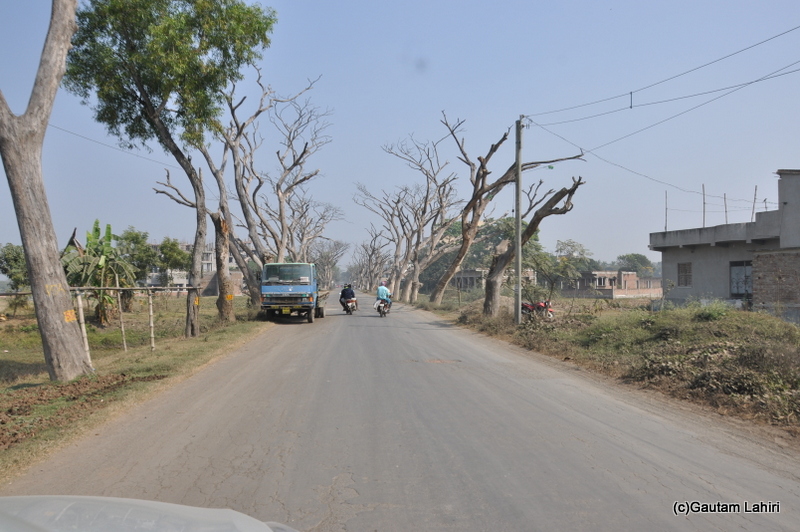
The seventeen kilometres good road section could be seen bordered by two-storied houses which were newly built and huge naked trees stood guard as sentinels.
Local agriculture
Huge stacks of hay were seen dumped beside the road as we negotiated the local traffic which was quite less when we had started.
This told us that a big town or a hamlet was approaching.
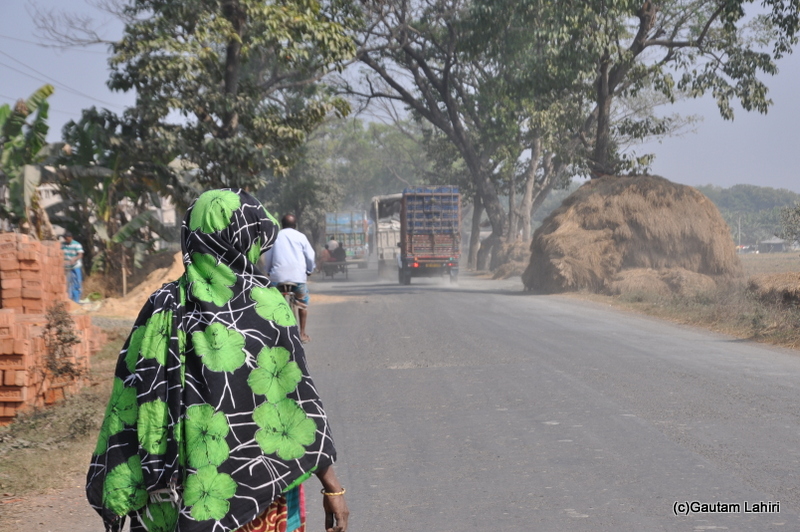
trundled away painting the adjoining areas with a fine spray of dust
Soon enough, the road turned once again for the worse with the drive becoming uncomfortable again.
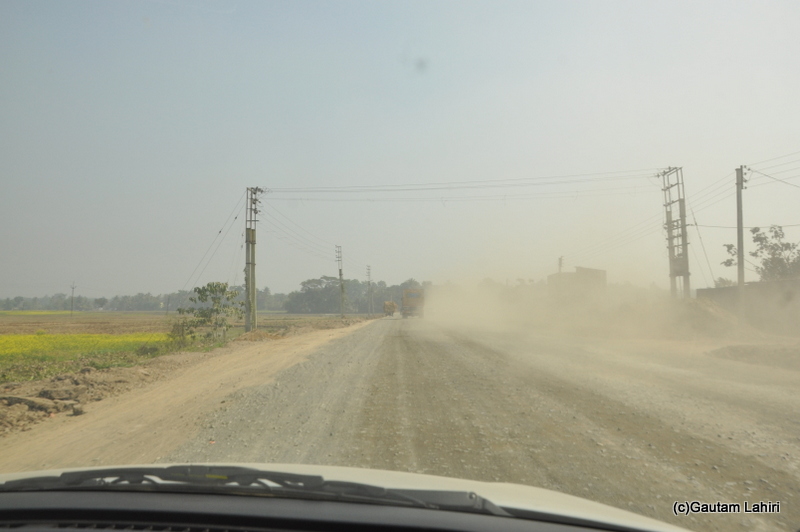
a blanket of dust whipped up by the passing vehicles
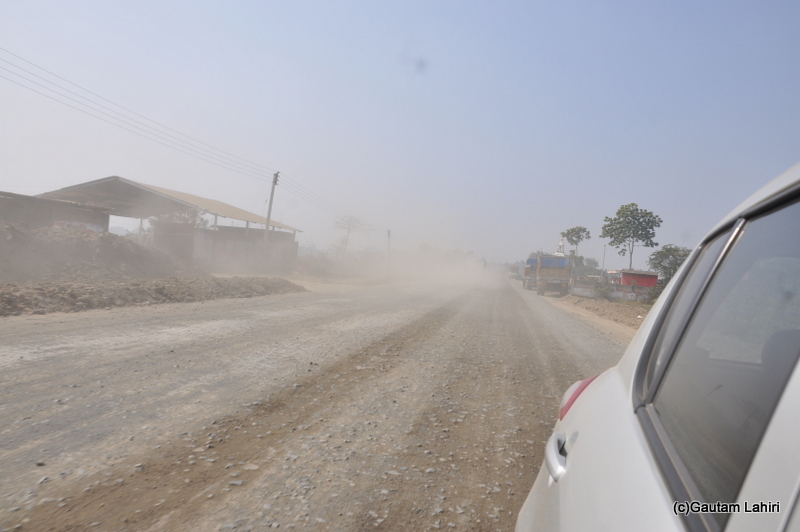
At times, we went on coughing because of suspended dust particles
The most striking feature was the absence of any signboards which could have told us about the places we were travelling by. And there was no mention of Chandraketugarh either.
Based on map the directions and frequent stops, winding down the window glass to ask the pedestrians of the whereabouts we made some progress. Four out of ten people never heard of it.
Difficult location
After another ten minutes of a bumpy drive of six kilometers, we came to a very congested marketplace which was the Berachampa.
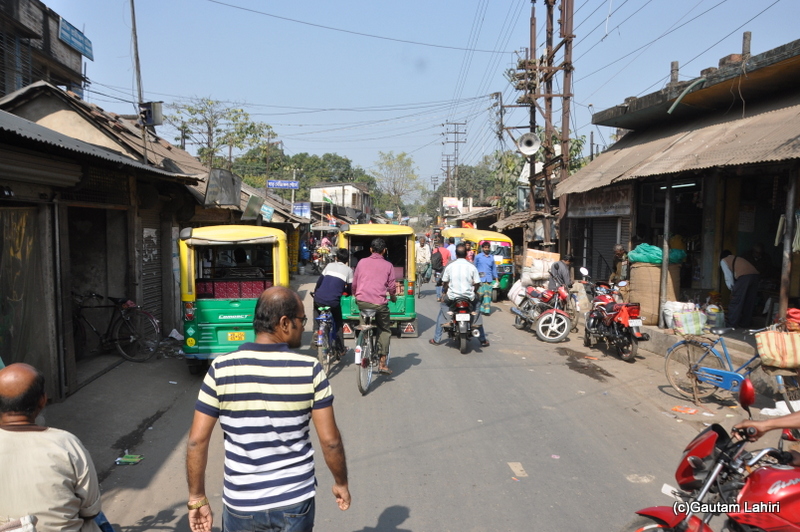
left towards our first stop Khana Mihirer Dhipi
We parked at a side entrance as parking was out of the question in these narrow roads. Rickshaws and cycles would have etched the doors of the cars with their signatures before the driver realized.
A nearby tea stall attracted us to take a ten minutes break.
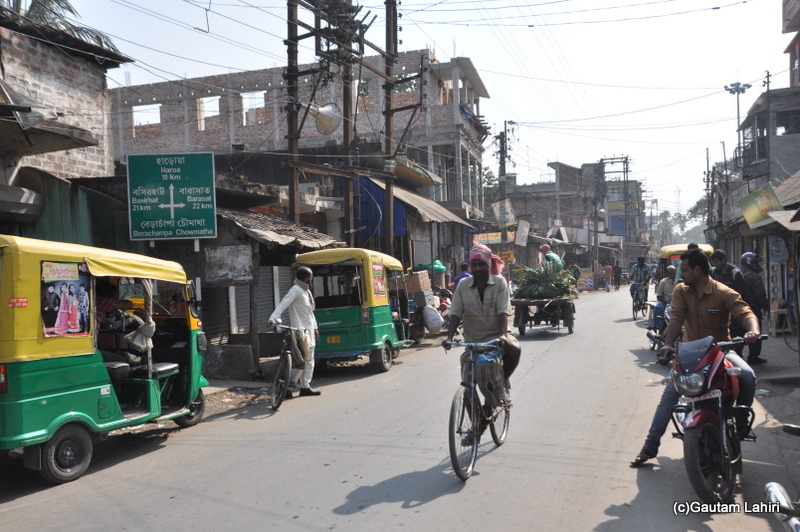
corner which showed directions
The odometer of the car showed that we had covered a distance of fifty-three kilometres.
Local tea joints are always helpful in giving the history and travel data in India if one asked them the right questions. Our interview resulted in a major data flow.
While sipping the tea, we met a local newspaper reporter and was a treasure trove of local historical information.
Here it goes, as we heard from him.
History of Chandraketugarh
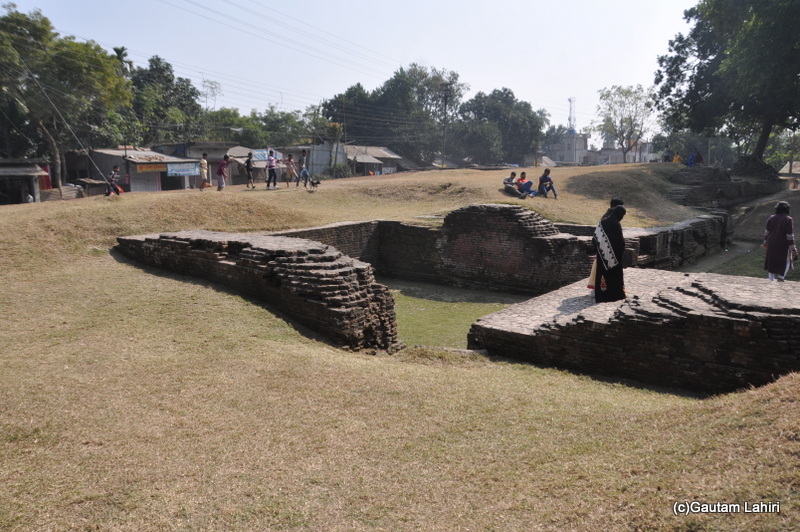
We were witnessing remains of a very old temple which was associated with individuals who were called, Khana and Mihir.
A fort also stood here which has been gobbled up by nature and happened to be the Chandraketugarh Fort. This fort was constructed by King Chandraketu.
The remains that we saw included pieces of structures is called ‘Khanamihirer Dhipi.’
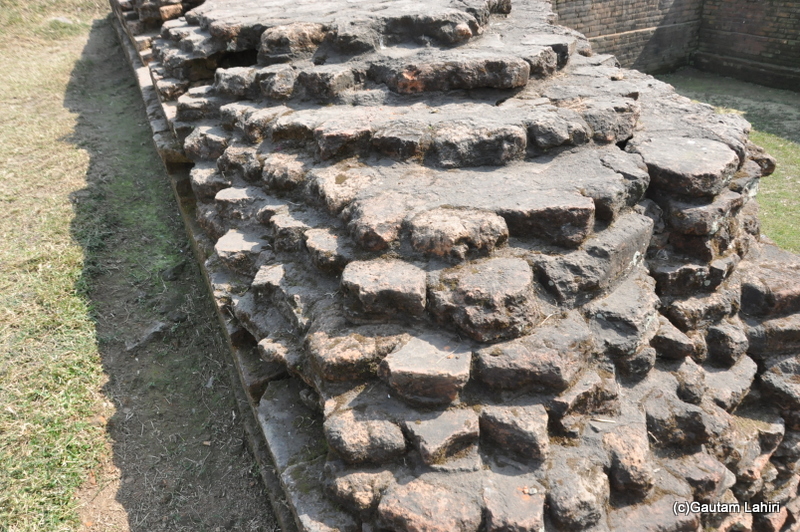
lay bare under the scorching sun and cooling rain
Under the leadership of Albert Henry Longhurst, in 1907, this came into prominence under the British rule.
The reporter informed that in 1957 the area was under focus and the Archaeological Survey of India (ASI) and Calcutta University, carried out these excavations.
He went on saying that the temple whose broken base we saw, was as old as 4th century BC.
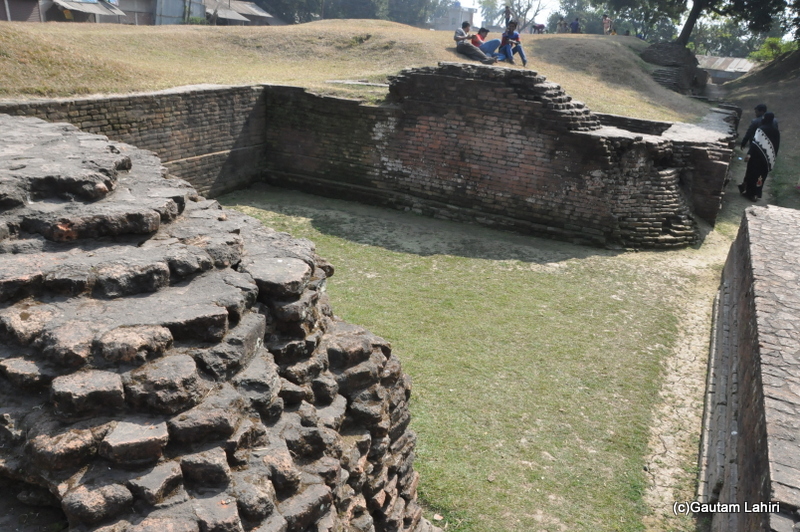
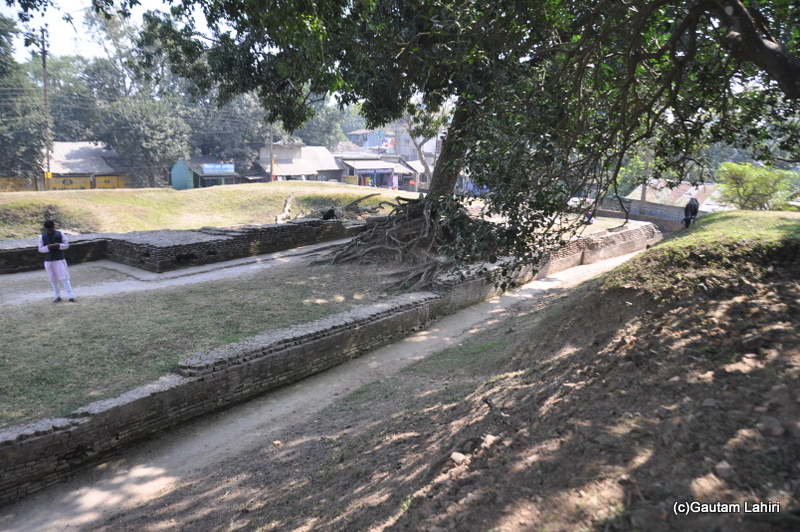
Only one face had some aesthetic structure which still remained
The period had seen towns and cities which prospered in a big way. The river Ganges flowed once through this area bringing in Greek, and the Romans traders.
All that remained of the temple was the flight of craggy stairs and the walls that held the structure. The ruins in some way conveyed the temple beauty now degraded to its skeletal form.
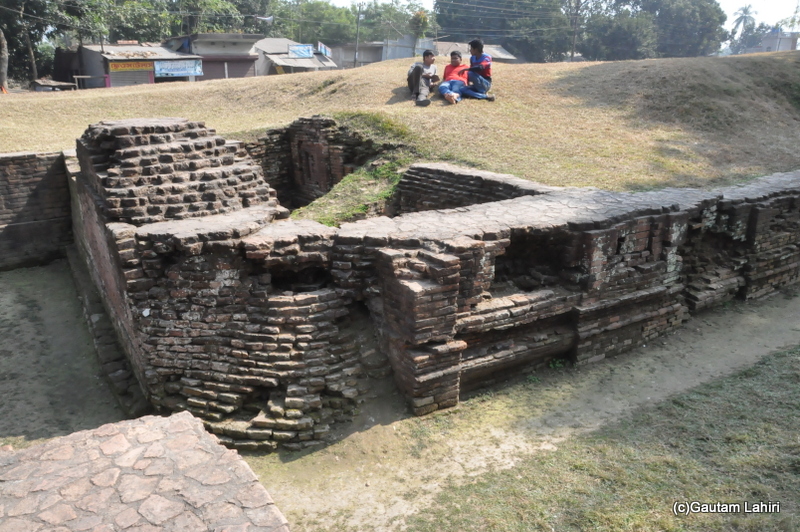
It has become a playground for the local youth
As we walked from one face to the other, the reporter who had picked up a liking for us narrated on.
Exploring historical splinters
We were his audience with loads of patience. I had started taking notes by then which I have shared here.
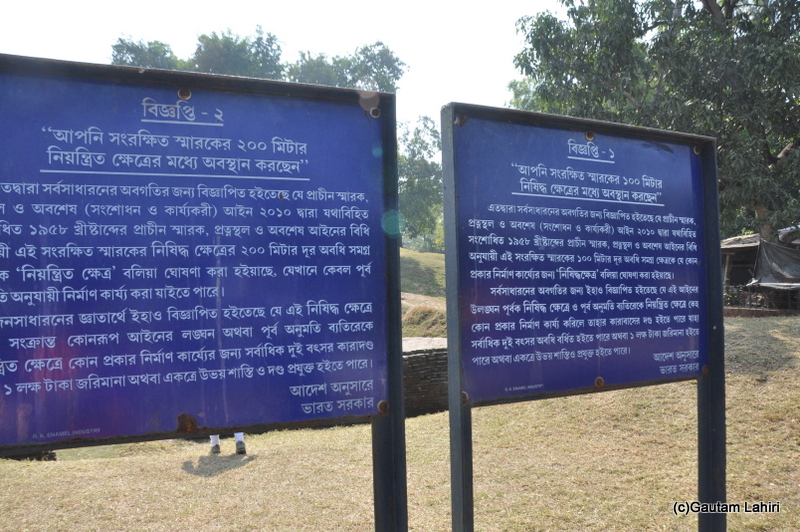
the visitors of the area’s historical significance
We came across the long bricked surface which was perhaps the prayer hall as the locals assumed, which has been standing since 700 BC.
As we explored, we met the government caretaker and came to know of a history professor or a historian who has kept at his house, the excavated artifacts which are under security now and soon they would be transferred to a museum which they planned to erect.
We were eager to see the excavated articles which included, as the stories go, Northern Black Polished Ware, a sort of burnished pottery used by affluent people in those days.
Terracotta objects, copper and silver coins.
Our historian reporter informed that these coins belonged to the Gupta and Kushan times, beaded figurines were also unearthed that owed its origins to the Shunga, Maurya, Kushan and Gupta dynasties. Well, we were denied a visit to the historian’s house as it remained sealed.
Perhaps, when the museum finally comes into existence, visitors can see these ancient objects that would depict the ancient tales of a forgotten civilization.
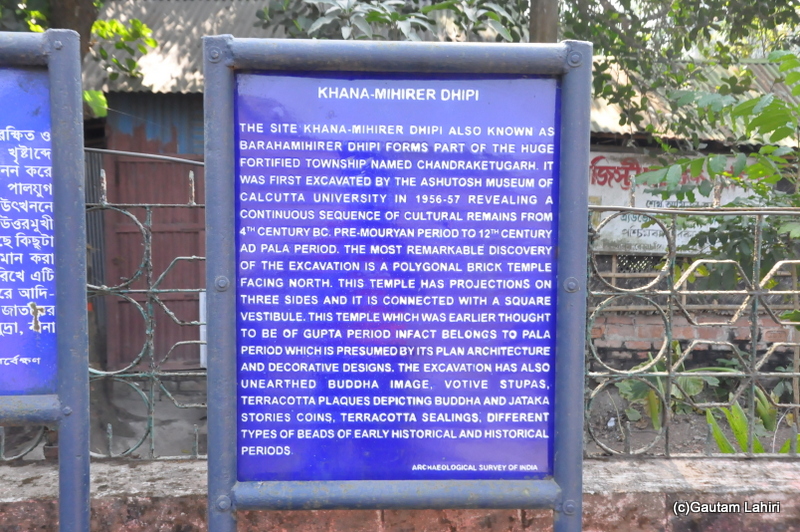
complex which caught our eye
As we strolled, fascinating history unfolded. The reporter told us that historians reckoned that Chandraketugarh and the areas around it which we were visiting, were known as “Gangaridai”.
Named by the Greek as well as the Roman historians.
Present historical landscape
This was a clear proof that India had business connections with other ancient civilizations whereby trade between these two distant lands had flourished.
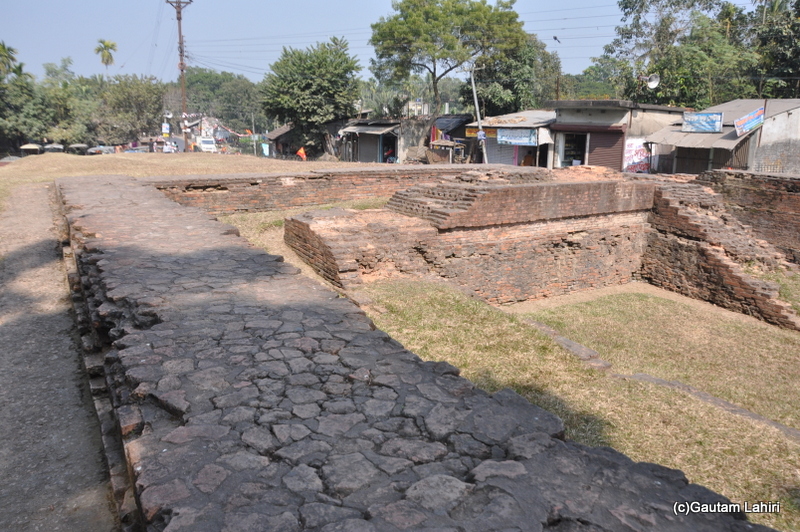
It gave us goosebumps as it dawned that the civilization that existed here was from the pre-Mauryan period all the way to the Pala period.
Unfortunately, the structures had disappeared.
We set off towards the other site.
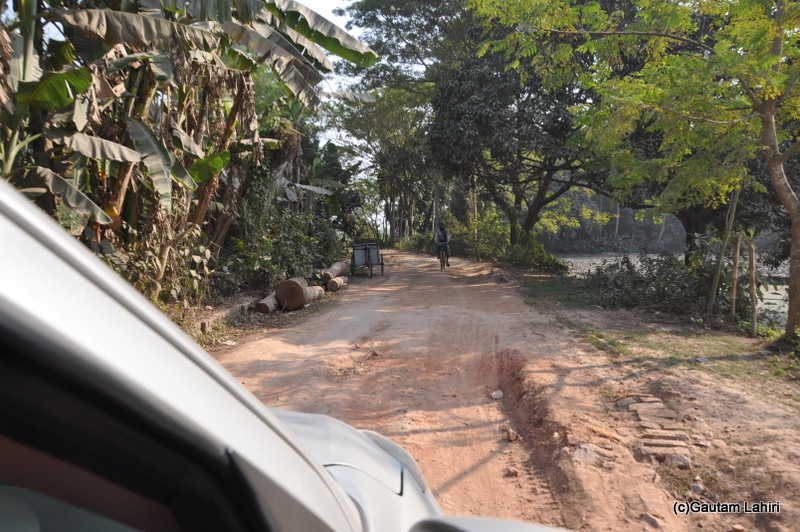
called the Chandraketugarh road which branched off from Harora road
We reached a vast undulating field with green paddy fields surrounding it. Huge trees had grown over it.
Only a board told us that this was Chandraketugrah; however, not a brick of any structure remained.
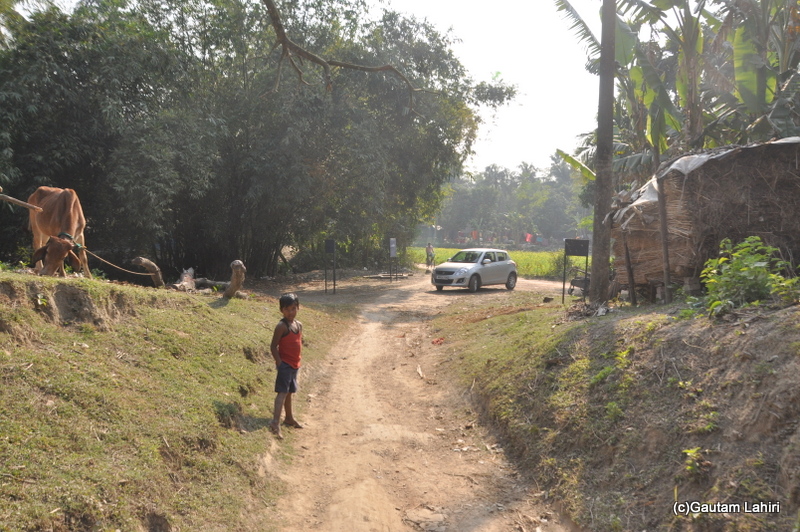
just off Chandraketugarh excavated site
The place was very quiet and hardly saw any tourist visiting this place.
All we saw were a few cyclists and villagers making their daily errands completely oblivious of the history.
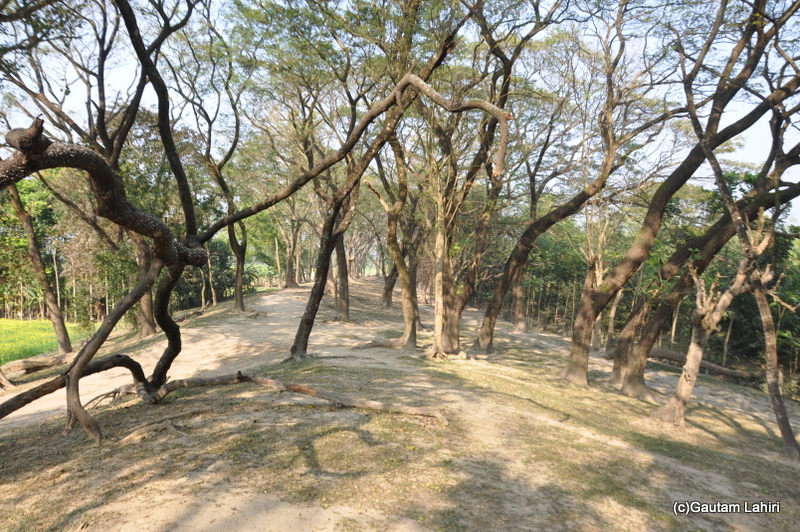
in and the mound today has these dancing trees
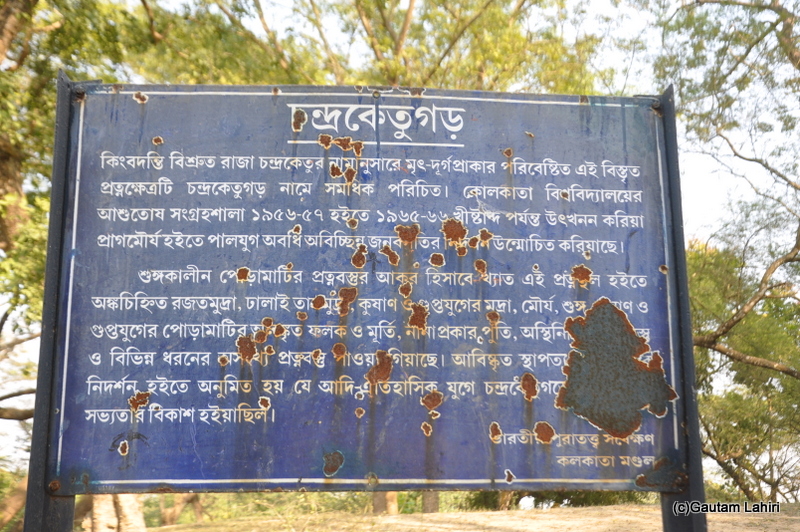
Chandraketugarh, written in Bengali
Tales of history
The board on top informed the visitors of the existence of this mythical king Chandraketu and the civilisation of that period.
Based on the folklore, twenty-two Arab missionaries visited this place to teach Islam.
Sayad Abbas Ali Gazi, among them, whom the locals called Peer Gora Chand wanted the king to convert to Islam; however, the king resisted and a battle took place.
There’s an interesting story what the reporter told us. The king had with him two pigeons, a black and a white. If the king won, the white pigeon would be released and by way of sabotage someone released the black, and the queen thought the king had lost. What happened next, no one knows …

I have already shared the board text in the picture above in the content which we have been reviewing.
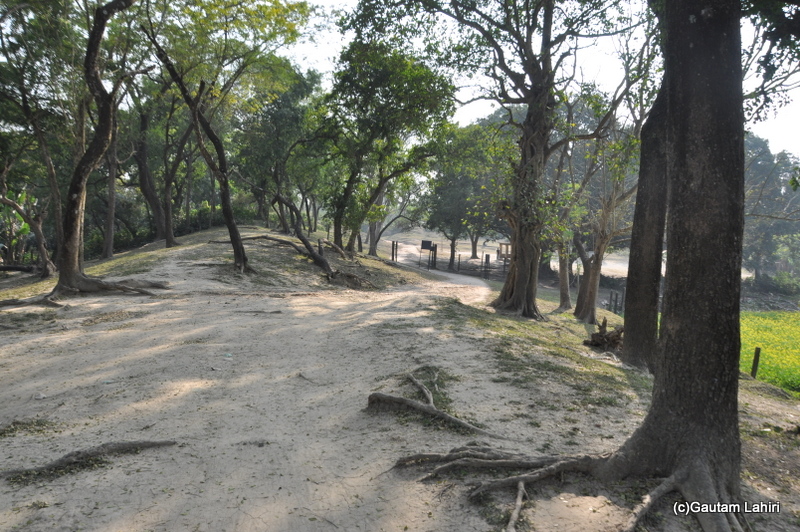
Harora road, about two kilometers away
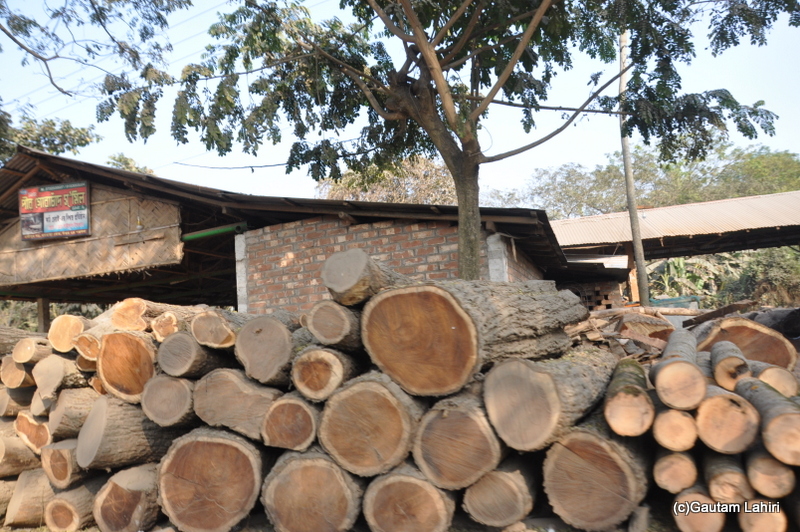
As we drove back, we saw fare bit of mills constructed that were tearing away the forests. Huge logs were kept in large numbers to be chopped, processed for the cities to grow.
Deforestation being quite rampant in this part of the city as it seemed.
By about late afternoon, we had finished our tour of this ancient piece of land.
It was very unfortunate that the local people were not aware of this place and the historical significance it carried.
The neglect it has received; I am sure in another fifty years, the structures that we saw today would vanish away swallowed by the expanding modern world and only the history books will make mention of them for the generations to come.
We had driven there with a lot of expectations to see the historic structures, the museum, given the fact that the area and the little what left were so old.
Nothing existed barring the crumbling forms.
We felt the uneven ancient bricks that were over 2600 years old. With this thought we drove back to our vibrant city in a cloud of brown dust behind us.
Inference
- Good roads are a must with proper road labeling so that drivers can come here with ease
- The government can promote Chandraketugarh through tourism to proliferate the ancient history of this place
| Distance from Kolkata city to Chandraketugarh | 56 Kms, one way |
| Time to visit | November through March to escape the heat |
| Car used | Maruti Swift Diesel 1.2L |
| Pocket pinch | Rs. 470 (Diesel), Local restaurant lunch / breakfast cost: Rs. 500-600 for 3 people |

 SPITFIRE GAUTAM