


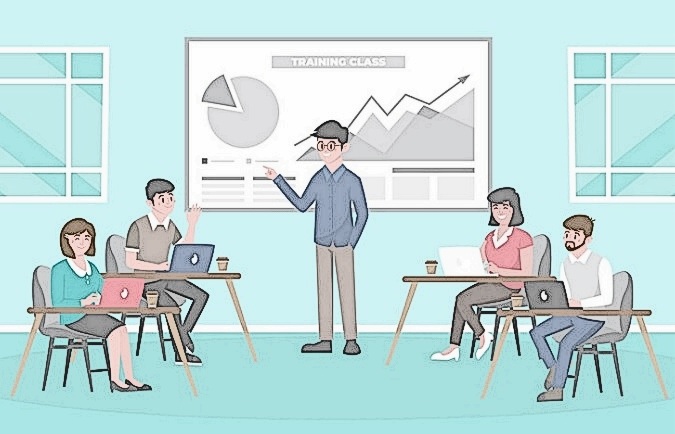

Leadership questions…
Why is it important adapting to market dynamics? 🤨
How PM training will secure business resilience, strategies for future proofing your business? 😟
Catering to changing market dynamics that impact businesses is imperative. By implementing PM practice, you can have far reaching effects, in terms of its reach and depth.

Disruptions like, Covid, AI have made rapid changes in the businesses and how they run.
As project managers, we have to drive our teams to quickly respond to these tectonic shifts taking place in the market place.
Business challenges
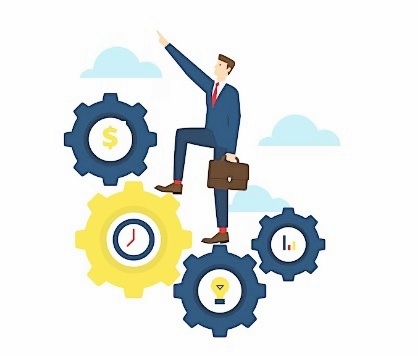
Common challenges that PM practice has to manage 👇
- Identifying knowledge and skill gaps
- Resistance to change from team members
- Communication between teams, managing virtual teams and stakeholders
By way of running short user level trainings, the teams can be made flexible to adapt behavioral changes.
Remember, changes have hidden new opportunities, and businesses can capture them by adapting.
What role PM plays?
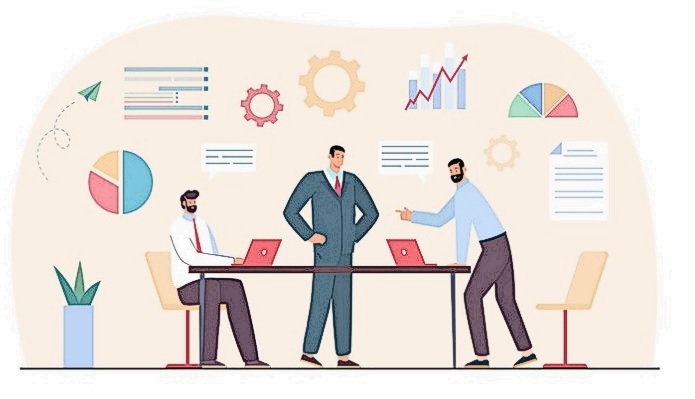
PM is the central team that identifies skill gaps and help manage risks and changes, trains teams, and acts like a bridge towards stakeholder communication.
What key skills to adopt? 🤨
- Risk management
- Stakeholder communication
- Critical thinking on the fly
- Display servant leadership in agile approach
- Gather knowledge and percolate them within the teams to benefit being on the same page
How stakeholder management helps with the changes in the market?🤨

of both accomplishments, and risks
Every teams need to speak the same language to foster oneness in thinking.
Requirement fulfillment must be based on a methodology, individual responsibility, and stagegate checking.
Repeatability in processes brings the same processes to rehearse, irrespective of being agile or waterfall.
What would the teams invest in learning?🤨

Constantly learn, and play along
Essential skills
| Change management (CM) | Allows you to manage changes effectively, like business goals, and operations. People who opposed CM earlier, after training, usually adapt to the new processes. Teams view the impacts in a different light. |
| Always upskill | Fill those gaps, generate proactive habits, bring in the organization, the culture of continuous training, and innovation in teams. Use technology tools, like JIRA, Slack, Smart sheet, Data analytics tools to bring cohesive working across diverse teams. Be agile and self-motivated. |
| Future proof your business or PMO | Assess the skill gap, area of weakness, and fill them, go for foundational training. |
| Key training considerations | Design comprehensive training that gives exposure to all the approaches, content should not be very old, training material/teacher should be current. |
Takeaways
- Understanding concepts
- Bring adaptability
- Upskilling, and know the business needs
- Promote a culture of learning, and embrace the change

 SPITFIRE GAUTAM