My New Delhi Diary – Exploring Ghiyasudin Tughlaq’s Tomb: An edifice of 🪨 Stone and Legacy 🕌✨
About 39 kms North West of Gurgaon, sits the broken ruins of a medieval Delhi fort complex.
A 14th century tomb enclosed in red sandstone, echoing the tales of power, paranoia, and Persian influence cradled the mortal remains of Ghiyasudin Tughlaq, founder of the Tughlaq Dynasty.
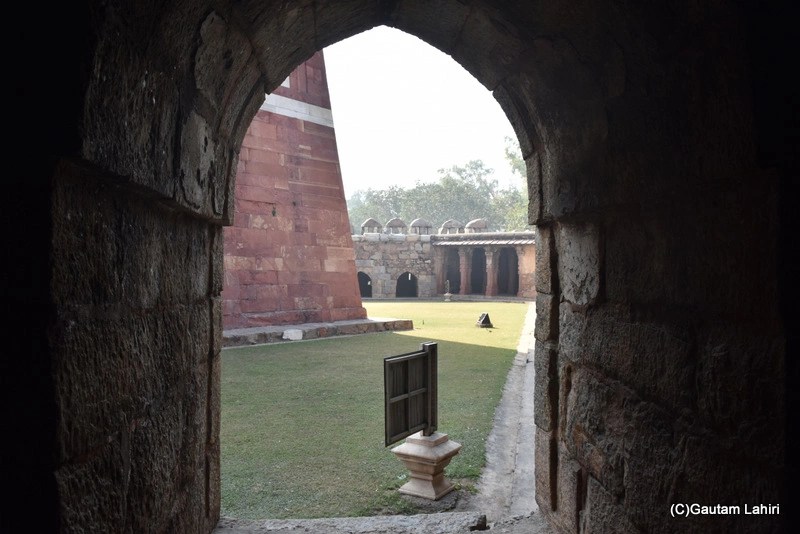
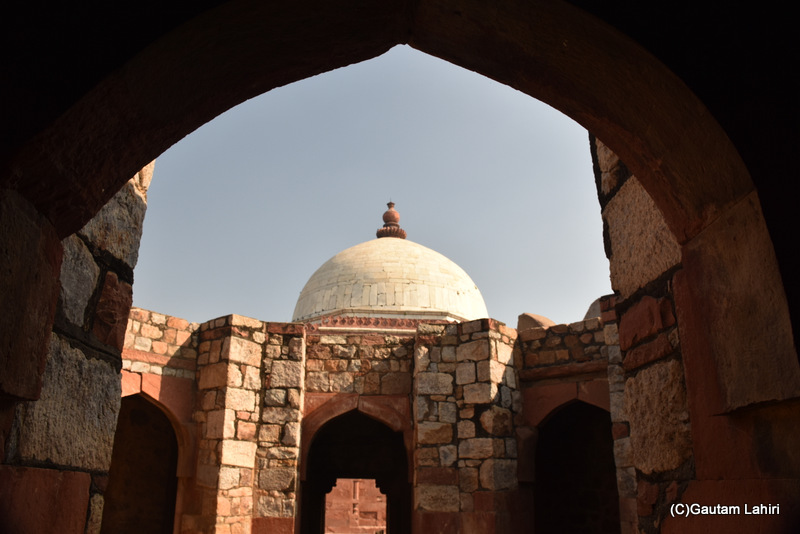
The red sandstone edifice that contains the remains of Ghiyasudin Tughlaq, can be seen through the arched doorway of Zafar Khan’s tomb. The soldier’s quarters surround the tomb
Braving the fierceness of the April sun, we spent a full day climbing the remains of a sprawling fort and a tomb 🟥
The Tomb’s Causeway➡️🏰
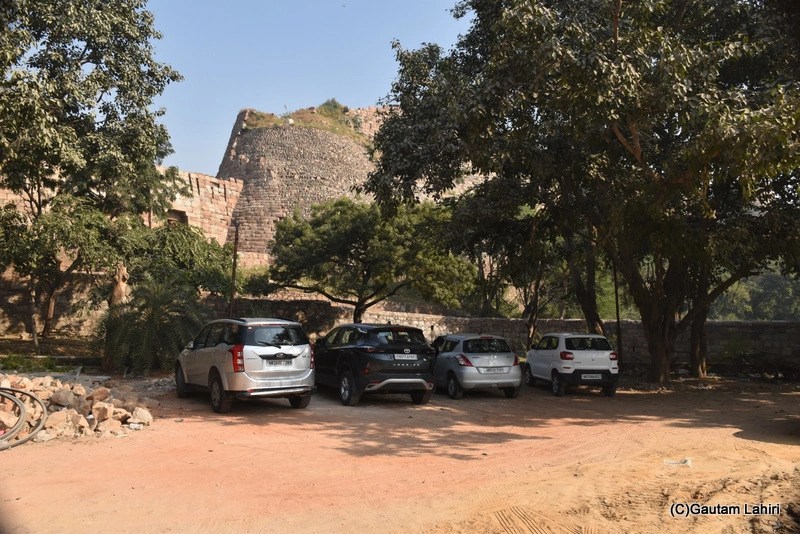
We parked amidst the broken rocky parking lot, under the shades of trees, perhaps as old as the surrounding fort. Seven hundred years ago, horses were tied to the posts where I parked my mechanical horse, my Suzuki SwiftAcross the Badarpur-Mehrauli road, the tomb can be accessed. This stone bordered causeway connects the tomb to the Tughlakabad fort. Ghiyasudin built his own tomb in 1328 AD. In those days, this causeway was above a moat or an artificial lakeSlopping fort walls with arrow slits formed the entrance. Crenulated roof edge protected the inmates from outside aggressors. A soldier’s stone walled quarter sits up front, now acts like an office of the maintenance wingThe grand entrance, typical of the Delhi Sultanate where you can see Indo-Islamic architecture. Slender pillars held the arched entrance, guarded by a thick metal enforced wooden door with heavy knuckles and chains. Stone and slabbed steps went up to meet the uneven wooden batonNo one knows how old this wooden door is. It has seen the changing behaviours of human civilization at closed quarters. Pointed angular pegs jutted out at regular intervals which prevented the elephants to ram the doorThe 12 feet wooden door went all the way up and met the red sandstone curvature of the tomb’s entrance dome. A touch of modernity can be seen, an electric bulb which was not there when this mausoleum was made
Ghiyasudin Tughlaq’s Tomb⚰️
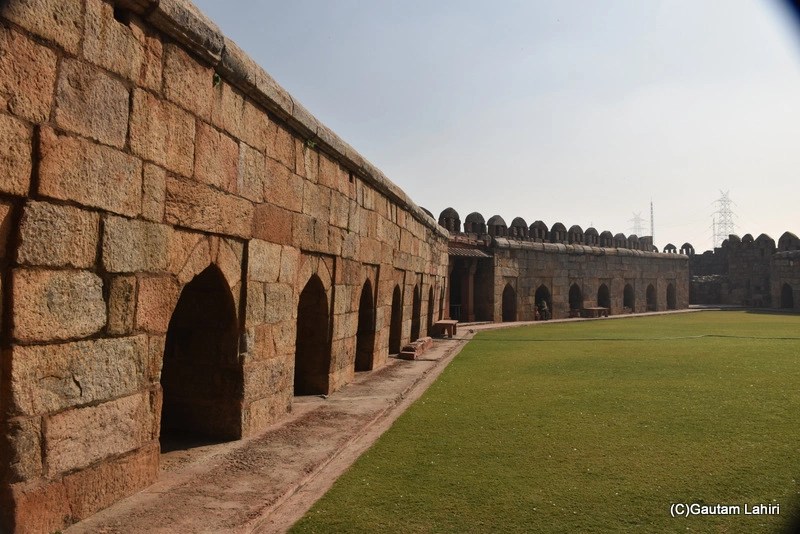
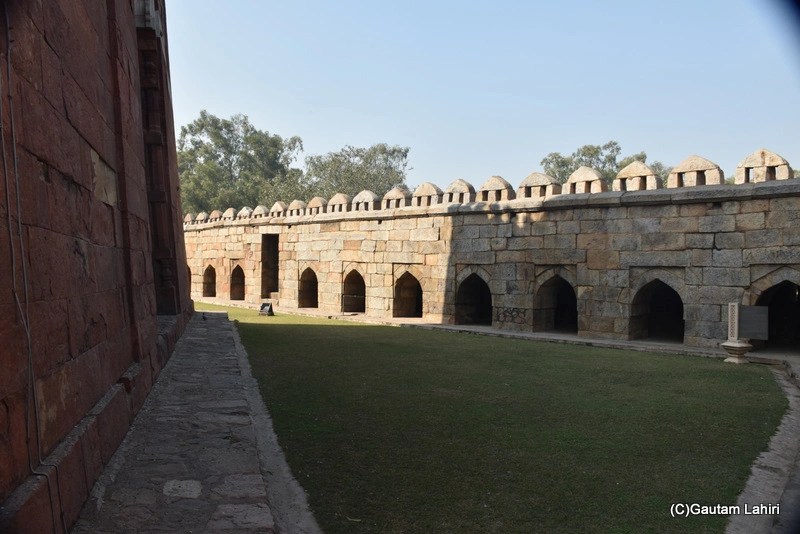
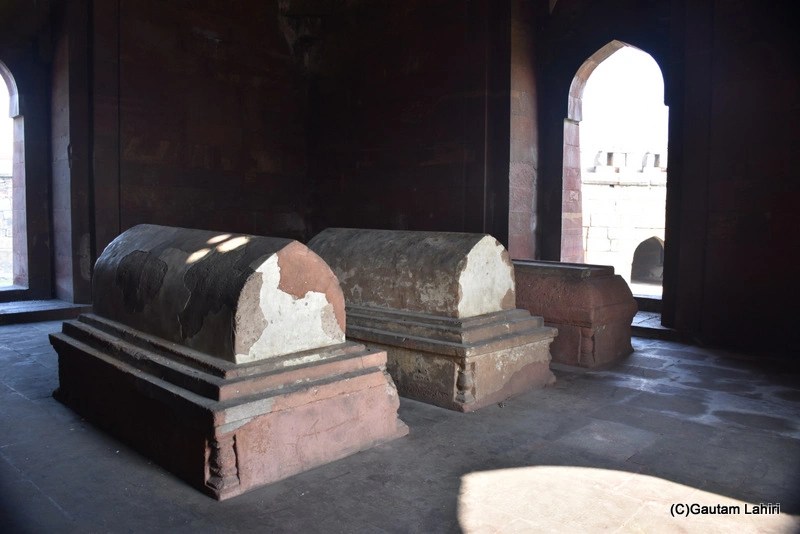
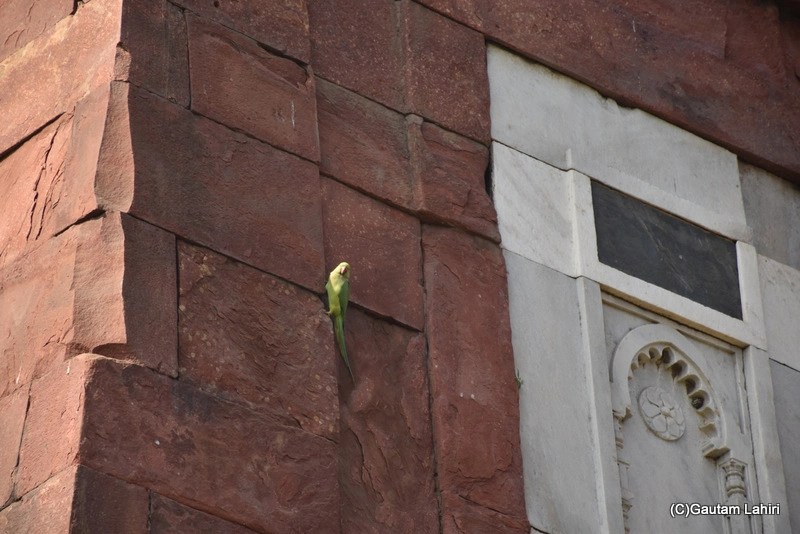
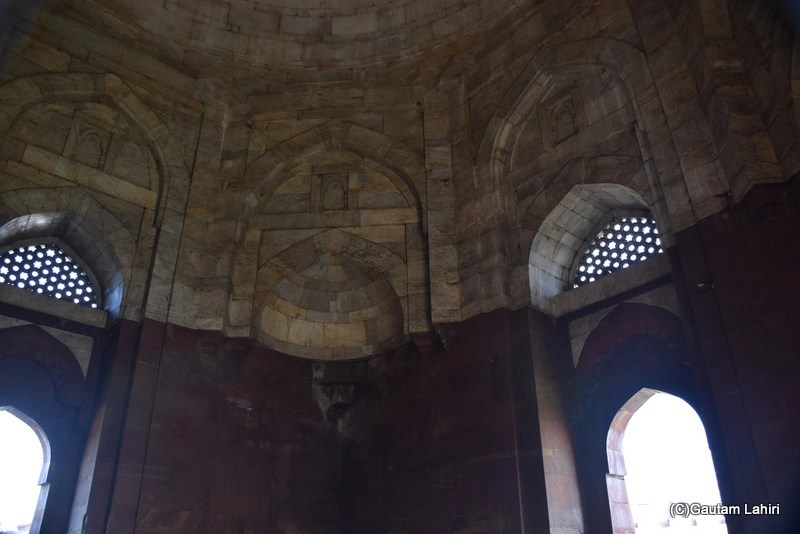
Once you enter, around the tomb you will see low height arched openings within slabs of stone rooms. These looked like soldier’s rooms. The courtyard that separated had a cover of velvet smooth grasslandsThe dark shadow of the tomb fell on the crenulated rooms that were built at an angle with the border wallThe tomb is pentagonal in shape. Slanted walls border the mausoleum with battlements at each corner. A dome sits on top of an octagonal drum. Mausoleum has white marble and dressed in sandstone. A flock of pigeons kept circling the tombWithin the enclosure, there are three graves: Sultan Ghiyasuin Tughlaq – The main tomb, centred under the dome. His Persian born wife, Bega (Haji) Begum – Believed to be interred beside him in the same chamber, extreme right, the smaller tomb. His son, possibly Muhammad Bin Tughlaq on the leftThe tomb was built primarily with red sandstone, lined with white marble inlays. Sloped walls and battered fort-like exteriors for defence. We caught a young parrot hanging from the stone ledges, its head flashing the morning sunThe tomb terrace right below the dome had eight sections. The “Jhalis” or perforated marble window threw a dim light that showed the arched doorways. Exquisite Indo Islamic architecture could be seen
Tomb of Zafar Khan ⚰️✨
Zafar Khan’s tomb was the first structure of this complex built by Ghiyasudin. He named this place as “Daru’I-Aman” or abode of peace. A Delhi Sultanate general who conquered vast areas for Ghiyasudin and got killed in the battle. A dome and white marble embellish his tombOne of the innumerable arrow slits that abound the fortified walls that stand on the tomb’s perimeter. They overlooked the ground outside, providing a sliced view of the enemies outsideI crouched into one of the short openings of the wall that ran around the two tombs. Surprisingly, the rocky room was so cool. It was like an air-conditioned enclosure, several levels lower than the outside temperature
We will take you next to our second venue of exploration – the main Tughlakabad fort, across the Mehrauli road 🏰
Inference
Ghiyasudin Tughlaq, founder of the Tughlaq Dynasty, ruled Delhi from 1320 to 1325 CE
Famous for his military prowess and strong administrative reforms
He established Tughlaqabad Fort, an ambitious citadel meant to rival the might of earlier dynasties
His tomb designed during his lifetime was completed shortly after his death in 1325
His tomb at south Delhi is an example of Indo-Islamic architecture in India, unifying functionality with spiritual symbolism
Distance from Gurgaon to Ghiyasudin’s tomb, South Delhi
39 Kms
Pocket pinch
Indian Citizens: ₹20 per person Foreign Nationals: ₹250 per person Children (Below 15 Years): Free entry Nearest Metro Station Tughlaqabad Metro Station (Violet Line)
Best time to visit
Late November through mid March
Activities
Just walk and soak the history. Do not expect a very clean tomb, however the gardens are well maintained
Parking
Available across the temple, Rs. 50 for first 4 hours and Rs.20 for subsequent hours







 SPITFIRE GAUTAM