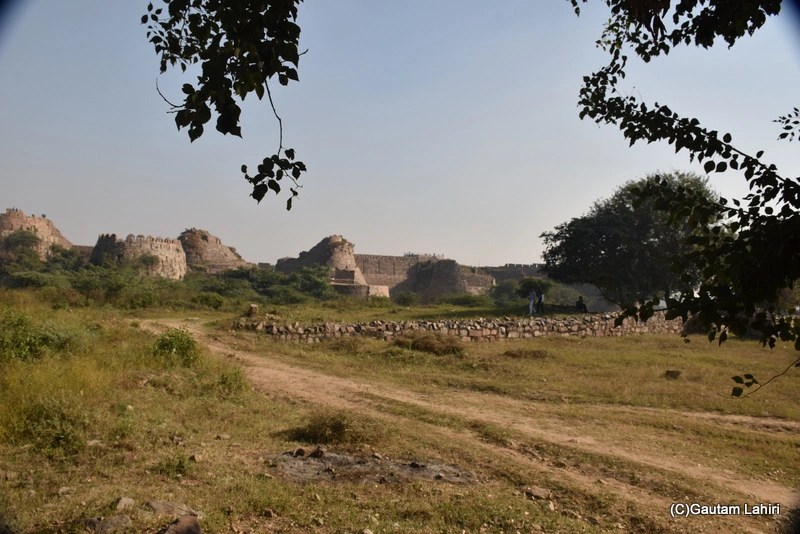
Join us, as we will explore the fort of Tughlaqabad, built by Mohammad Bin Tughlaq in between 1321 to 1351 AD.
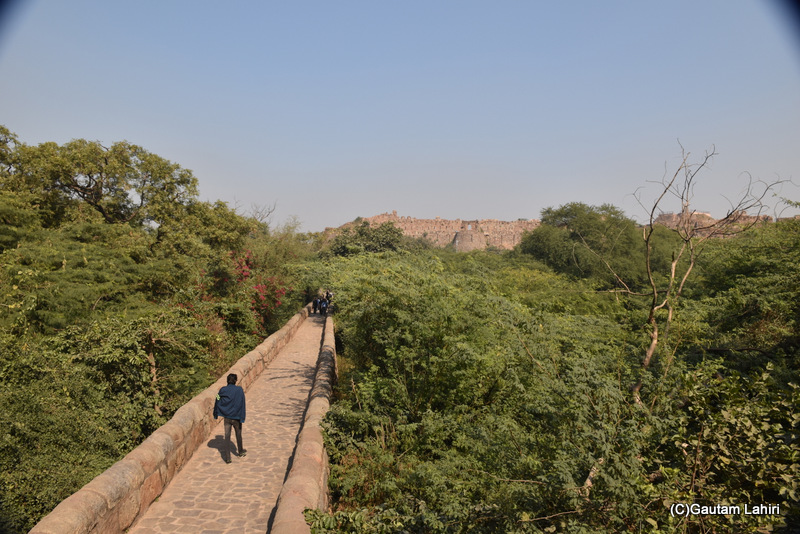
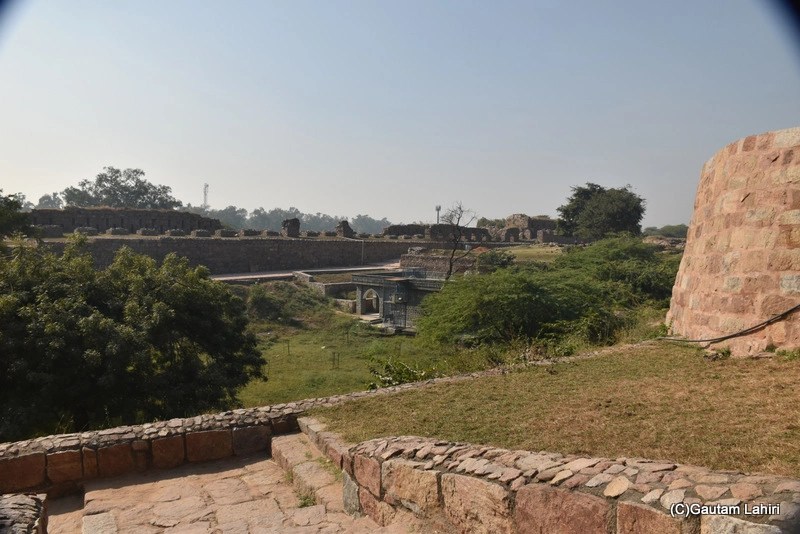
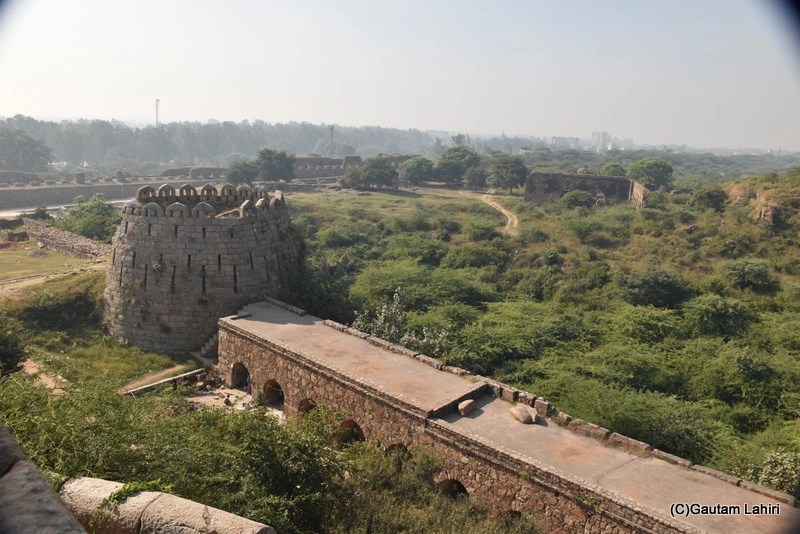
From the ramparts of the tomb of Ghyiasuddin tomb, we saw the Tughlaqabad fort over the dense foliage of deciduous forest cover. The causeway or the stone walkway in earlier days went over a moat or artificial lake, which is all dried up now
Legend says that 🧙♂️saint Nizamuddin Auliya cursed the 🏰 fort saying “Ya base Gujjar, ya rahe ujar”
(Either it will be inhabited by herdsmen or remain deserted forever) — and eerily, it was abandoned shortly after Ghiyas-ud-din’s death 🪦
Tughlaqabad Fort – Four gates🚪
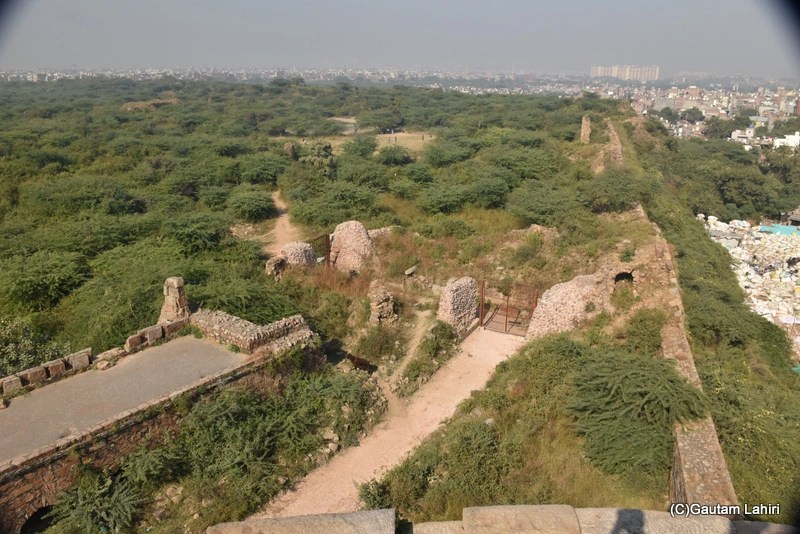
We trudged a broken wall over a mound and from its zenith we get a bird’s eye view of the entire fort. Far away the modern thriving city of New Delhi flashed white in the morning sun, distinctly different from the fort’s ancient times
The huge fort area is divided into four gate areas – East, West, North and South.
You will be taken back in time, as we walk each gate area and its broken ruins, each telling a story 🏚️
Tughlaqabad Fort, West Gate 🧱
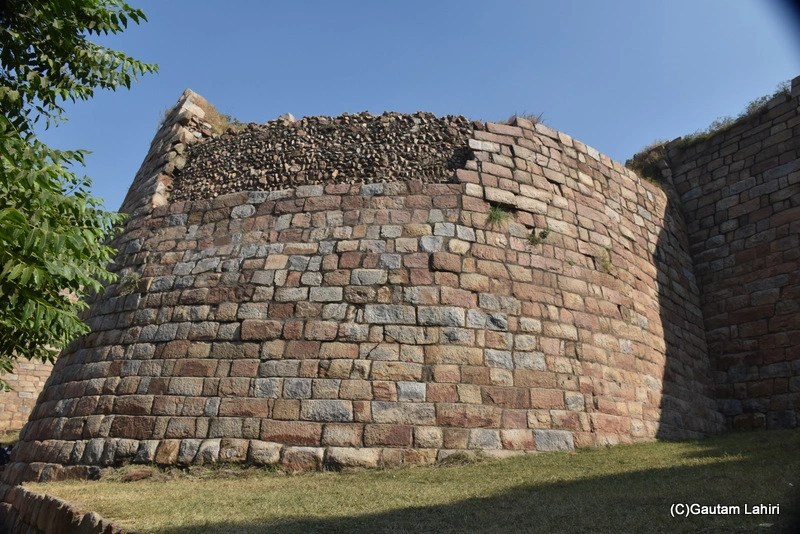
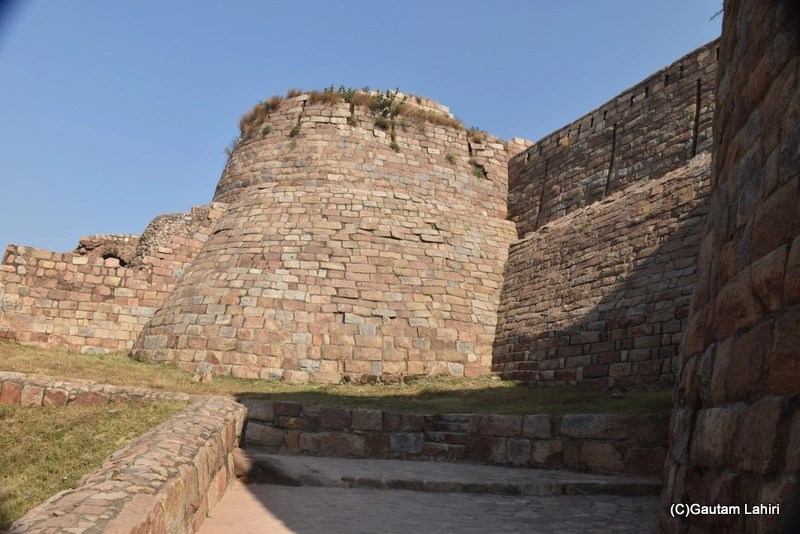
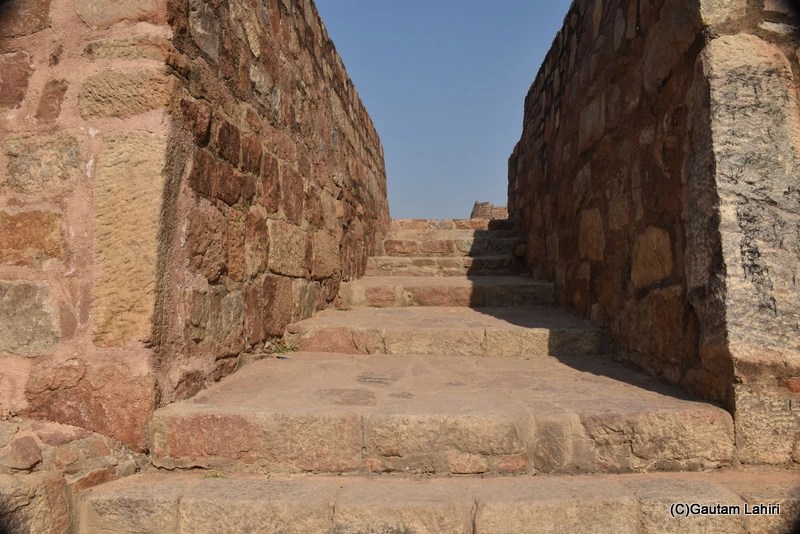
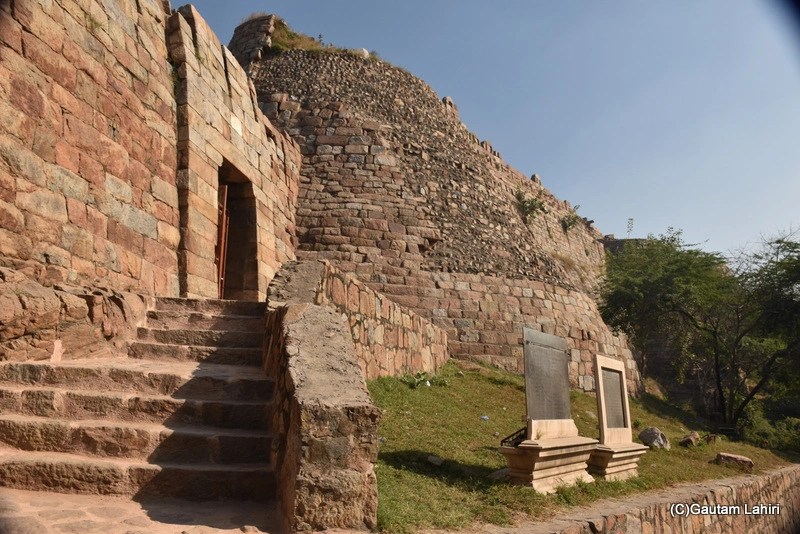
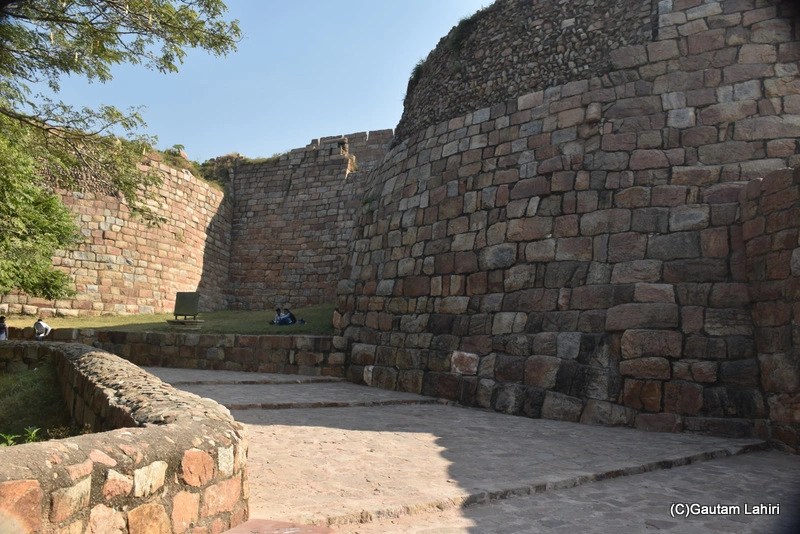
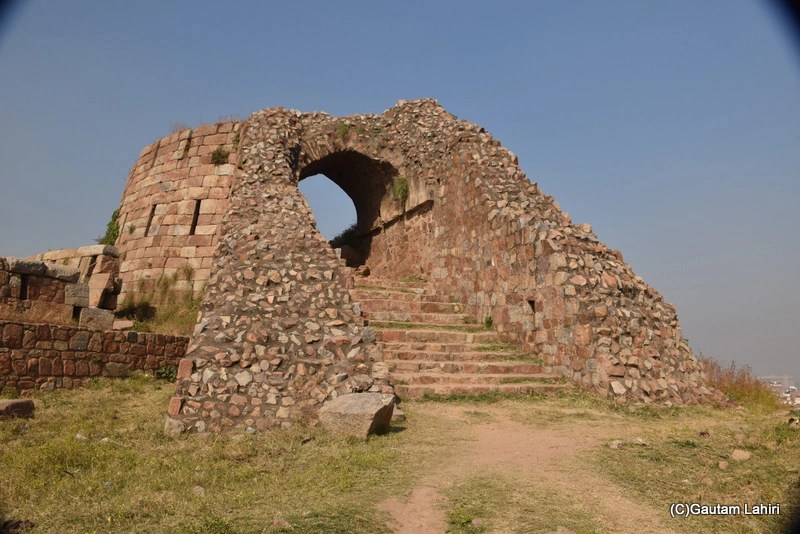
Neatly stacked up stone slabs slanted upwards for security reasons could be seen on one of the bastions beyond ‘Baoli’, the stepwell. They wall angle thwarted the enemies to climbAnother fort wall with its protruding bastion over a grass mound around the ‘Dariba’ gate area. Arrow slits abounded as the soldiers stood guard and unleashed a deluge of arrows to the unsuspecting enemiesWe stood on a broken walkway near to the Dhobi Dobhan gate of the Tughlaqabad fort. Building remains and green fields criss-crossed and met a few ruined buildings belowWe reached a vantage point around the ‘Neemwala’ gate area on the western end. Broken rocks and slabs from the fort’s housing quarters lay broken under the open sky. The modern city of New Delhi graced the skyline far away in the distanceTwo staunch upright pillars enclosed a slabbed stairway that led us to the top around the ‘Neemwala’ gate. The Fort walls were made so strong that even today, they looked extremely stableYou are seeing the ‘Vijay Ma’, the highest point of the Tughlaqabad fort. The ravaged fort still holds such mysticism that it kept us glued to its ruins
Tughlaqabad Fort, East Gate 📜
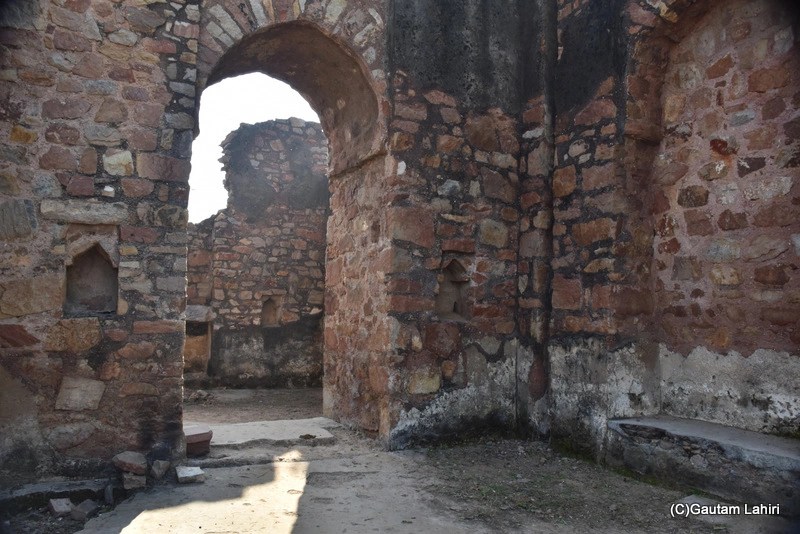
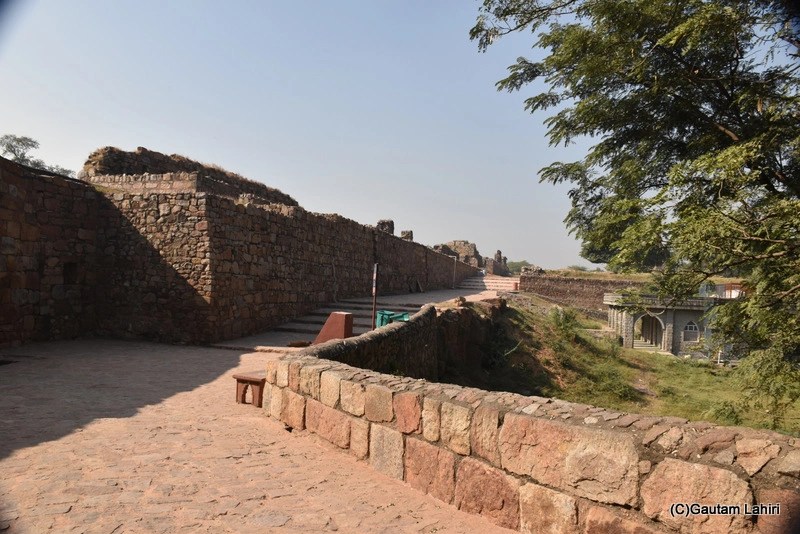
The sun washed ‘Bandholi’ gate had numerous broken buildings. These were the quarters where the fort inmates stayed, perhaps the royalty as it was far away from the bordersThe ‘Bhatoi’ gate area was quite unique. One of the well preserved rectangular building that housed the regimental horses of the dynasty. It butted against a globular bastion with arrow slits to oversee enemy positionsA stone laced road curved its way between fort walls that have turned to debris. We were seeing the East ‘Bhatoi’ gate area. The road rose and then descended far into the distance, ruins were everywhere On the eastern fringe, we skirted the ‘Jama Masjid’. A flight of stone steps turned into the entrance. An arrow slit bastion with its slanted sides formed a bulbous structure next to itWe approached the main palace quarters. Distinctive rooms could be seen, all made of stone slabs and mortar, the area had heavy tree cover, a sort of respite from the burning sunYou can make out the rooms in those days of the palace. Huge walls that meant, the room roof stood about 20 or more feet away from the ground. Small enclosures in the wall were probably used for keeping torches to light the room during the nightsWe came to an opening which was bordered by the broken walls and palace rooms, derelict and broken, were mute testimony and spoke volumes of the Tughlak dynasty
Tughlaqabad Fort, South Gate 🏛️
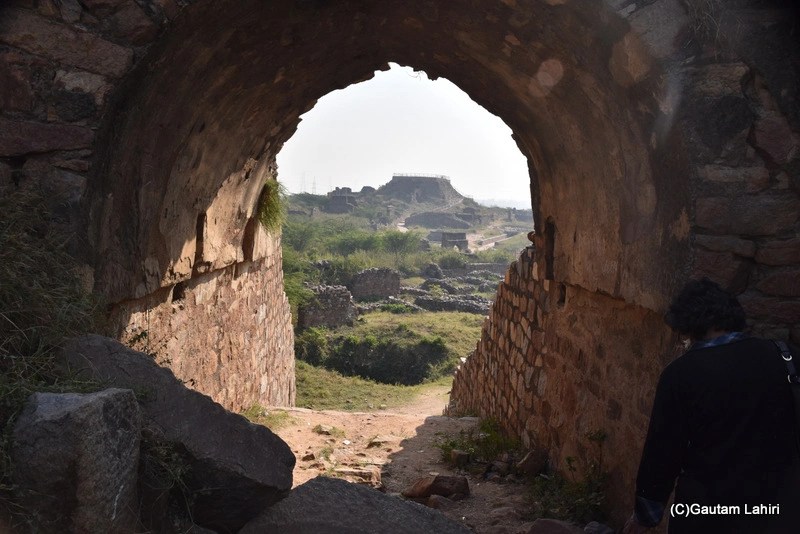
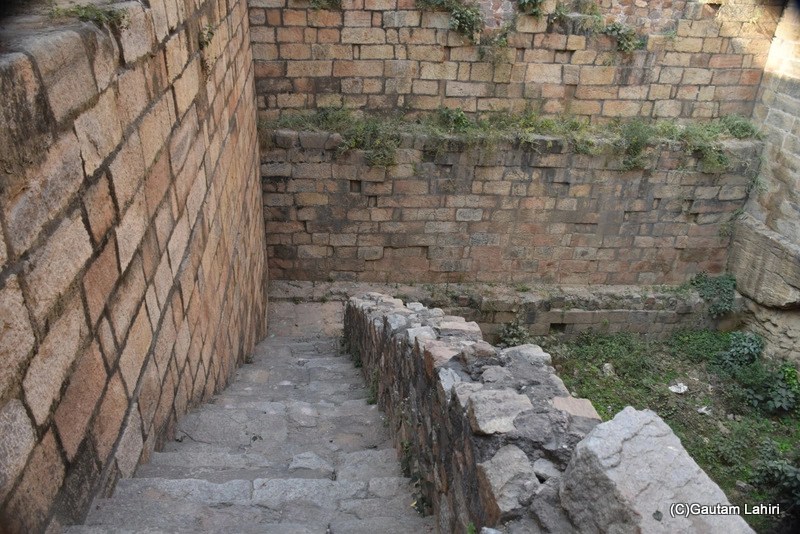
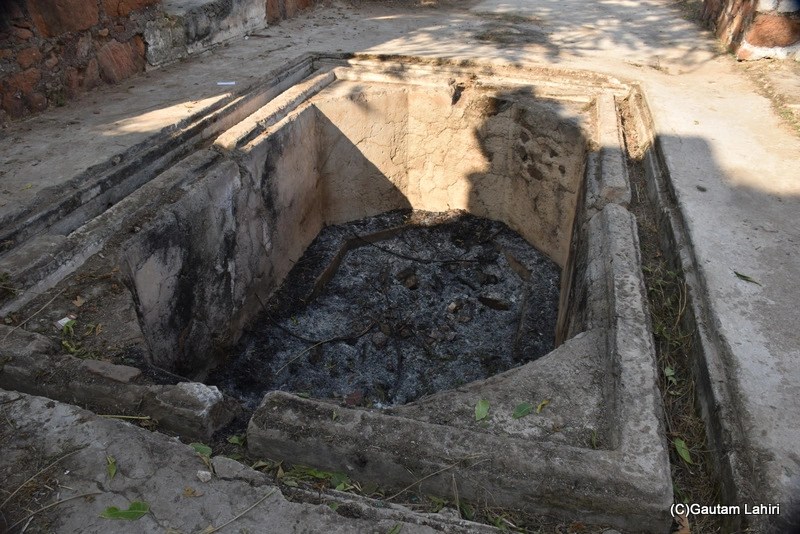
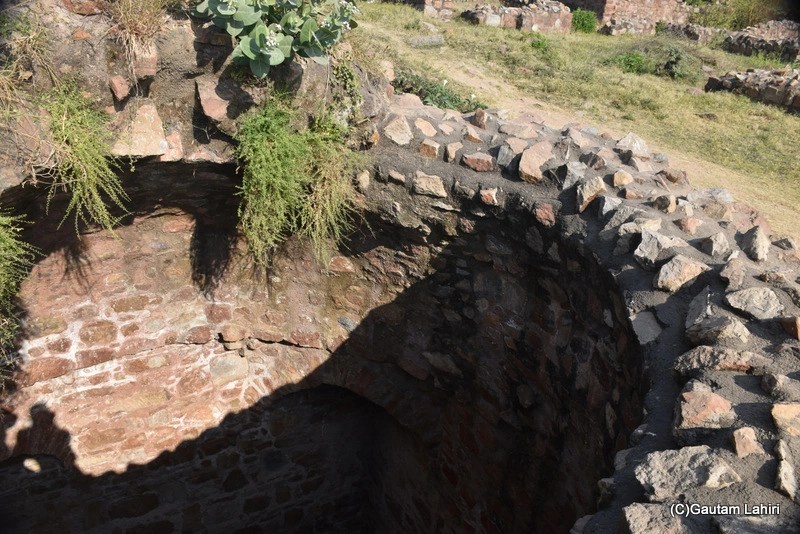
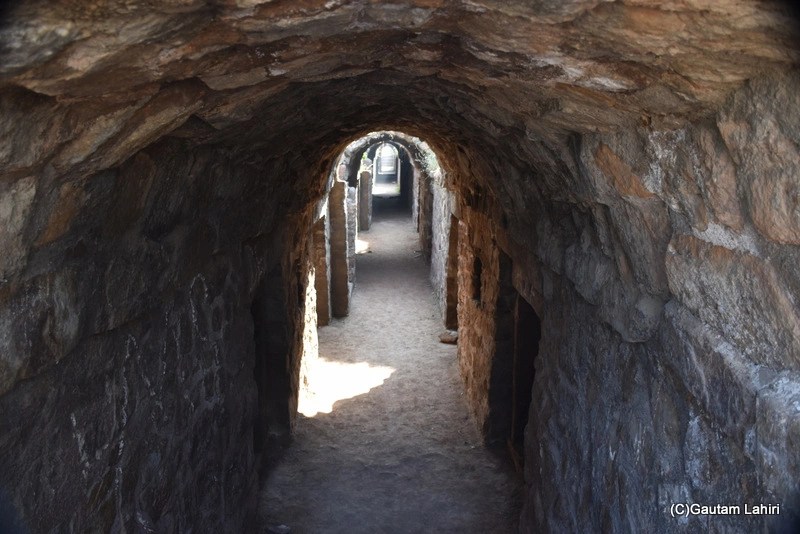
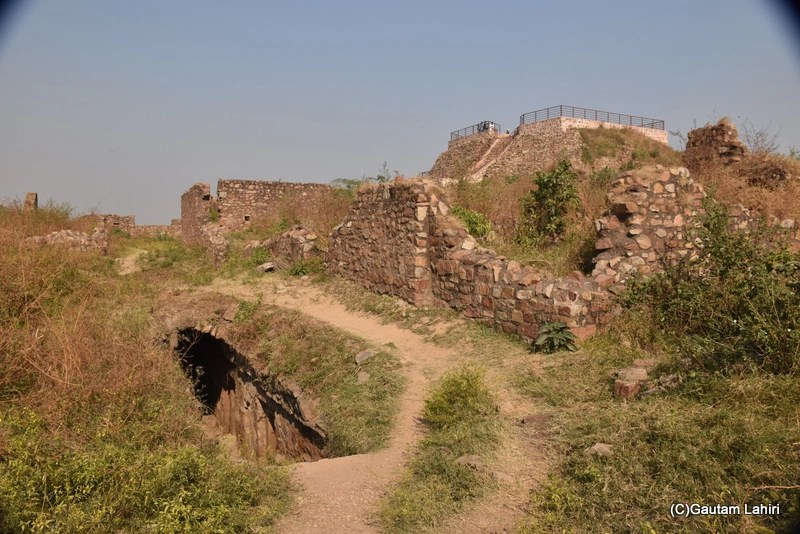
The southern gate area had the ancient reservoir and how the dynasty stored water. We climb down the stone steps to visit the ‘Baoli’ or stepwellIn one of the palace rooms, we saw this water bath. It lies in complete ruins but once upon a time it must have held soothing waters that touched and cooled the silky skins of the Persian royal ladiesOne of the multiple secret passages of the Tughlaqabad fort. It served as an escape route for the inmates from the fort to the next fort area at Adilabad. The opening edge stands completely brokenA true secret passage. I climbed down into one and had to crouch as the stone arched roof ran past me. A few broken roof let the sunrays in. I wondered how the soldiers with their weapons managed fast pace within these narrow passagewaysIt was quite dangerous to tip toe along this narrow walking trail which overlooked a secret passage below and the tallest point, the ‘Vijay Ma’ on top. The surrounding structures were all broken with heavy growth of shrubs and plants
Tughlaqabad Fort, North Gate 🏛️
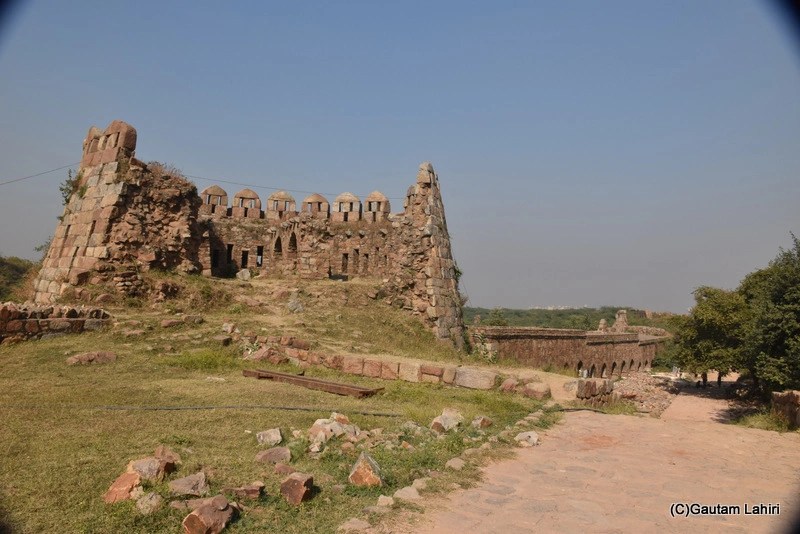
A table top section around the ‘Chakala Khana’ gate came up. Could not make out from the broken buildings. Though it was evident that they were for the soldiers as the area overlooked the southern edge down towards the grasslands belowBy this time, we were half way through the southern gate. We were walking through the ‘Meena Bazar’ area. This place must have seen vibrancy as the inmates thronged to buy jewellery and other stuff from the occasional markets within the fort enclosureThe striking structure on the southern gate section was the derelict structure of a mosque. Half of its eastern face was eaten away by the elements. A stone pathway of red sandstone went into the distant broken buildings. We were stopped from going as this area saw a few roaming leopards from the nearby forestsA relatively clean and less damaged area of the palace around the north gate. We were edging towards the exit as we had made a full circle of the Tughlaqabad fortNear the ‘Chakala Khana’ gate of the fort, we saw the sectional remains of a gate that led to the innards of the fort, once the sophisticated palace was turned to broken remnantsNear the ‘Rawal’ gate, this edifice or the remains of it attracted our attention. It could have been a destroyed bastion with stone stairs. You can clearly see the long arrow slits that were used to attack the enemies if they reached so deep into the fort
We wrapped up our discovery trail of the Tughlaqabad fort.
Don’t you feel like steeping out of a 14th century stupor after seeing the desolate landscape of a ravaged fort.
Our next destination is Adilabad fort, about 750 meters away. Stay tuned ☺️
Inference
Massive Stone Walls 🧱: The Tughlaqabad fort is surrounded by high sloping walls built with grey granite and lime mortar, designed for defense and longevity
Fortress Architecture 🏯: Built in a typical military style, with bastions, watchtowers, and narrow gateways for protection
Triangular Layout 🔺: The fort has a unique triangular shape with a circumference of about 6.5 km
Stone Causeway 🛤️: A raised stone path connects the main fort to Ghiyasuddin Tughlaq’s Tomb, making it one of the few examples of a fort-tomb integration
Royal Citadel 👑: The fort housed palaces, audience halls, and royal quarters
Underground Tunnels & Granaries 🌒🌾: Strategic use of subterranean passages and storage facilities for siege resilience
Baolis (Stepwells) 💧: Ancient water harvesting systems within the fort for sustaining life during sieges
Distance from Gurgaon to Tughlaqabad fort
39 Kms
Pocket pinch
Indian Citizens: ₹20 per person Foreign Nationals: ₹250 per person Children (Below 15 Years): Free entry Nearest Metro Station Tughlaqabad Metro Station (Violet Line)
Best time to visit
Late November through mid March
Activities
Walk carefully and take in the history. Do not expect a very well mantained fort
Parking
Available across the temple, Rs. 50 for first 4 hours and Rs.20 for subsequent hours









 SPITFIRE GAUTAM