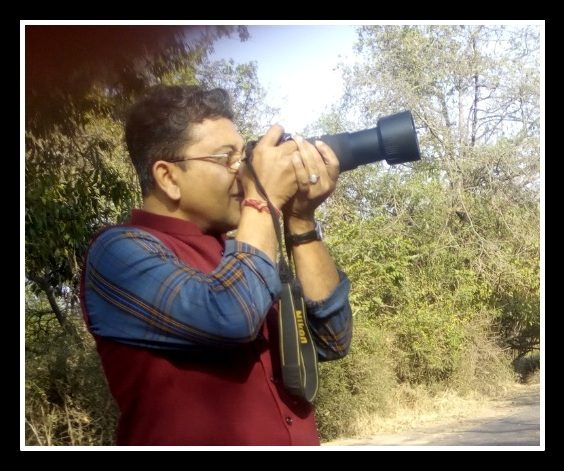


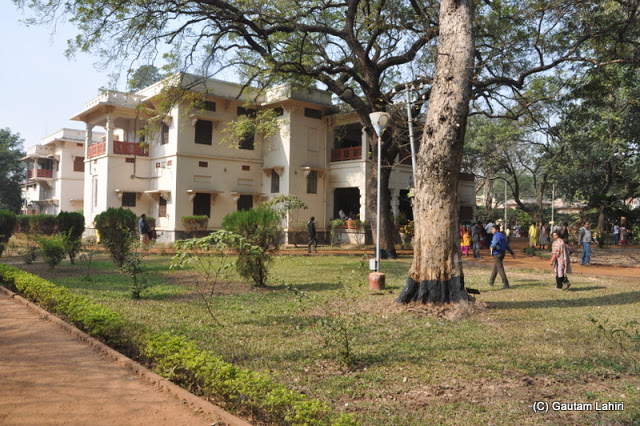
I could see myself smiling as the glass panel upfront reflected back my smile. Finally, we were going to Santiniketan for a few days. Breaking open the shackles of a daily urban routine.

I rang my home phone to confirm with my family that we can get cracking on the holidays.
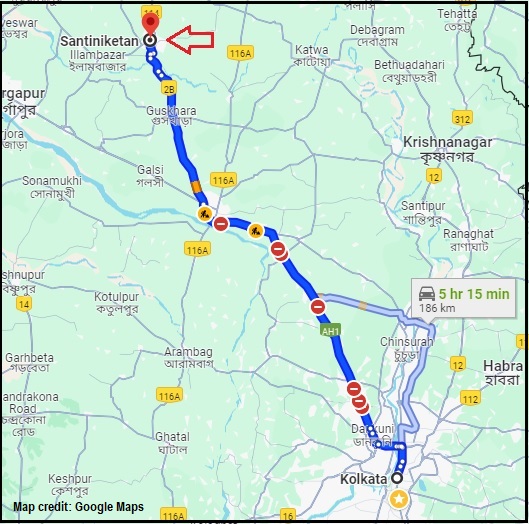
We planned for a four to five days of break from the city; visit the famous ‘poush mela‘, a fair and festival which gets held between 22nd and 27th of December every year at Santiniketan, located in the Birbhum district of West Bengal state, India.
The fair started on the 7th day of the month of Poush, and typically runs for three days, although vendors remained busy selling until 31st Dec.
The Drive plan
Excitement ran high as we were to see a few live performances too of Bengali folk music, especially baul music as they are seen singing at various venues of this town this time.
Follow it with a drive around the town and visit as many places within a radius of 100 kilometers and head back.
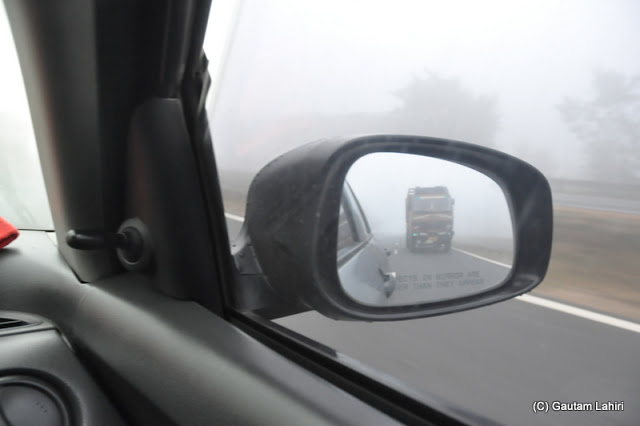
pierced it to through NH-19 towards Santiniketan
Eagerness overflowed, so we readied our trusted transport, the Swift diesel hatchback, an old warhorse.
Hurriedly, I scanned the travel guides for an accommodation and we were lucky to get a four day stint at my friend’s place near the Bolepur railway station.
The NH 19 highway
Expressway were a driver’s delight
Packing a couple of suitcases with warm clothes as the place is colder than Kolkata, we hit the north-west bound highway, NH-19 at 1.30 pm IST which connects Kolkata to New Delhi.
The afternoon sun played hide and seek with the smog knotted clouds, as the Swift made its way cutting the cool air of the highway.
Wonder dessert of Saktigarh
Around 4 pm, we took a break for 15 mins at Saktigarh, a small town in the Burdwan district, 80 kms from Kolkata, famous for making ‘Langcha’, a spindle shaped syrupy fried sweet and anyone on this highway will stop for these in particular – langcha, ‘jhal muri’ (a mix of puffed rice, shredded tomatoes, coriander, chilies and a host of condiments).
The tangy sensation in the mouth coupled with the cold breeze as we stared at the passing trains on the horizon were something we relished.
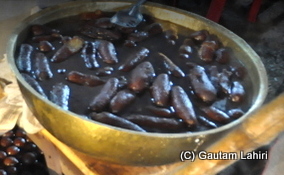
After the sweetened refreshments, we set off again and after driving roughly 16 kilometers, we took a right and left the carpet smooth highway and ventured on the state highway at a spot which took us to a place called “Ghushkhara‘.
Mud bleached countryside
The car was tossed around as the tires negotiated potholes, that had formed in a series. As the afternoon sun brightened, the green vegetation covered hilly mounds held by the dry mud and rock threw striking colors.
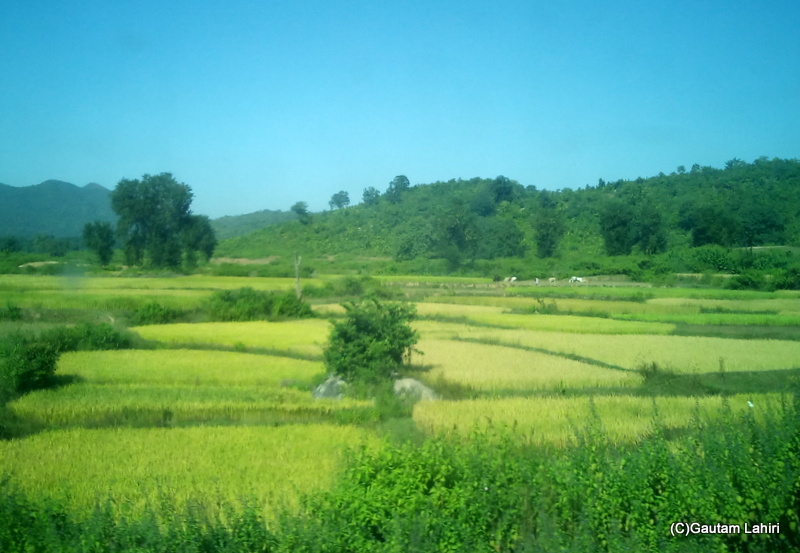
we drove towards the town
Incredible town traffic
This section had everything that you can think of: two-wheelers of all shapes and size, small to big twelve wheeler trucks which we faced and weaved our car around and tried boldly to hold on to the road.
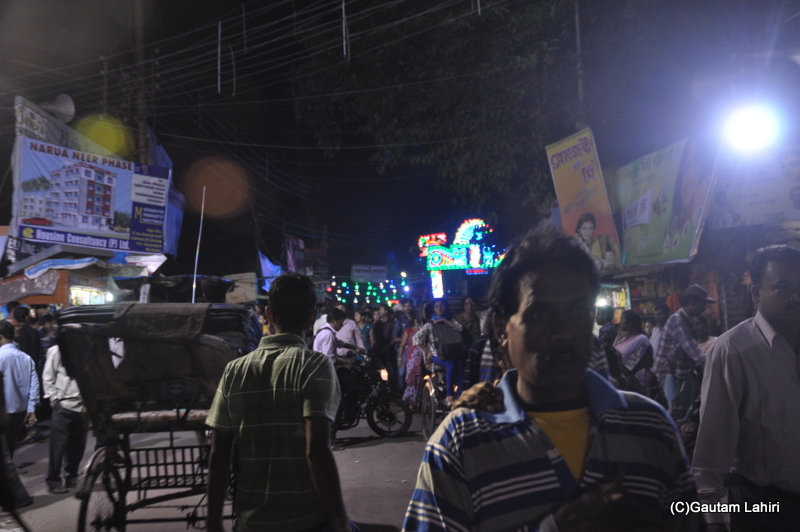
filled with local traffic
After a 52 km travel, we reached ‘Chaurasta’ a busy intersection of four narrow roads.
I eased a millimeter of the clutch to reach 5 cms of travel, and I competed with ambitious electric auto-rickshaws, hundreds of humans, around twenty two-wheelers; all of them wanted to reach beyond that 5 cms at the same time.
It’s a wonder, no one touched each other even being so close.
Days of refuge, a bliss
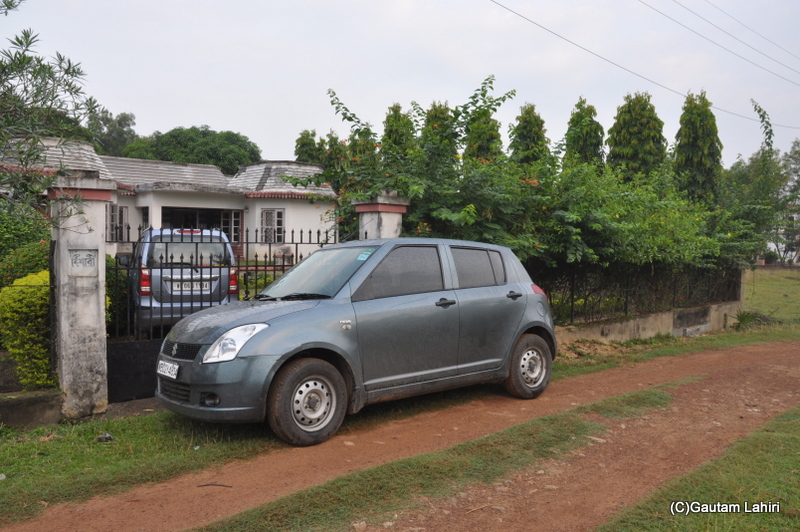
After an hour of battle royale, we finally parked in front of the beautiful edifice where we wanted to rest for the night.
The murram road was barely ten feet wide and the Swift had to master all the courage not to scrape while advancing every 150 meters of the stretch.
A local bloke tapped the roof of the car, with a big white grin, told us that during the fair, for 10 days, no vehicle is allowed in the vicinity of the fairground; which meant, no car.
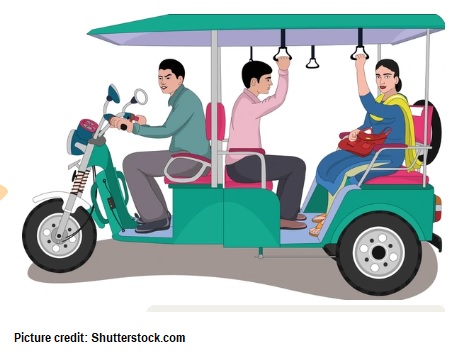
We jumped out and hired a ‘Toto‘, an electrically powered auto-rickshaw which had enough power to move 6-7 people in reasonable comfort.
Visiting the Poush-mela
With the cold evening breeze on the face, amidst the chirping of the night birds, returning to the trees, we enjoyed a bumpy chauffeured ride of twenty minutes and reached the fair.
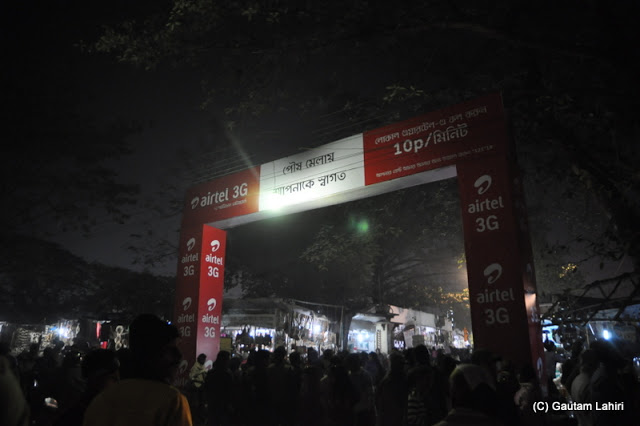
A huge column of people in winter dress, in all shades of color merrily made their way towards the entrance.
We joined in and slipped past them.
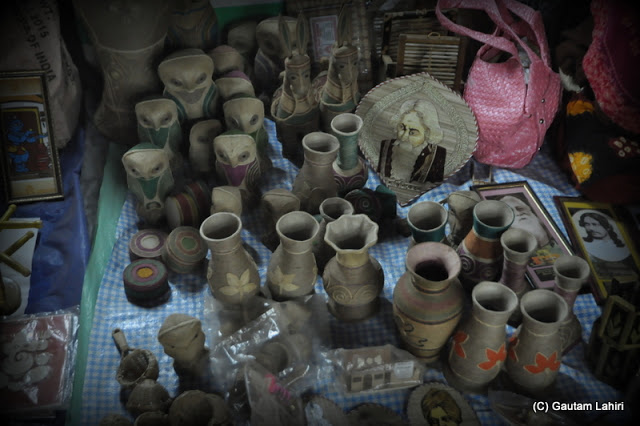
The fair had stalls on either side of the pathway, with its vast array of handicrafts, picture frames, hanging musical instruments, and decorative bags.
Handicrafts of Santiniketan
Visitors were bewildered as to what to buy as the options were endless.
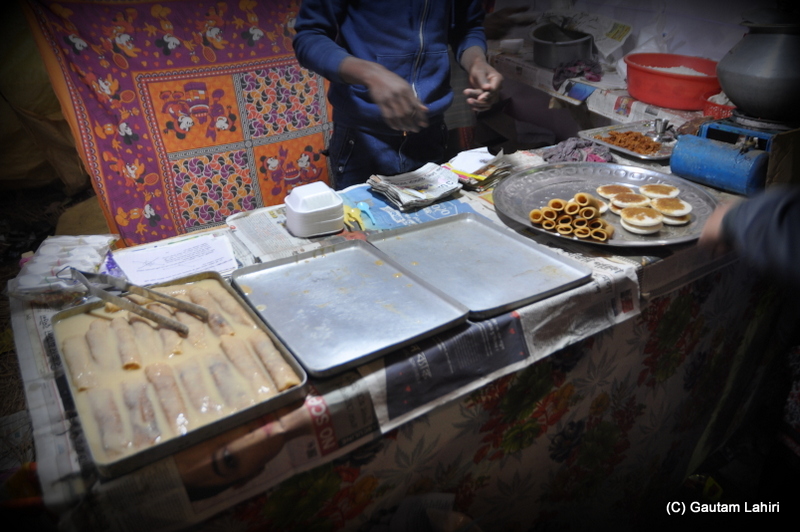
A Bengali sweet known as ‘pithe‘ made from rice, dipped in date tree juice was gracing one stall.
They come in various forms – longitudinal, spherical, and a saucer-shaped one, all of them when you bite into, will take you to a sublime state of pure happiness. They tasted so good.
Lovely, inviting snacks
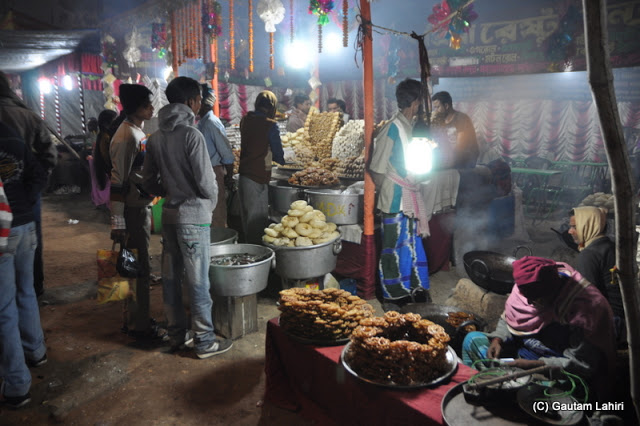
Before you explore the fair food, you also have to remember the level of defense that your stomach can withstand.
The food on display were lying in the open, and a fine crust of dust whipped up by thousands of shoes and slippers had settled, any gullible soul would mistake of thinking, sweets having another fried coating.
Nevertheless, when hot, and served, they tasted golden.
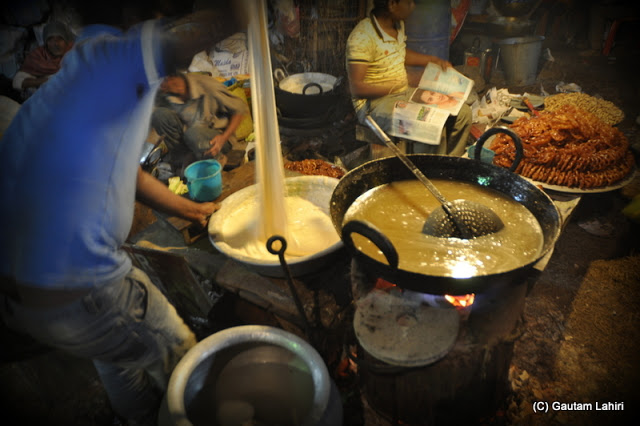
The stalls had all kinds of sweets from ‘Jalebis‘, “Rosogollas,’ ‘Sandesh‘, soft and dry in nature.
Paradise of handicrafts
As we snaked around the stalls, the sheer beauty of craftsmanship gripped and kept us thinking why you don’t have all the money in the world to buy everything you see and decorate your house.
Flower vases, of all shapes, picture frames of Rabindranath Tagore, models of birds, like a wooden owl; exquisitely curved and made of jute…
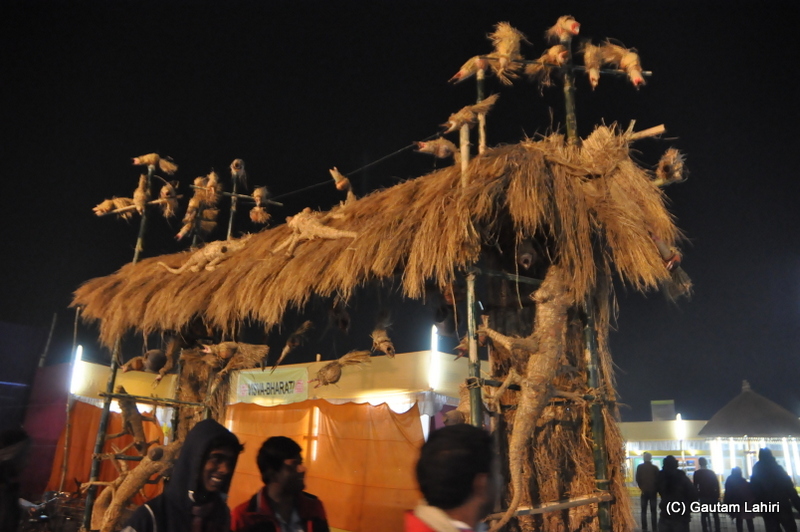
Felt very nice to see that jute made a comeback in the modern age.
We saw a gate made of bamboo and jute which had figures of birds, crocodile, loosely stitched over a haystack ushered the visitors to see the jute products on display.
Roar of tribal drums
As we walked away from the jute stalls, the sound of drum beats caught our attention and we turned to see a podium where the tribal dance was taking place.
White dhoti-clad young men were dancing to the rhythmic drum beats and we stood there mesmerized.
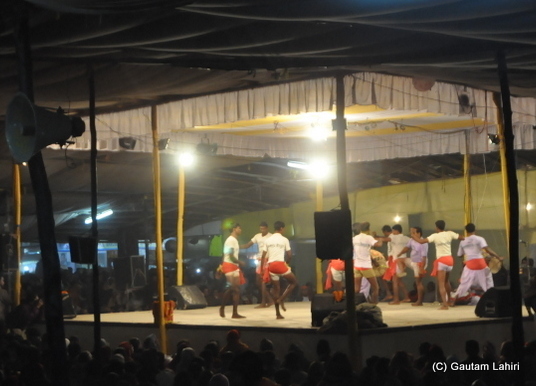
As the night deepened, the cold increased, and the sound seemed to have an intoxicating effect.
Music of Ektara
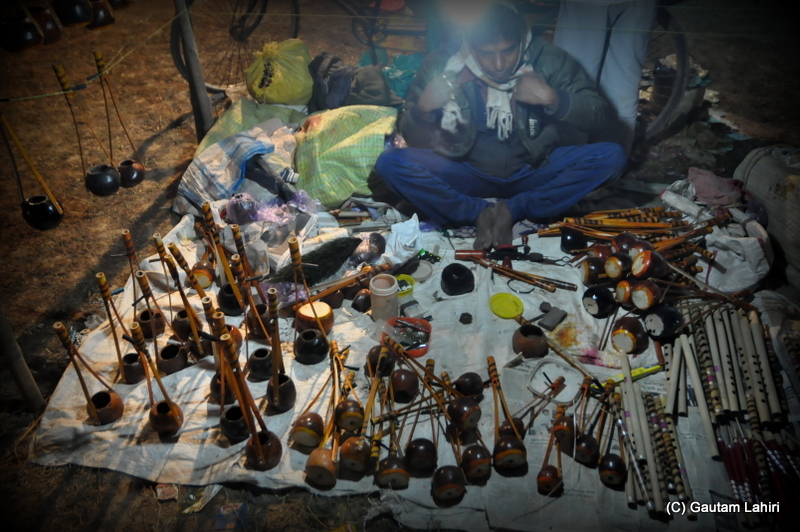
One item which we saw in abundance was the ‘ektara‘, the single string musical instrument which the bauls play when they sing and dance,
They were in all shapes and sizes.
The sound of drum contested with a sweet voice of a young boy who was singing rabindra sangeet.
Exqusite glass designs
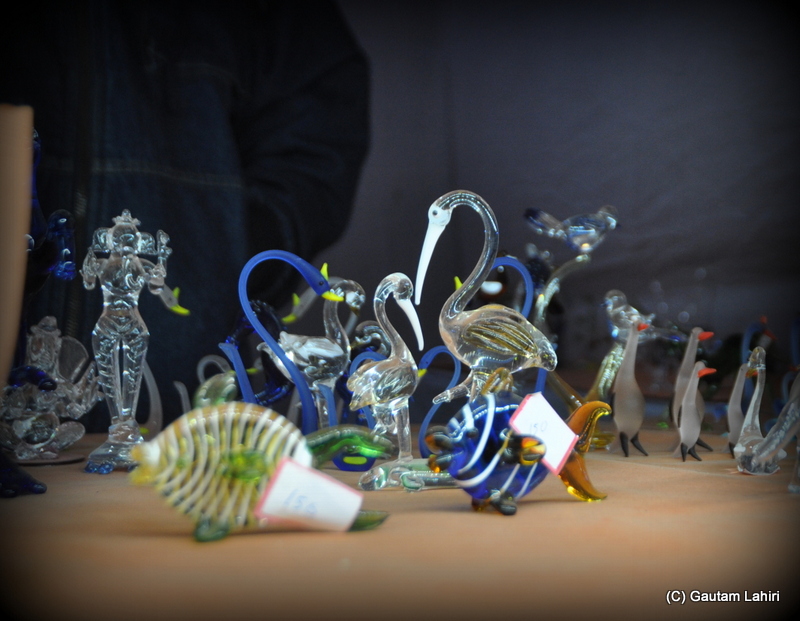
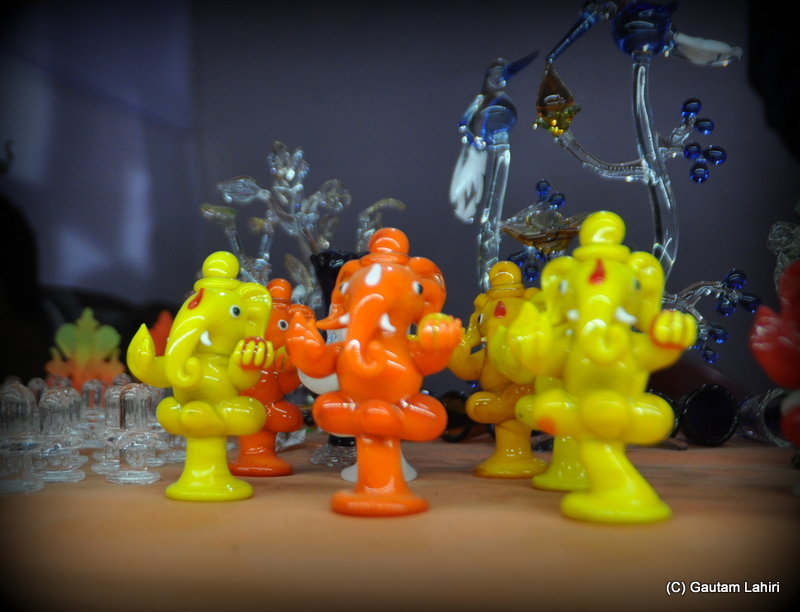
We hopped on to another stall which sold delicately made, beautiful glassware products of birds, ganeshas, and figurines.
I think the craftsmanship was at its very best.
Small and big, colorful or monochrome, they were of the finest quality.
Delightful day end
With so much of beauty absorbed, we came across a restaurant offering ‘Chinese’ dinner of mixed chowmein with chillie vegetables.
Having had the popular and succulent dinner, we jumped into a ‘Toto’ and made our way back to retire for the night.
Tagore’s museum, Santiniketan
Following morning, we wanted to visit Rabindranath Tagore’s residence and museum. As I had visited Santiniketan during poush mela, I knew how difficult it is to take a car in the main town, especially around the exhibition ground.
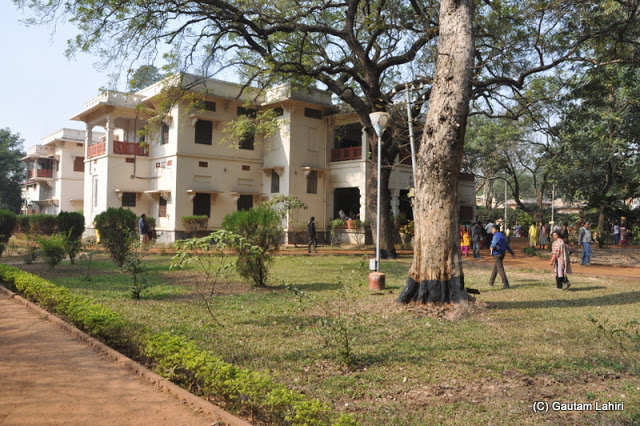
with objects used by the poet
The cars are not allowed at all, so we parked about 5 kms away on the outskirts and made a beeline for the museum.
Tagore’s car
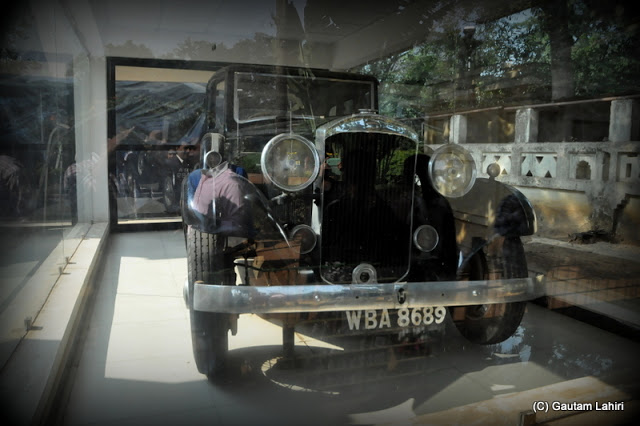
used to visit Santiniketan
We saw a glass draped enclosure with a bold strong car. The Humber Snipe car used by Tagore.
I guess one of the illustrious vehicles of that era and had the honor of transporting great personalities like Mahatma Gandhi, Netaji Subhas Bose, CF Andrews.
A 4 liter straight 6 engine propelled this big car.
We butted through the crowd to see the museum, packed to capacity during the ‘mela‘ season. Soon afterward, we retired for the day and made plans to see the outskirts of Santiniketan, the next day.
My Santiniketan series
Catch us in the Part 2 – Song, music, dance of Santiniketan, a countryside drive for ambling across the outskirts of this famed town.
Part 3 – Lucid music of Baul singers – The heartbeat of Bengal’s folk song SANTINIKETAN, India is bound to offer, all the music and song lovers, a delightful experience of Bengal’s folk songs.
Inference
- Santiniketan is famous for its literary and creative heritage
- Distinguished figures being Rabindranath Tagore and Nandalal Bose
- Visva Bharati offers Shantiniketan’s cultural centre
- Founded in countryside West Bengal in 1901 by Maharshi Devendranath Tagore and developed by his son, the celebrated poet and Nobel laureate, Rabindranath Tagore
- In 2023, it was made a UNESCO World Heritage site
| Time to visit | December to March, preferably to escape the sultry hot weather |
| Places to visit | Chhatimtala – The Birthplace of Santiniketan Rabindra Bhavana – Dedicated Tagore Museum. … Khoai Sonajhuri Forest Amar Kutir – Historic Independence Cooperative Singha Sadan Heritage Bell Tower Cheena Bhavana Chinese Cultural Centre Kala Bhavana (Nandan Museum) Fine Arts Museum |
| Pocket pinch | Rs. 1500 to 3500 per night, Toto ride costs to move around town, Rs. 750 to 1200 per day |

 SPITFIRE GAUTAM