

Readers have been traveling with us along the remarkable Hooghly river on our southward march to the mouth of the river.
Hooghly river
She has been circumventing her course around numerous small and big cities, towns across the state of West Bengal, in the southeastern part of India. She is born at the Farrakka barrage and has traveled almost 260 odd kilometers irrigating thousands of acres of human habitation. River Ganges sheds some of her pristine waters to Hooghly when she is young by way of a canal before she becomes river Padma in Bangladesh, India’s eastern neighbor.
After touching the lives of millions, she gets matured and in the process, has been quenching the ever-increasing thirst of countless living beings and helped them to survive and thrive for thousands of years. After crossing Kolkata, she has turned calm and remains flattened out; loaded with tons of natural debris, human wastes, and reaches Diamond Harbor.
Her roar is replaced by the gentle movements of her deep and murky waves.
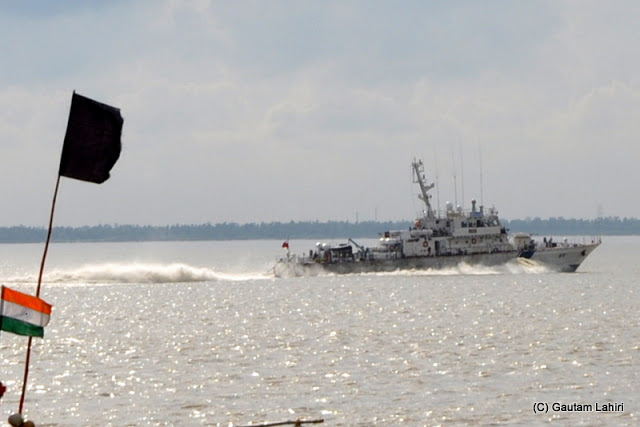
Diamond Harbor (DH) is a jewel that twinkles in the form of a small town on the eastern bank of river Hooghly.
This is the spot after which the river takes a slight right turn and makes her final southward journey before she disappears into the wave laden waters of the Bay of Bengal.
Approach to Diamond Harbor
We saddle up our Swift and plan a day visit, to explore, and carry out a survey of this small town beside the huge water mass. The decision to start early paid off well as we covered the 53 kilometers from Kolkata through a plethora of man-made obstacles.
The NH-117 highway throughout stayed filled with traffic.
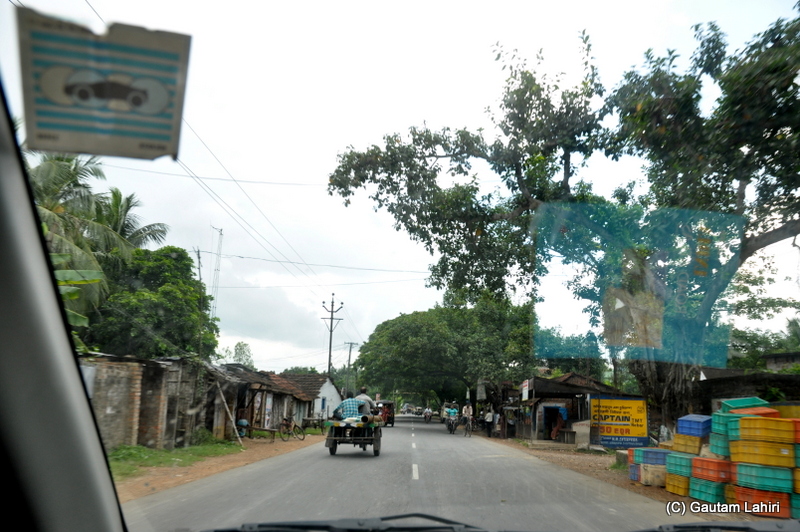
As the road touches small to medium business towns, it acts as a feeder road to the most fertile and cultivated parts of 24 Parganas South.
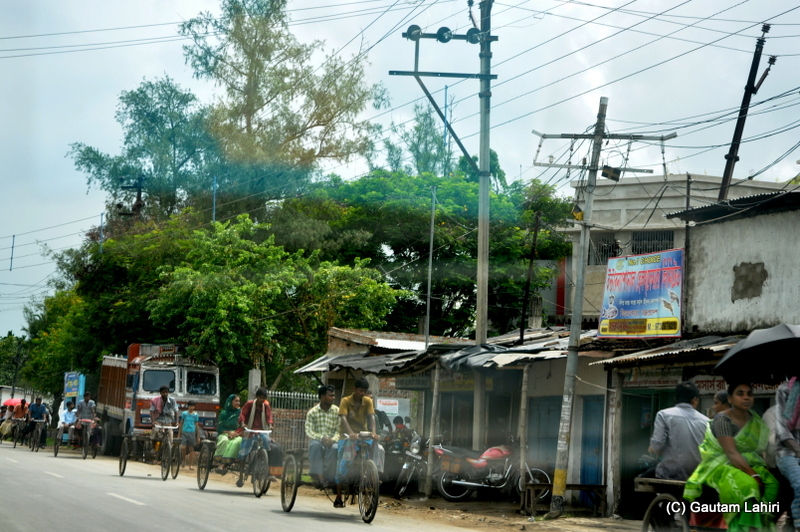
Almost, 24×7, trucks, buses, rickshaws, and people in great numbers bring their produce to sell in the adjoining markets.
The distressing traffic congestion spins the travel time of a motorist right out of the window.
However, we hung on and made good progress.
We were able to bring down the usual 3 hours to about 90 mins and reached (DH) at about 8.30 am.
The highway touches the river bank at an angle so, after a short stint of a drive through a market, the marine drive or the main road suddenly presents the river in her full glory.
Diamond Harbor river front
The river is gigantic and the sight of the cloudy blue sky touching the wide river simply takes the breath away.
You are left to believe if you are looking at a river or a sea.
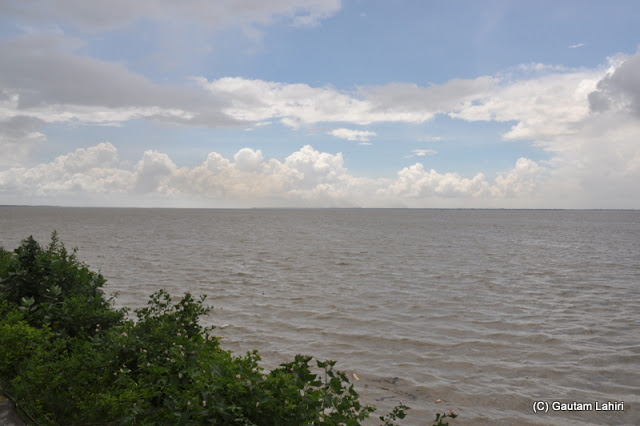
Before long, we see one of many big ships, digging through the river’s water surface.
If you want to see ships, the best time would be, between 6.30 am and 11.30 am at the full tide.
Hooghly seemed to be the mother of all rivers with her wide expanse of gurgling water. As we watched in awe, a gentle and cool moist breeze brought that unmistakable smell of fish, fishermen, and boats that hovered over the riverfront.
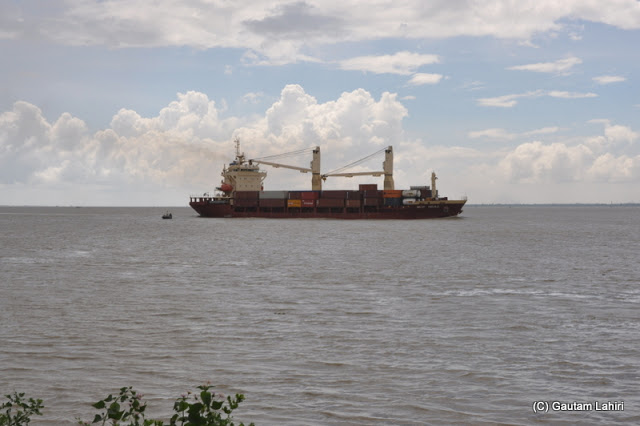
It is quite evident why the British renamed this town to (DH) before India’s independence.
The natural beauty of both the river and the sky, are so unique that any passing ship on the river or a passing motorist on the road is bound to stop and bask in the glory of this sparkling diamond.
The atmosphere was electric to say the least.
We stood there and every natural element just kept changing. The light breeze in minutes turned into a turbulence of speedy winds. Trees swayed and bent with a hissing sound, the water waves splashed gently on the bank and the next moment the area became quiet with all the movements coming to a screeching halt.
We came across plenty of good food; like fresh fish, crabs, prawns. A delightful lunch awaited at every single eating joint.
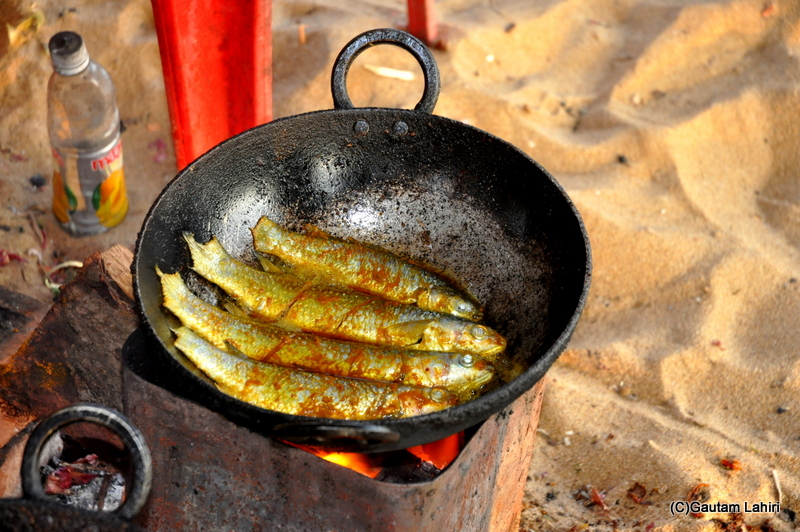
The aroma of the fried fish and burned cooking oil would turn even the staunchest intermittent fasting soul to a glutton.
We did not have to visit any expensive place to quell our hunger.
The fishermen’s den
We started our tour of both the land and around the river with an overbearing pungent smell of fish and drying nets encompassed us.
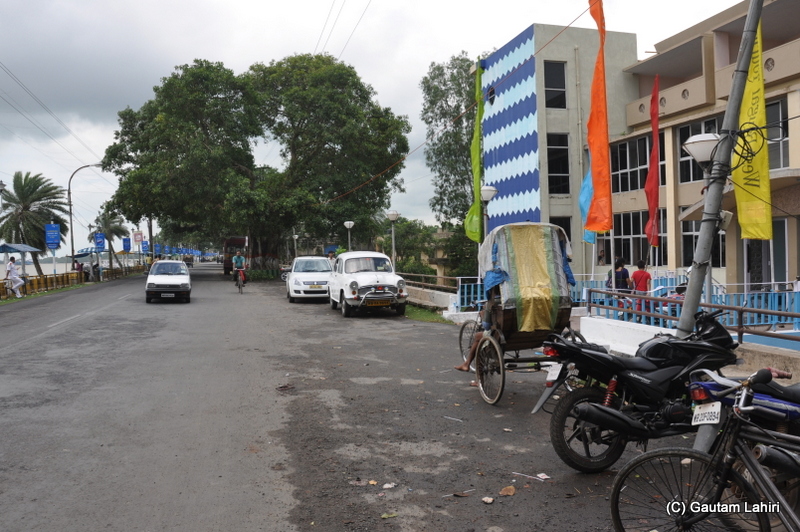
We drove into the deeper areas around the villages through the trees where the fishermen community stayed and farmers could be seen cultivating the paddy fields.
Everywhere our eyes skimmed, the area was wrapped in a green carpet of leaves, trees, and plants, soothing the tired eyes.
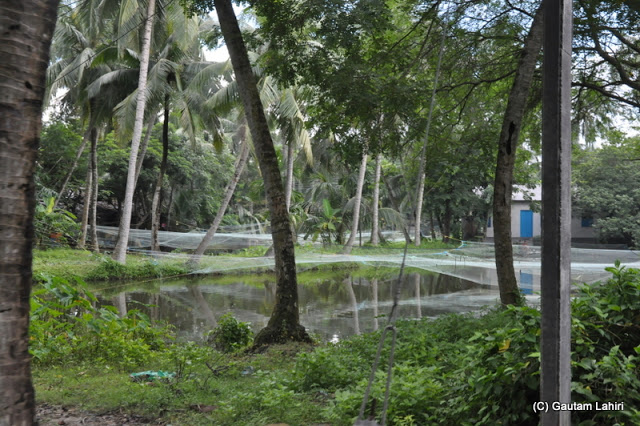
Coconut trees shared the same land with other trees like Neem, and Peepal.
They formed an umbrella over the small water ponds that were strewn across the area.
Fishermen had the fishing nets strung across the poodles of water to dry before their use for a fresh catch.
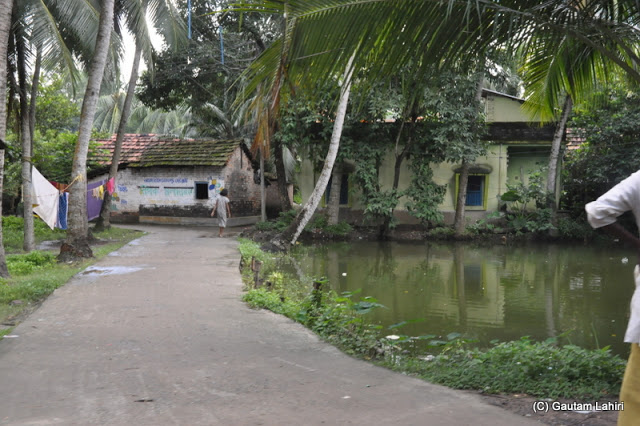
Local livestock ran helter-skelter and a few rested under the tree shadows.
We came out of the village into the open fields.
We saw nets plugged into the muddy ground encircling catchment area.
These nets were used to catch small crustaceans, shells, fishes or other reptiles from reaching the paddy fields.
Green grasslands and river
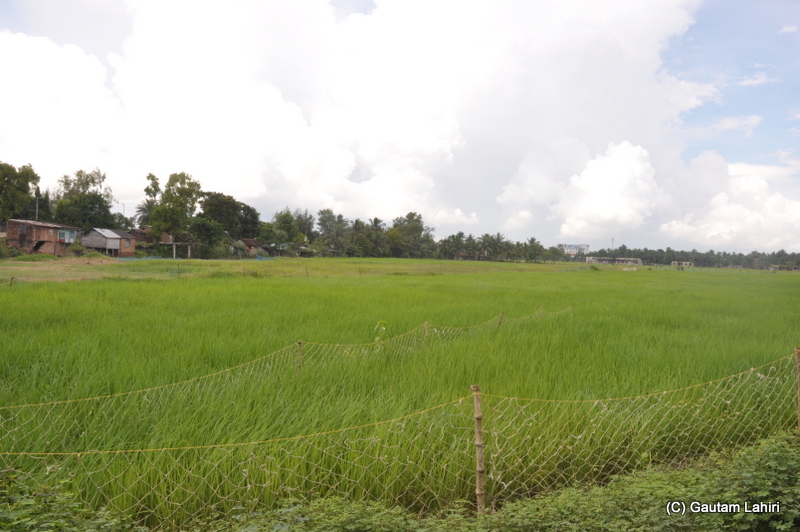
Most of the land beside the river looked the same and we played hide and seek through the undergrowth and big trees.
We came on to an opening where the fishermen had kept their long winding nets on the ground, probably to dry and get ready for the afternoon catch.
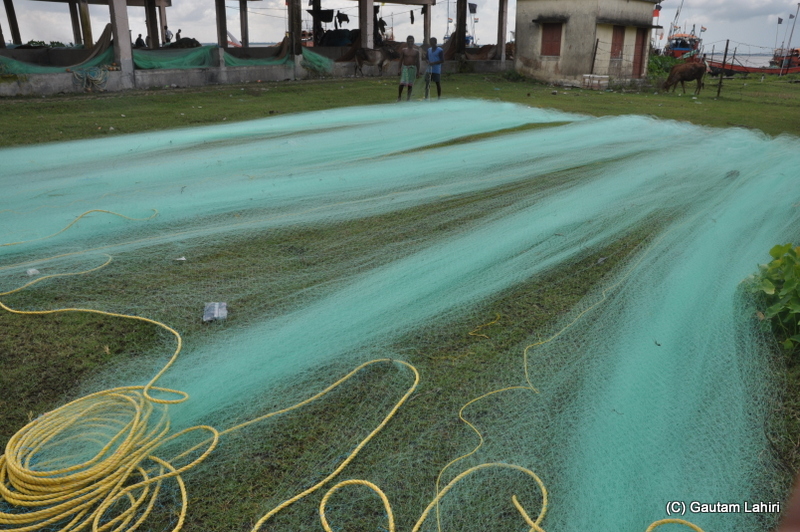
We were coming back to the river and wanted to find the fishermen’s life on and off the great river.
A makeshift road, mostly broken made its way to the riverfront. We bumped across and found a small and compact open field along the river. The land was a part of an abandoned fuel station.
The fuel bunk was being manned by the grazing cows and a few stray road dogs that loitered in the vicinity.
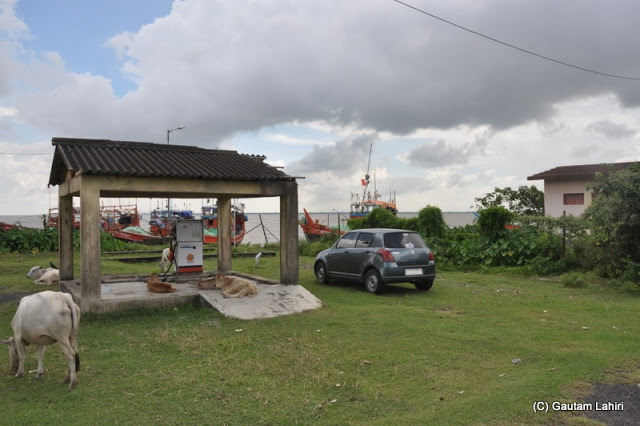
I felt extremely excited at this point. Having parked, I made my way towards the pier that overlooked the wide river.
A long metal swaying walkway made its way to the river, wide enough to use it for loading and unloading crates that housed the fishes from the trawlers.
Also present were large capstans which made perfect places to sit and watch the ocean liners under the sun and wind.
We got a taste of the laid back life of the river people and walked on through the mist from the frothy water that smashed against the riverbank that landed on us in a spray.
Ships and boats, the water highway
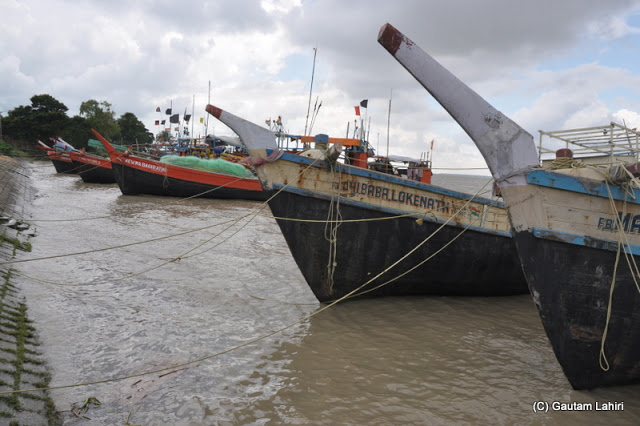
These sturdy boats were being used by the fishermen as told by them are specially built to pick up speed when catching “Hilsa (Ilish)”, the most loved fish in Bengal and Bangladesh and perhaps, few other places, the world over.
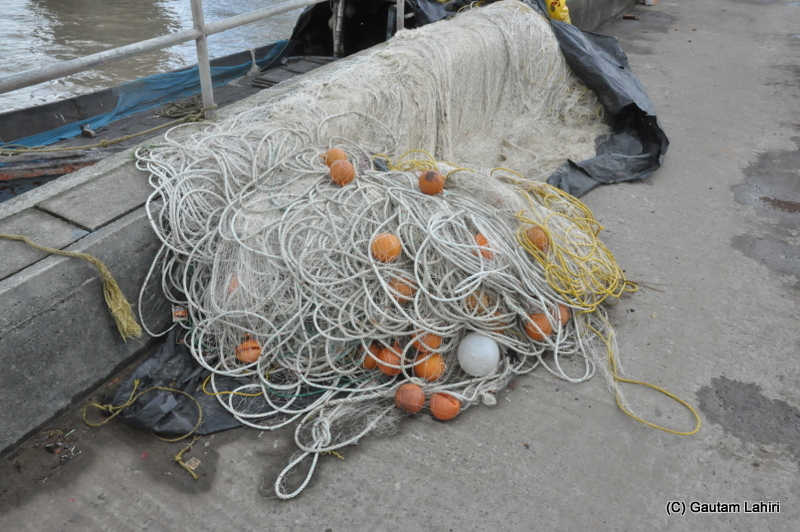
A huge stack of coiled up net lay on the pier. The entire lot would be moved to the waiting boat which was jumping about besides the makeshift dock
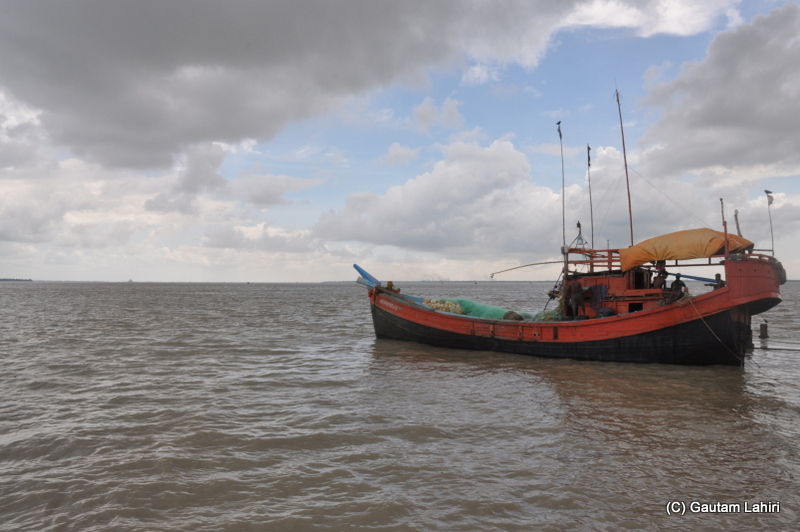
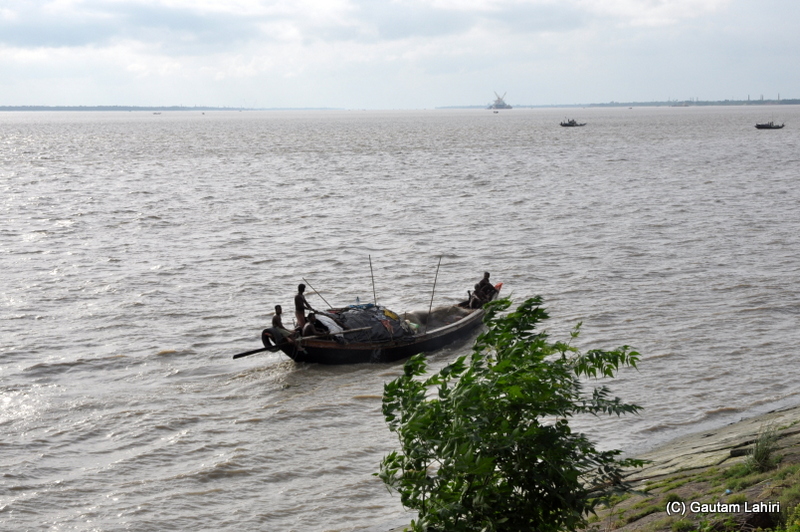
We saw a large fishing boat getting ready to set sail.
She was waited for an approaching large ship to sail past towards the sea before she could start.
A couple of big ships roared past, passing each other in opposite directions, the waves that they created off their bow turned into a sudden storm of waves that tossed all the boats that were anchored on the river bank.
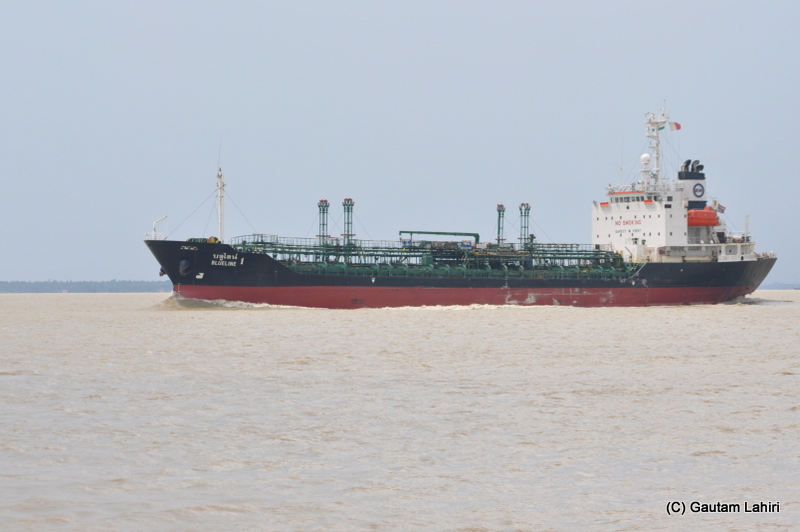
So, mighty was the power of a big passing ship, it seemed a squall hit the river bank, a sight that is etched in our memory.
A huge oil tanker from Hong Kong passed the point where we stood, took a full 3 mins to pass us, perhaps at 18 to 20 knots
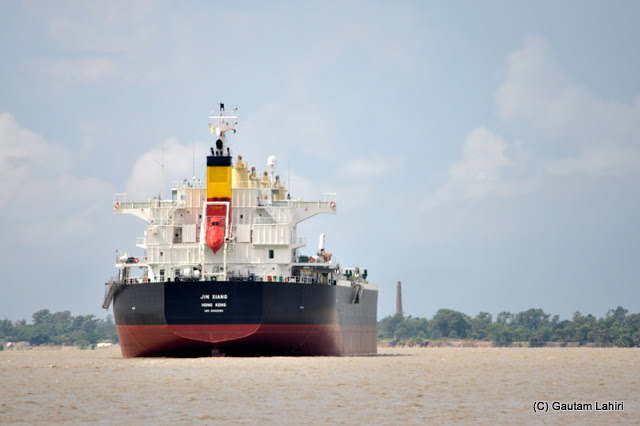
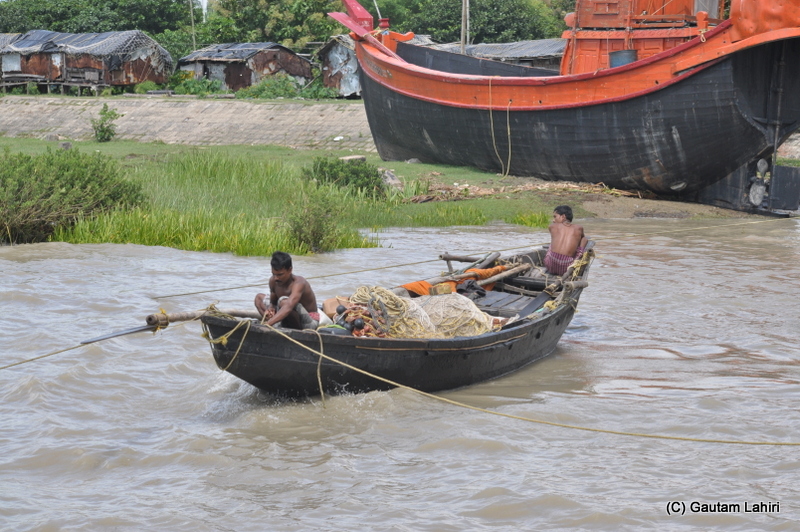
When the ships moved out into the distance, the fishermen started jumping on to their boats to make use of the mad rush of water and waves created by the ships to push their boats into the cauldron and started the engine when they had floated in the middle of the river, saving fuel.
Play of river water
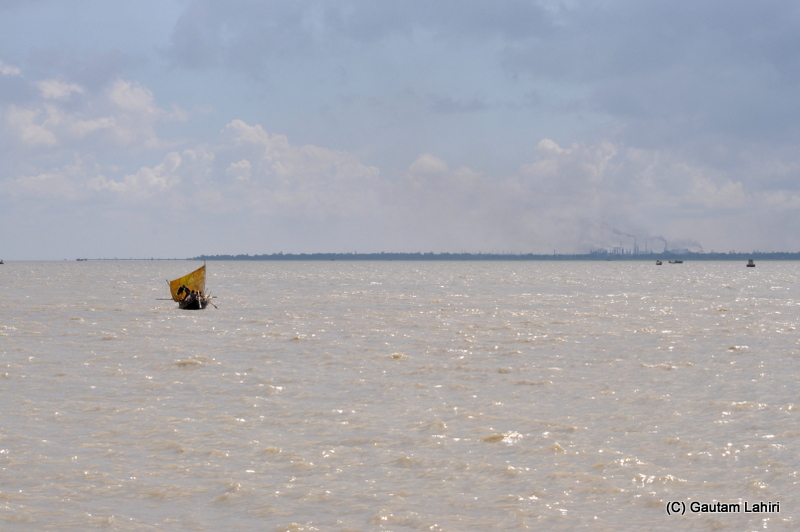
The sun was right on top and although it was very hot and sultry.
The river breeze was making us comfortable, whipping water off the surface that created a pattern of hot air pecked with cold water particles.
By 1 pm, the ship traffic reduced considerably and we could see why; the water level had gone down.
We had our sumptuous lunch in a nearby restaurant.
The menu included, two pieces of Hilsa or Ilish and tiger prawns with a dash of lime, fried pulses. We concluded the lunch with green mango chutney.
It made perfect sense to savour the fresh fishes over chicken or mutton when around rivers and sea.
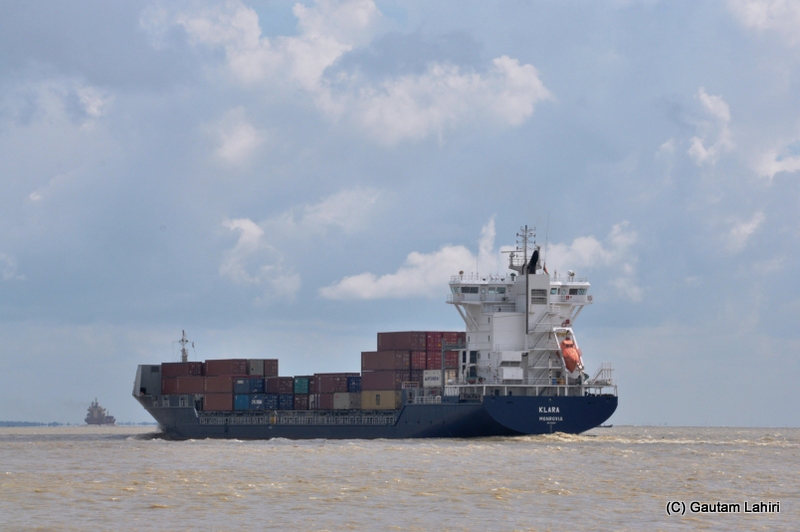
The tide started to rise and we knew a ship would be seen and we did not have to wait for long as a big handsome looking container ship whizzed passed us at speed towards the sea.
The fishermen could be seen using the ropes and tackle to fasten the boats to the capstans that dotted the pier.
Fishermen’s day catch
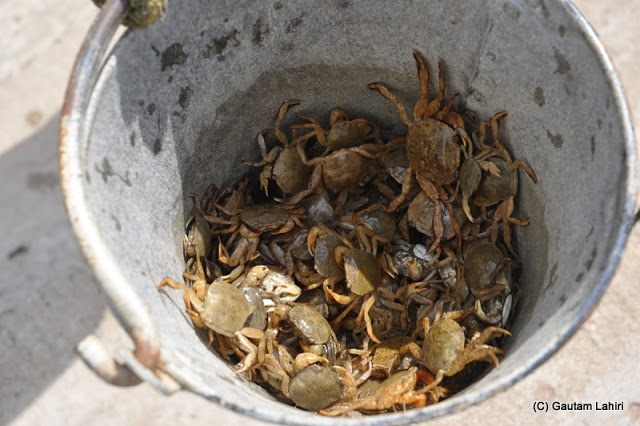
One person was using a hand net to catch a few more crabs before he could take the catch back home.
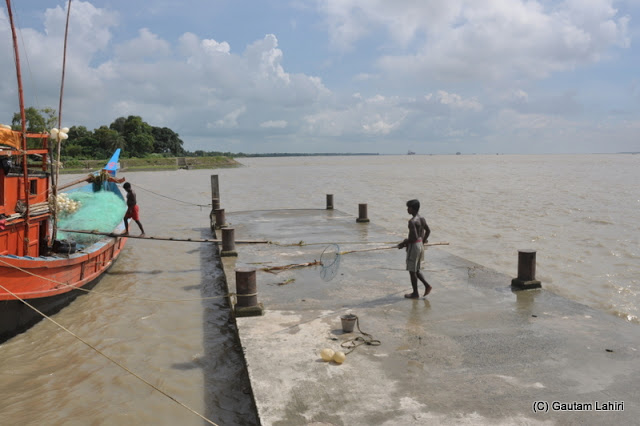
Fishermen pulling the boat with the help of a rope as another walks on a bamboo, using it as a walkway and how effortlessly he crossed over on the dancing pole.

It was afternoon and the sun graced the western horizon. The heat was slowly replaced by a cool breeze that dried the sweat away.
A sugar laden hot tea in earthen pots spiced up the late afternoon with a few munchies as local delights. Vendors of all kinds could be seen along the riverfront.
We picked one and settled on a concrete seat with a Date palm tree as our shade and looked at the river which had turned blue by now.
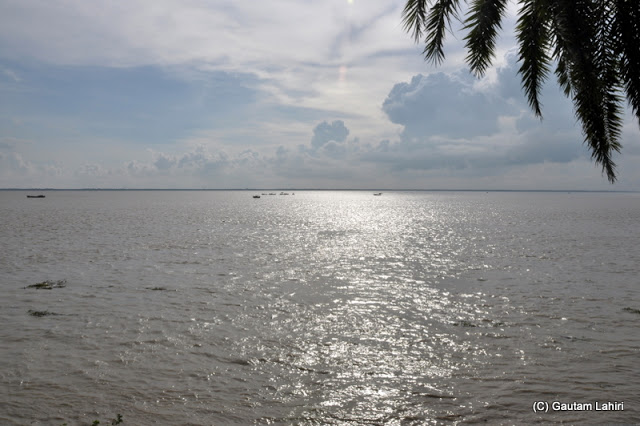
A blast of wind came rushing towards us. The boats wanted to cash on this wind to pick speed as they sailed on.
The day-long heat made the land very hot and the air over it rose high and the cool breeze over the water smoothered us all.
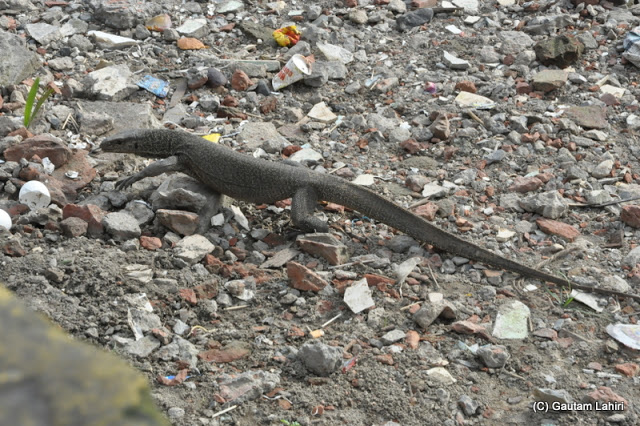
We saw a water monitor, plenty in this region moving surreptitiously towards a waste bin to lick clean whatever morsel it could find from its human neighbors; it thanked the untidy humans for their generous disorderly habits of throwing foodstuff for them to devour.
Bengal’s pride – The Hilsa
We walked back along the riverside road and came across the most astonishing site that every Bengali, like me would love to see.
All those boats that we saw for hours doing all their water acrobatics have paid off. We saw a man with the fresh catch of Hilsas or Ilish fish.
Sparkling in the afternoon sunlight and we felt like buying the entire cartel on display.
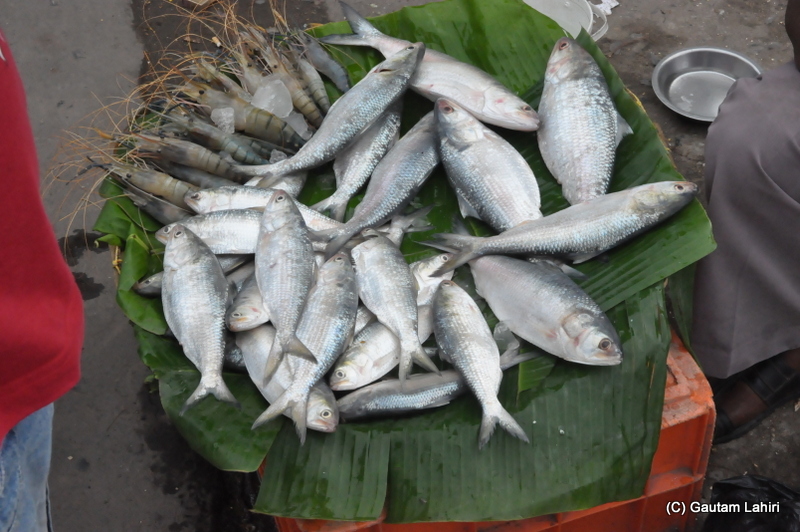
There were two sizes that were on sale, medium-sized ones which were less expensive and the other one, bigger and had a light pinkish glow which attracted everyone’s attention, including ours.
The big ones were just out of our wallet capacity, so we looked at them with reverence from a distance.
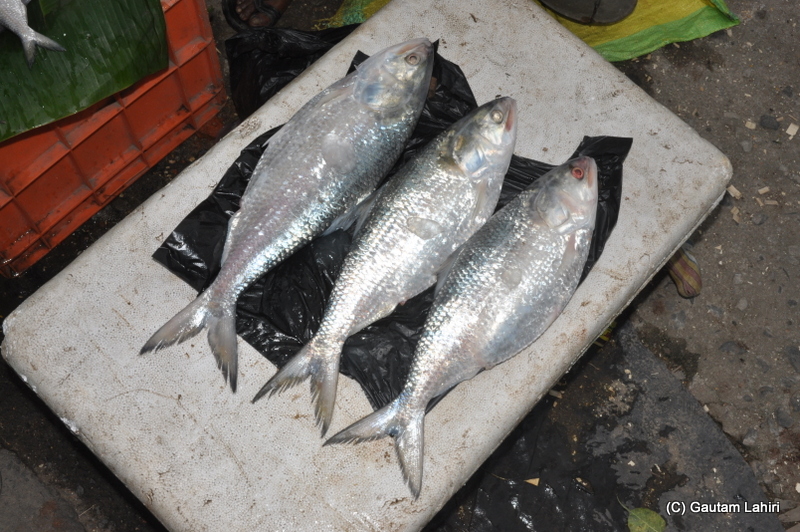
We just could not resist the temptation and bought one large, especially the bulging fat bellied which meant there was caviar in it or eggs. The ones with eggs cost less too.
With a big smile on our achievement and the date with Diamond Harbor slowly coming to an end, we looked back at the setting sun over the river.
Inference
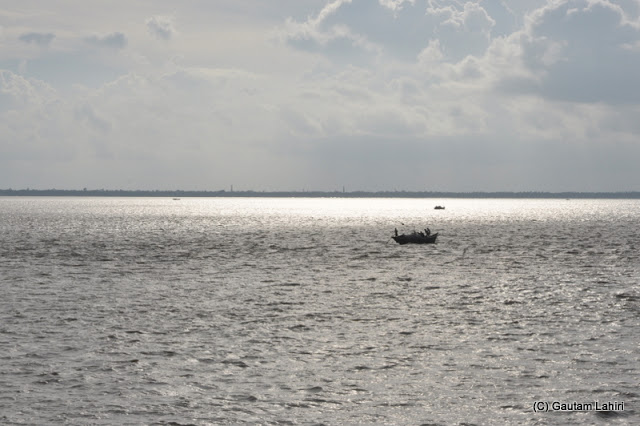
Completely bewitched by the river’s beauty, her interplay with the sun, cloud, and temperamental wind, our soul was content and also a bit tired.
Very delicately with ice packs, we kept the Hilsa fish in the Swift’s dickey or the rear luggage compartment and set a course due north towards Kolkata.
We had a taste of a fishermen’s day, the playful coexistence of mighty ships and smaller boats. Changing modes of the river and weather, and of course, a non vegetarian’s paradise, especially a fish lover.
We bade farewell to the mammoth river and disappeared over the NH-117 for our base.
| Distance from Kolkata to Diamond Harbor | 53 Kms (one way), travel time: 2 hrs. |
| Car used and diesel required | Maruti Swift Diesel 1.2L, Fuel needed: 4.2 liters |
| Time to visit | Not in summer or rainy season, reach early by 9 am |
| Delicacies | Hilsa, prawns, Pomfrets,crabs |

 SPITFIRE GAUTAM