

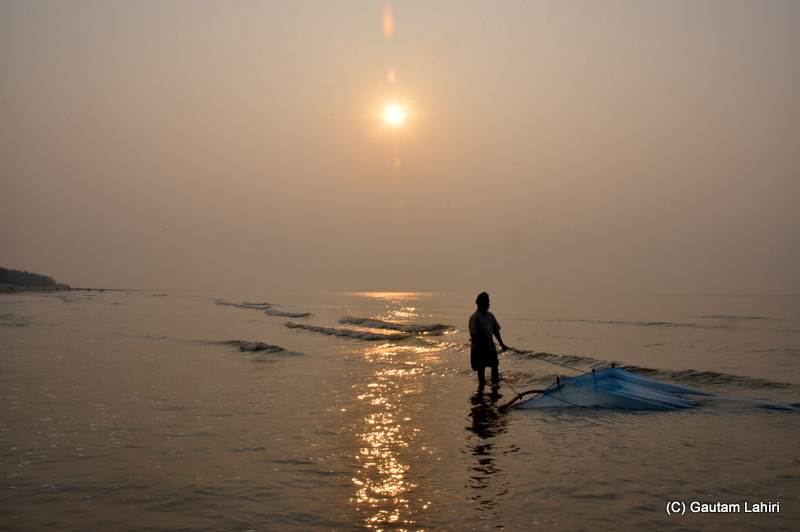
We have been following River Hooghly on land along with her twisting course on her way to her final fate, meeting the Bay of Bengal. She has splashed the banks of countless lands and cleansed the myriad souls of a civilization.
She is a reservoir of life, replete with diverse culture, nourishing the living beings inexorably without any expectation. She has touched the historic Diamond Harbor, Haldia, and away she goes another 81 odd kilometers, skirts the Sagar Island on the right and dissolves into the sea.
Bakkhali approach
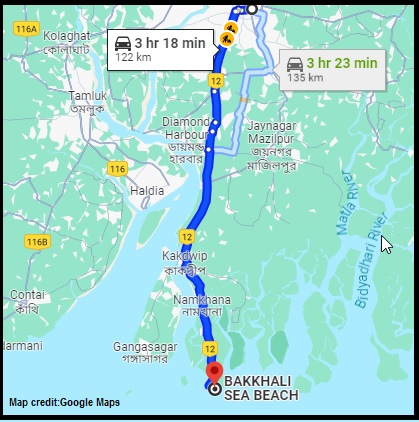
If we take a bird’s eye view from the top at this point and move south-east from this area, a beach has blossomed up called Bakkhali with a satellite town known as, Frasergunj.
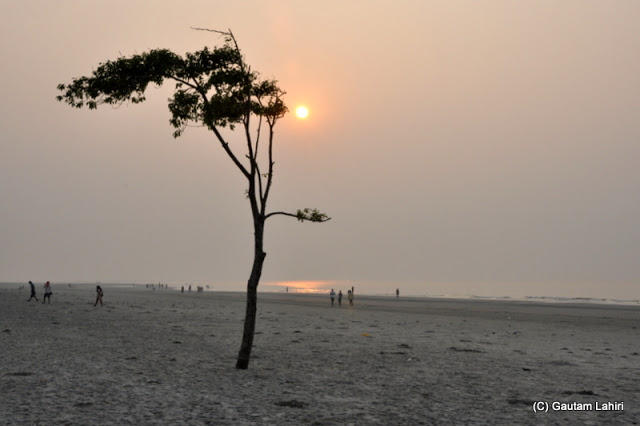
drenched white sand turning golden brown
Having been to Diamond Harbor, an inner cry in me was resonating to see the beauty and nature’s ever-changing mood of painting colors whenever a river met a sea.
We geared up again, and with a loving look towards our ever trusted travel companion, Swift, we started our seaward journey by land. Bakkhali is about 123 Kilometers away from where we stayed and shared the same NH117 highway which we had taken to visit Diamond Harbor(DH). Most of it was known to us, the only difference was the extra 80 Kilometers, down south that connected (DH) with Bakkhali.
Unique car-ferry
My interest lay in the last leg where I heard that motorists have to take the car across a small creek or a canal.
After a 3-hour drive through the greenery of 24 Parganas, we finally reached around noon, the Namkhana jetty where we queued up behind a series of cars to cross, the river Hatania-Doania.
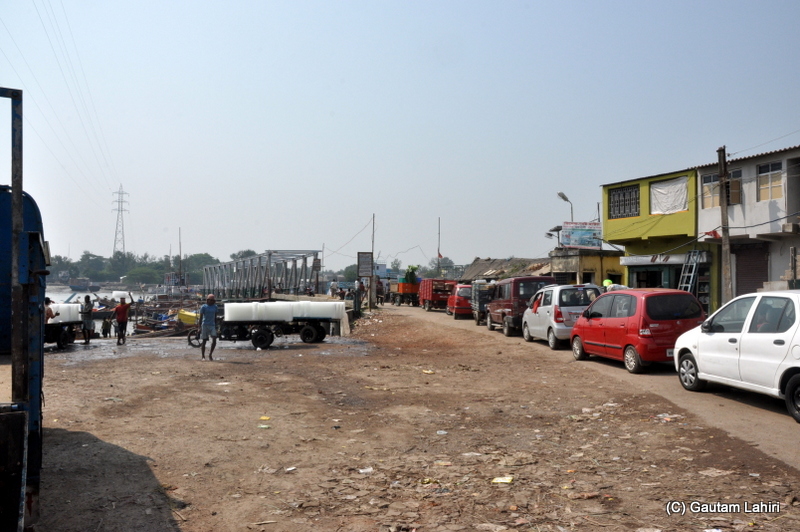
and land on the barge which would take us
towards Bakkhali
Hatania-Doania is one of the many rivers that connects the mainland with the island town of Bakkhali.
The river is extensively used by the fishing boats and as such, Namkhana, the town has become primarily a fishing harbor.
Click the ‘Play’ to experience the car ferry
River crossing
All we could see were tons of fishing boats, stacked up with big blue plastic tanks and fishing nets. A brisk movement prevailed as fishermen, tourists and officials all wanted to compete to reach Bakkhali.
The air was redolent with all pervading fish smell.
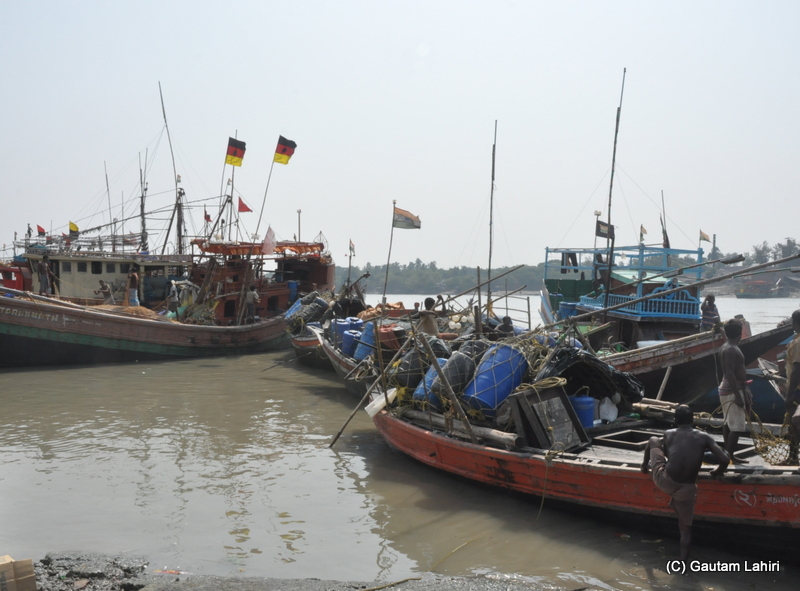
grimy waters of the creek to guide
them into the open sea
The final moment came and I was so excited to drive our Swift on to the boat.
With a clank of metal, rubber hit the metal deck, the boat nudged a bit as I parked the car on it with bumper-to-bumper vehicles.
We were extremely lucky to get a chance after a wait of only 10 mins. The motorist on my right glared at me with furrowed eyebrows as he had waited a full two and a half hours.
The barge only operates when there’s a load of fifteen to twenty cars along with small to medium-sized trucks to maximize its economic ride over the canal. We were the fifteenth car and helped the barge driver to finish his quota.
It was indeed a novel experience.
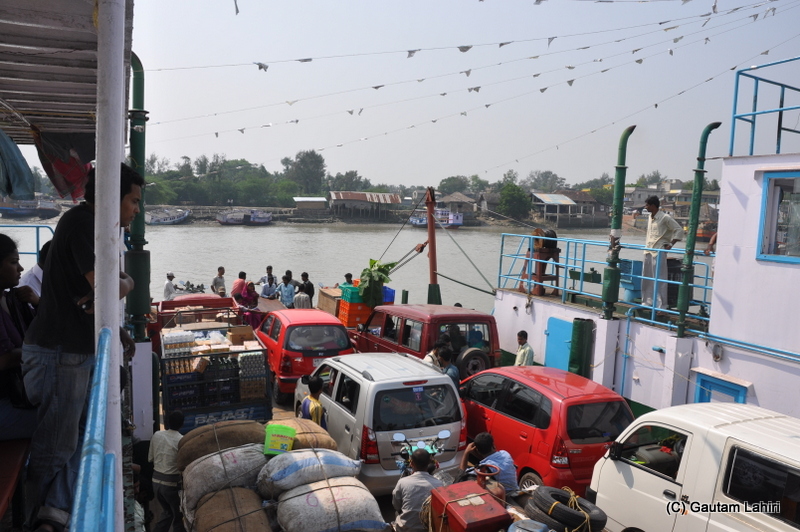
of cars and trucks as she set sail
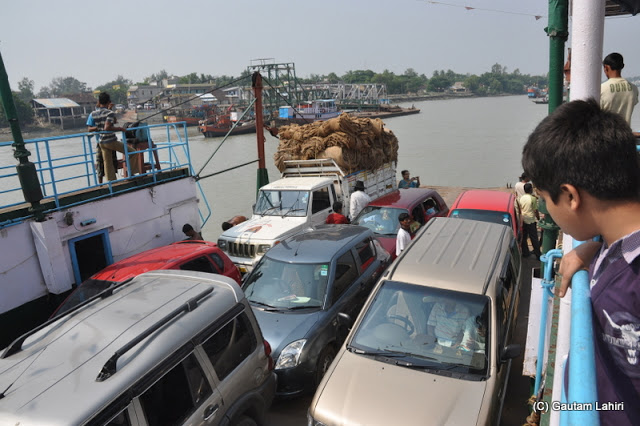
The boat would come back after 45 mins for the next load of vehicles, so we felt overtly joyous to have finally made it.
Our hope of a good ride with the car came to an abrupt end as the passage through the river was very short-lived and barely after an eight minutes ride, the boat’s front end touched the opposite bank for the cars to drive away.
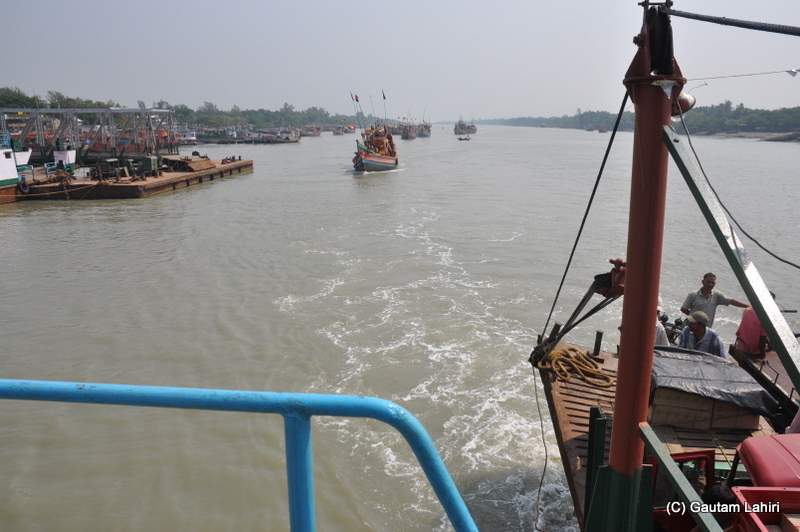
The beach town of Bakkhali has grown around big ponds and roads that ran parallel to many small to medium reservoirs. Most of them were being used for fish culture and due to proximity to the sea, the humidity level was quite high and often we had to wipe our face to look sane.
The sultry salt peppered weather was rather humid.
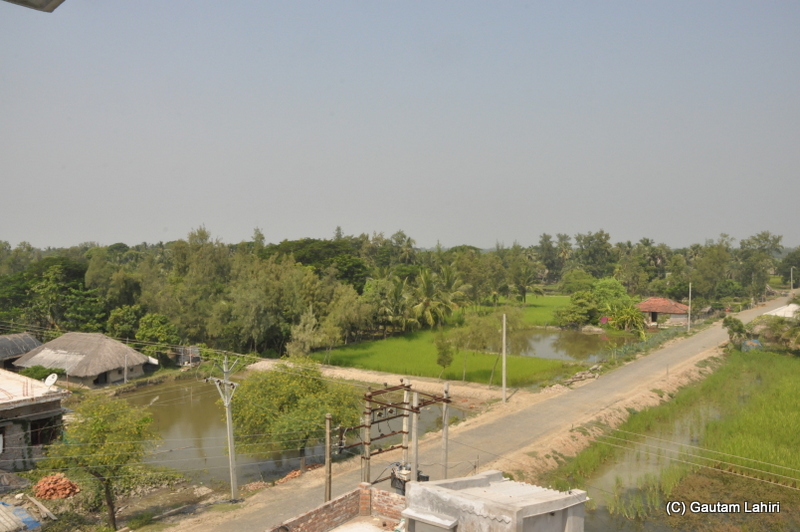
with the trees bordered the horizon
Bakkhali beach town
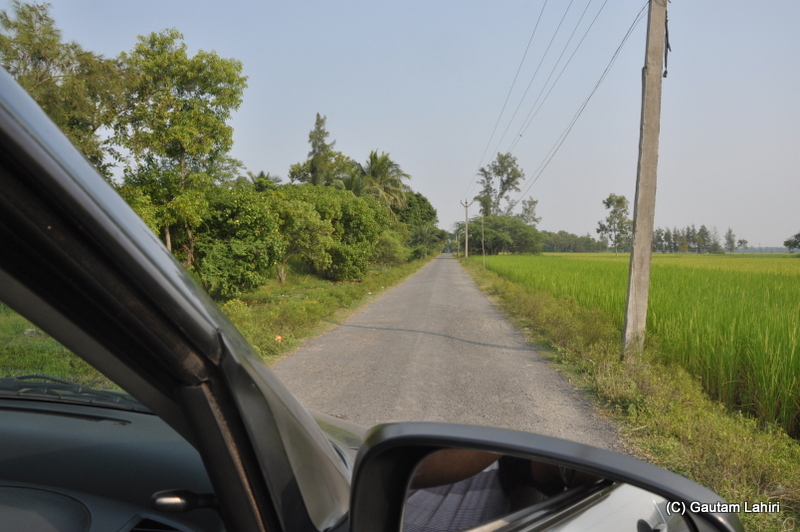
The color green was the preferred choice of nature here as the cultivation of paddy could be seen everywhere.
Various shades of green across a wide array of trees and plants touched the yellow and black lined sandy roads that were the life line.
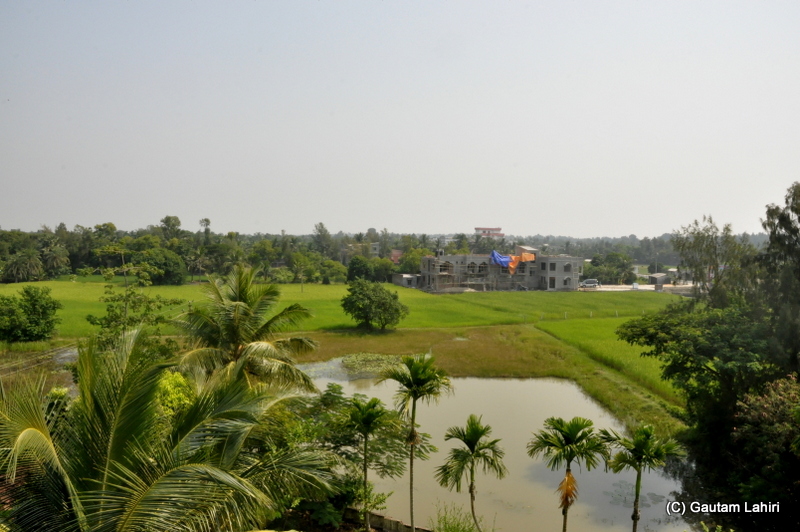
and trees of betel nut or areca nut, coconut, mango, peepal could
be seen grown in full glory on every inch of the land
Mostly our travel trips are always unplanned, so we picked up hotels or lodges on the go and travel gods so far had been kind to get a room for the night or two.
We dumped our luggage, caught some refreshments, and started our exploration of the place.
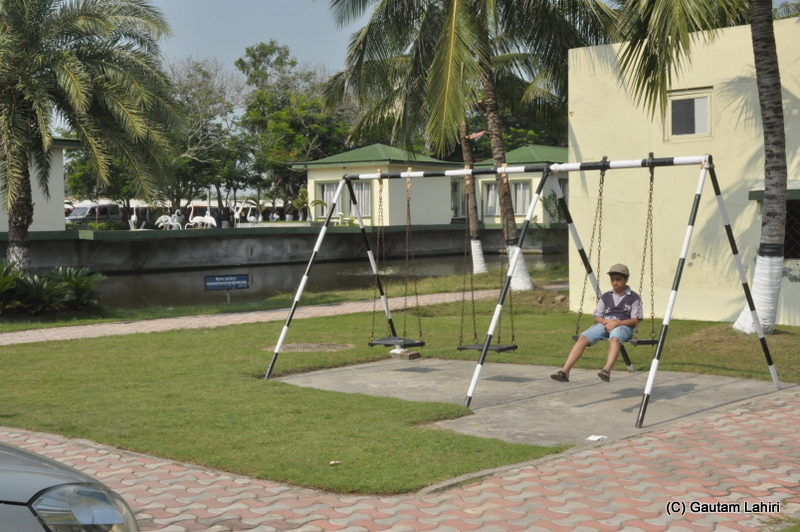
Not far away was the sprawling campus of the West Bengal government’s Bakkhali lodge. Well laid out cemented pathways with green-topped, off-white cottages lay for the tourists to select.
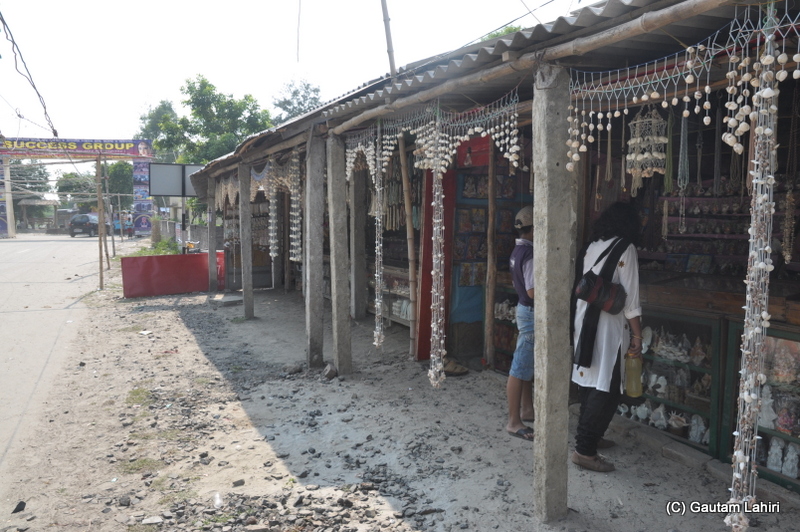
The Beach market
We moved on to the local market that bordered the beach resort. Encircling the lodge boundary, long stretches of bamboo roofed small shops had sprung selling shell products.
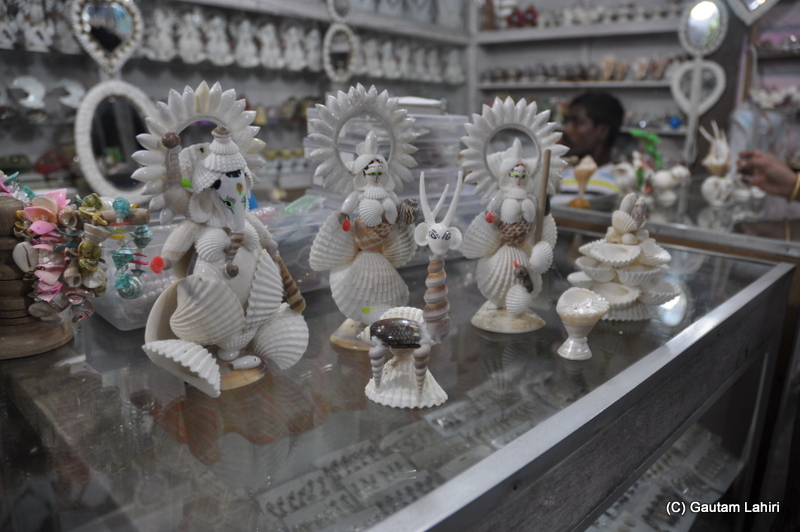
multiple designs of shells, ingenious and artistic
Conks, necklaces, human figures, earrings, all made of shells were on display.
Bags adorned with small shells of the colorful pattern were on sale too.
Henry’s island
We asked the local people for directions for a place called, Henry’s Island.
As the fable goes, the island town that bordered the sea was named after an European surveyor called, Henry who visited this place years ago, and ever since then a major effort has been pumped towards the prolific growth of pisciculture or fish farming in this area.
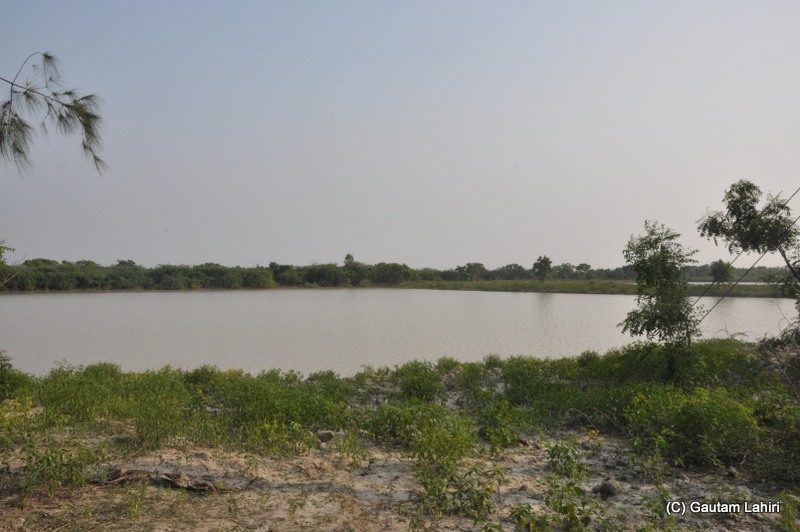
farming were strewn across the landscape
away amidst lush green paddy fields; were
immensely pleasing to the eyes
We climbed a watchtower, with the fellow visitors and had a commanding view of the entire area around.
As far as our eyes could scan, small to big, man-made lakes were present and each being used for fish harvesting.
The officials had also created at places sitting areas with a cover for the tired tourists to rest and explore this unique place that was about less than a kilometre from the sea.
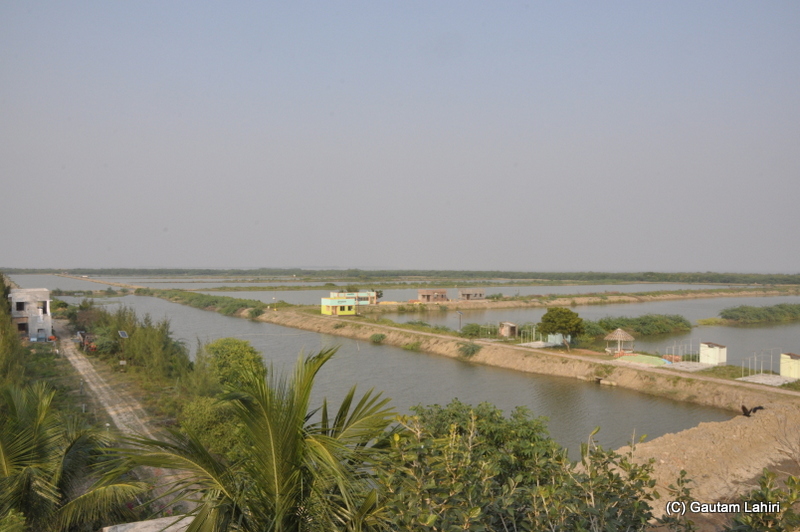
the fish ecosystem in balance
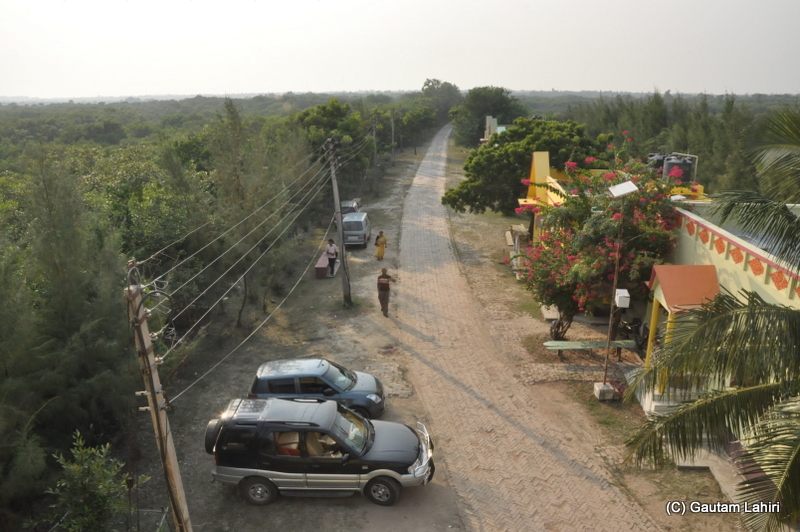
the Henry’s Island; a view atop the watch tower
The Bakkhali beach
We were getting impatient. The air was laden with salt. The afternoon sun threw long shadows and that meant if we could overtake the sun reaching the west, a good view of the beach was in store.
Our Swift had taken as far as she could and after parking her, we set on a foot trail.
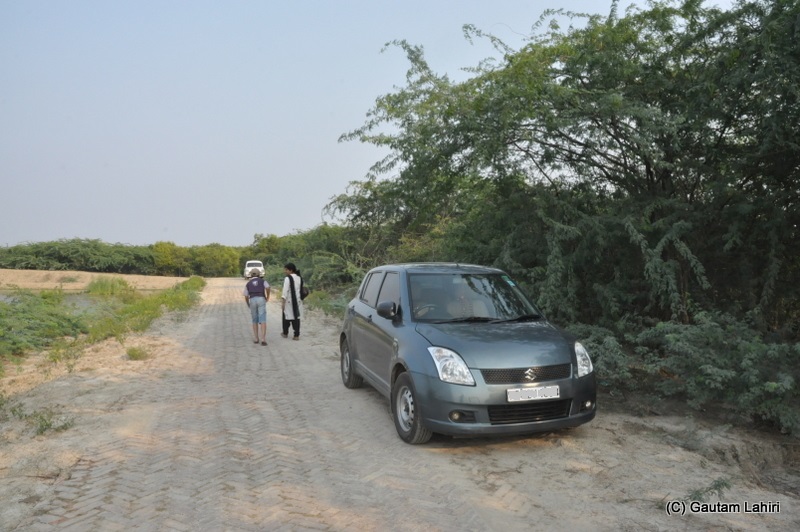
and sundari trees lined the road on either side
The morram road took us through a dense growth of mangrove and other countless variety, not known to me. They engulfed the entire pathway.
It made an interesting view of dried as well as the wet clayey muddy slimy surfaces.
We found poodles of water where mud-skippers and small red crabs jumped around.
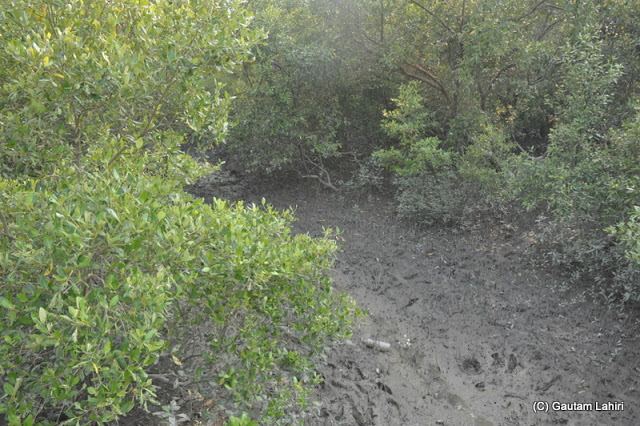
interesting pattern around us as we trudged
on towards the sea
Through the flowing branches, we walked on until we were presented with a craggy opening and we saw the sea.
Even after visiting sea side zillion tmes, sheer excitement always filled me and it animated me again and this time with Bakkhali’s salt laden warm sea breeze.
Henry Beach layout
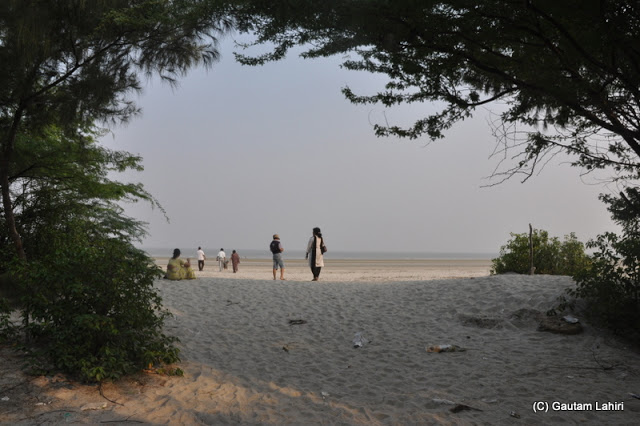
of walking over the mud splattered terrain
The Henry Island beach looked hard and flat. A car or a motorcycle can be driven over it. Unlike the yellowish color, we had seen in Puri, Odissa, or blackish gray in Digha, West Bengal, where the sand was white, Bakkhali beach trapped traces of brown and yellow sands that overlapped in patches. These patches were hiding the dry sandy mounds of tiny holes.
These holes are the refuge of small red crabs; they could be seen in millions scurrying across the beach.
Click the ‘Play’ to feel the gentle waves at Bakkhali
A long line of mangrove forests went all the way to the horizon on our left. In a few places, the casuarina trees were also present.
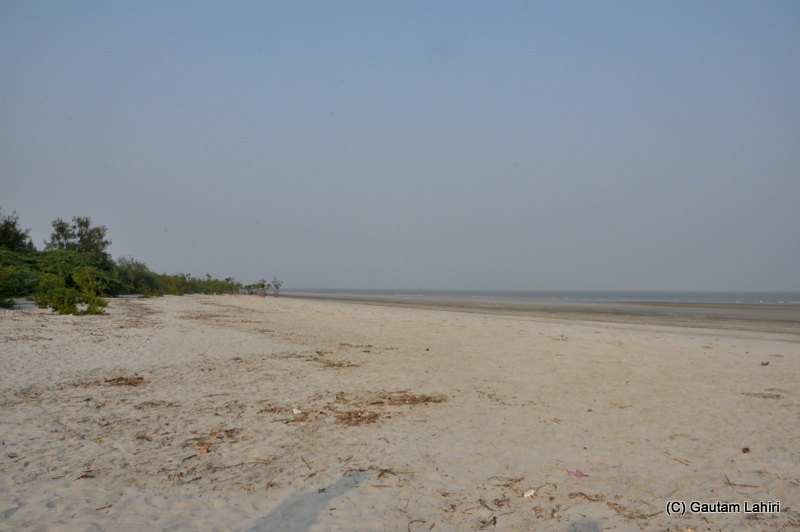
calls and hiss of wind through
trees punctured the silence
We sat on the sandy beach, at first listened to the gentle sea waves. The cold water of the sea lost speed as it ran on the sand and touched our outstretched feet.
The cold water was so soothing and we just could not resist the temptation to hit the water and got fully wet after a while.
I kept thinking about the sea water that was touching me. These waters may have been waded through by lethal sea creatures, like sharks, whales; the waters may have bumped against countless ocean liners that may have passed through them from far away countries.
The water had multiple sources, formed from the rivers and creeks across the country, got naturally treated by sand and creatures.
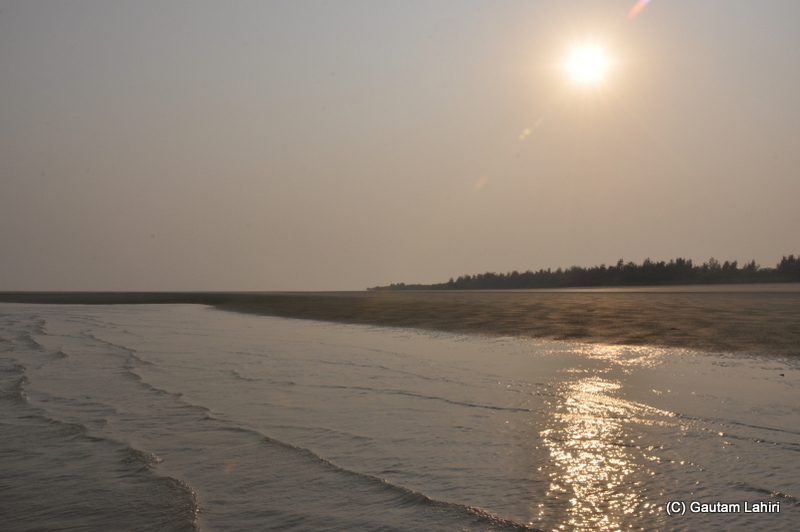
seawater wetted our feet under the sun
made us drowsy
Same water was on me and I was submerged till my waist. I felt like I had seen the entire world. We felt like staying there for hours on end.
The sun was in the western sky by now and had dipped. The sea started to look menacing, with the bluish water turning deep gray with the fading light; however, the sand under the setting light of the sun glimmered.
Beach at twilight
The night was approaching and we were tired too. We had one more day at Bakkhali. Having soaked the splendor of the area, we wanted to have a head start, very early, the next day; so drove back to the hotel to rest. On our way back, I wanted to drive over the sandy beach but hesitated as the front wheels had spun in two places and the sand layers were quite thick.
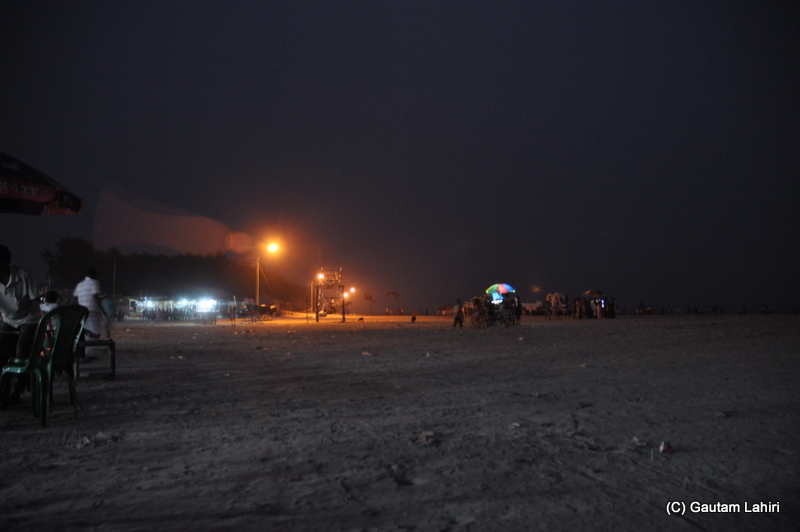
lamps lit the beach area. Vendors were seen making
every effort to pacify the visitors at a nominal cost
I did not really wanted to get stranded with the car on a beach at night which was fast losing visitors.
We parked on the road edge and went for a round of hot tea. The tea tasted very different; perhaps a few drops of seawater had flown in making the tea, both saline and sweet.
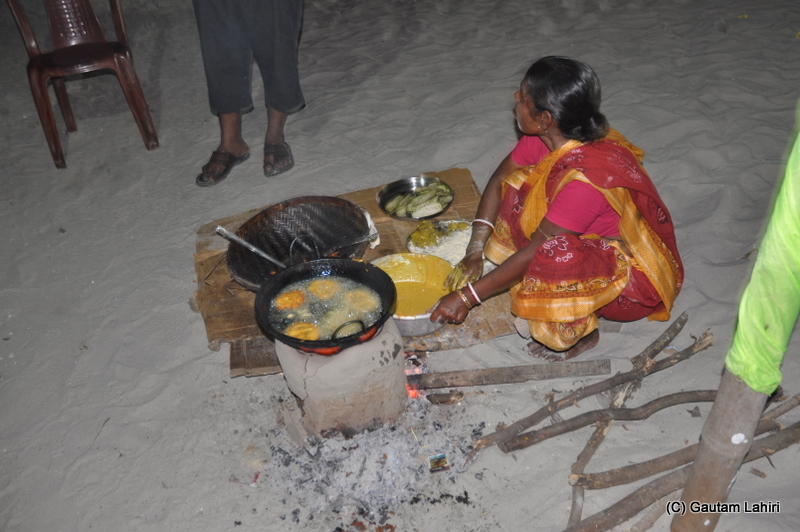
While traveling, we keep the dinner frugal and as we were visiting the sea, the sea fish was the preferred choice and the dinner comprised of white rice, prawns, a couple of fried pomfrets, cooked under low heat, with a smattering of finely chopped onions, ginger, and chilies. I added a dollop of local tomato sauce. It was very tasty.
With one swig of the remaining orange juice, we retired for the night.
Bakkali at sunrise
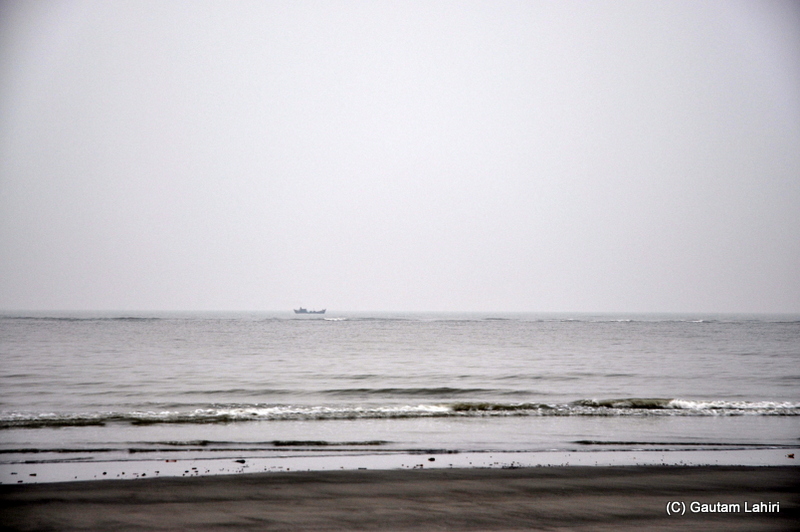
The next day, we set off early and made our way to the beach to check how the rising sun had painted.
The young sun had thrown its brush strokes around the sea.
We drove to the beach from one end to the other to catch all the glimpses of the beach and what we were presented by nature was a marvelous collage of light and shade.
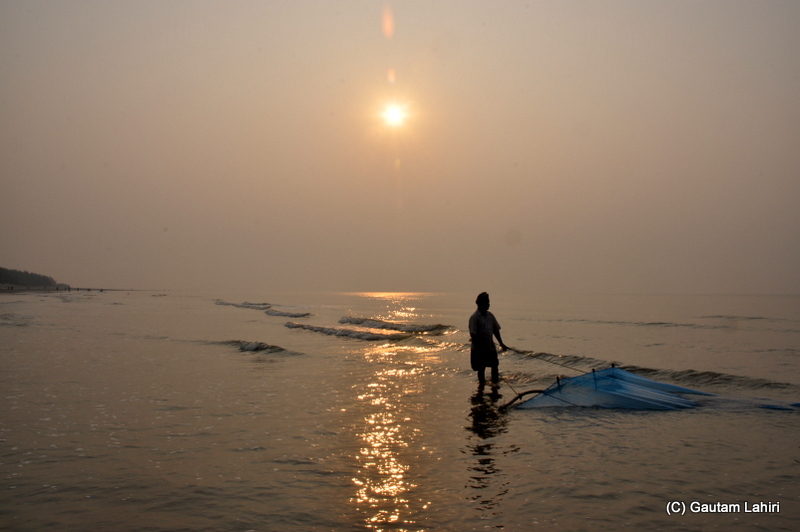
breaking waves to catch morsels of fish and crab.
The sun rays flashed a dancing pattern
over the moving waves
As we were turning back after a healthy seawater wash, a unique machine caught our attention.
A Hovercraft
We saw a Hovercraft of the Indian Coast Guard.
The machine was parked on the edge of the beach, ready to start its patrol. It can travel at the same speed, both over land and water using an air cushion column created by its giant fans that lifted the machine over the surface.
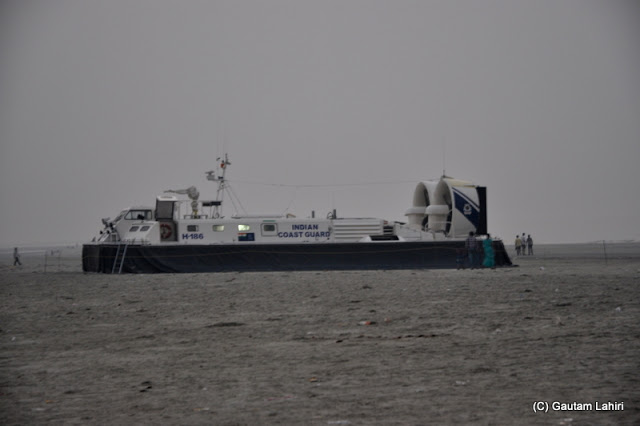
It prepared for its journey at a moment’s notice. Curious onlookers could n’t figure out what it was like the rubber skirt which contained the compressed air that flipped in the sea breeze.
We spent about an hour ambling across until the machine started and disappeared over the waves in a burst of spray and mist.
Click the ‘Play’ to rhyme with the throbbing hovercraft
off from the sandy beaches to the sea
Frasergunj, the fishing harbor
Our next stop was the nearest town of Frasergunj. Our main objective was to chance upon a boat ride from the fishing harbor, if possible to visit a place called Jambu Dwip,
“Dwip” meaning an island in the Bengali language. The local roads around the town were very well maintained, and our Swift made no qualms on a few stretches of unevenness. The place looked quite technologically advanced too as huge windmills could be seen at intervals; created to harness the constant sea breeze to generate electricity.
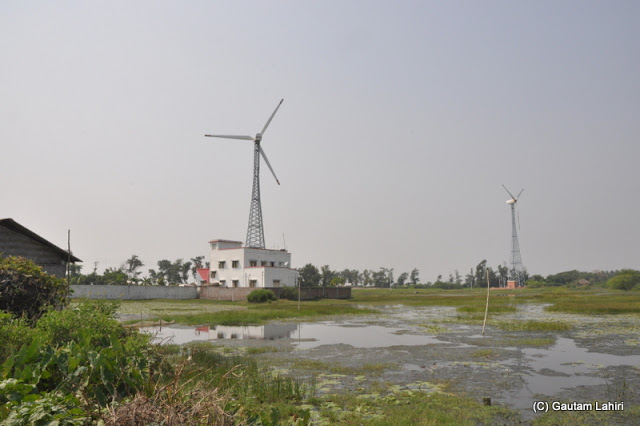
The road winded its way around the water bodies that were huge in number and after covering 5 kilometres, we reached the Fishing harbor at Bakkhali.
The mixed smell of fresh and rotten fish had smothered our olfactory system.
Click the ‘Play’ to see the fishing boats at Frasergunj
Henry Island, we chugged towards Jambu dwip
We parked near one of the colorful trucks that waited to offload the fresh fish catch. Good roads were replaced by muddy and jagged ones, broken off by the heavy pounding of the truck tires.
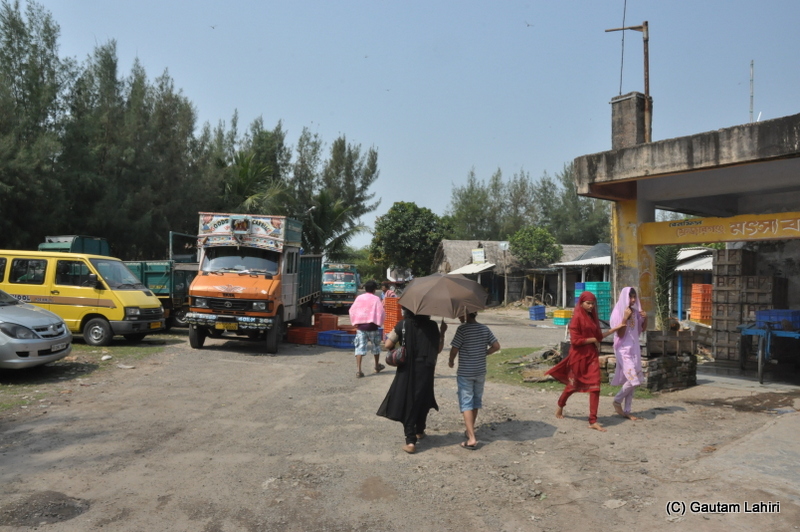
fishermen, and tourists
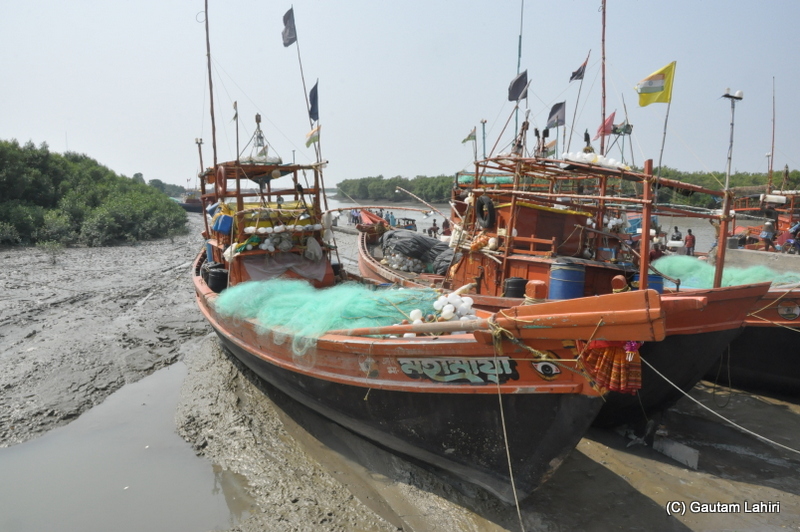
on the muddy river bank
We made our way to the cemented jetty where fishing boats were being offloaded off its midday catch.
Hard-faced, dark-skinned labor force with varied loads of ice boxes, baskets full of fresh fish was scampered across the quay.
World of fishes
It was a different world for a resident of a modern-day city. We were panting with the little effort we did of climbing, walking under the sun.
These men day in and out carried loads under the relentless sun with such ease.
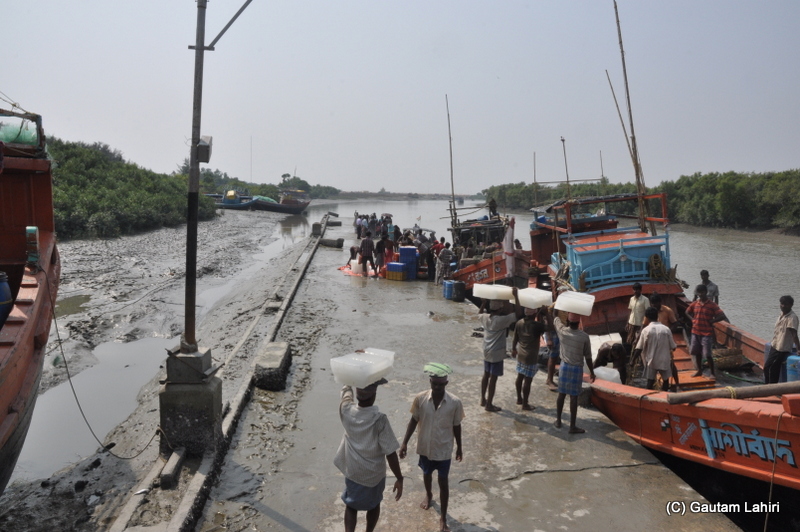
the fish and another gets ready with loads of ice
We were walking on the dockside, when one of the fishing boats was dumping, a pile of fish, several of them were still jumping around.
I had never seen such a big cache of fish, right out of the sea.
I looked on, transfixed.
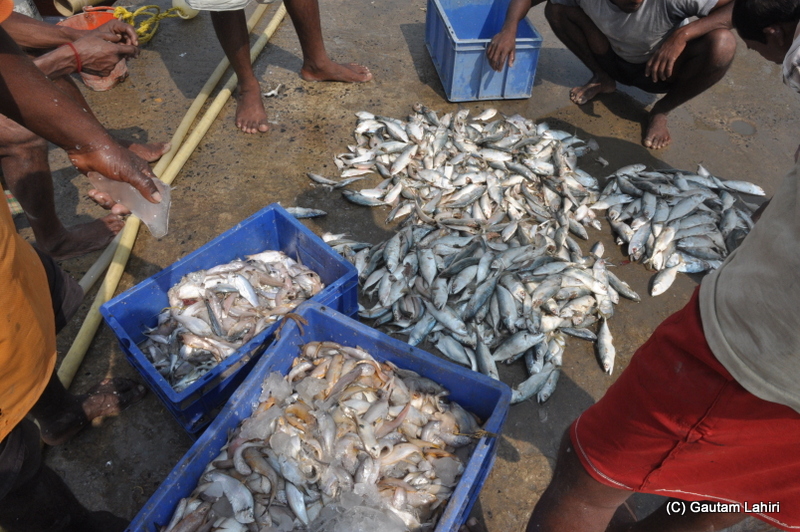
the fishermen and middlemen who
were haggling with the price
Baskets, hard plastic crates of wide-ranging dimensions were everywhere and all contained pounds and pounds of fresh fish.
Interestingly, the smell was nonexistent may be because of being fresh.
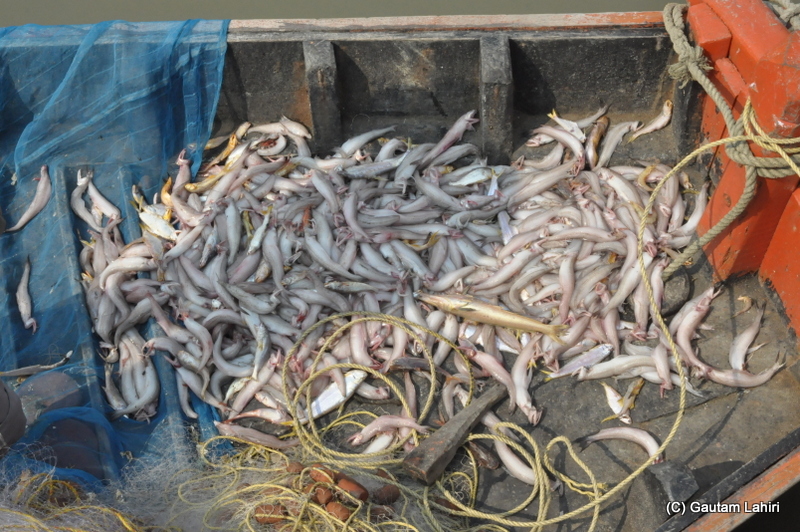
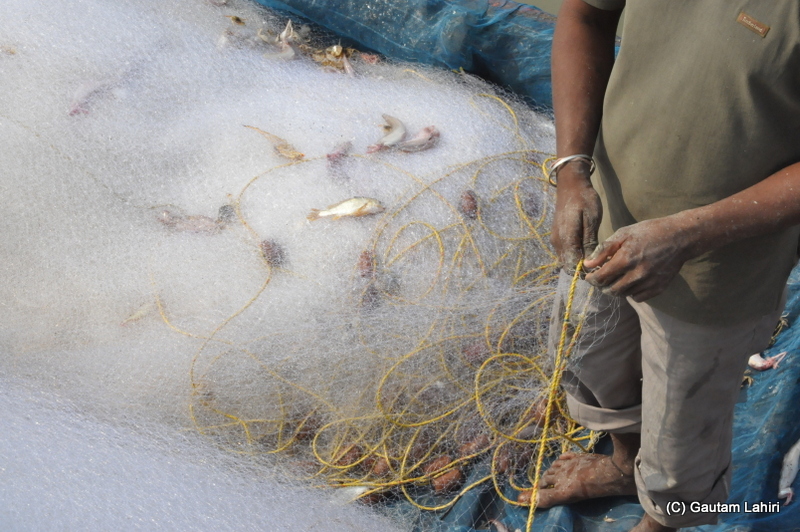
the fishes of the creek, river, and sea
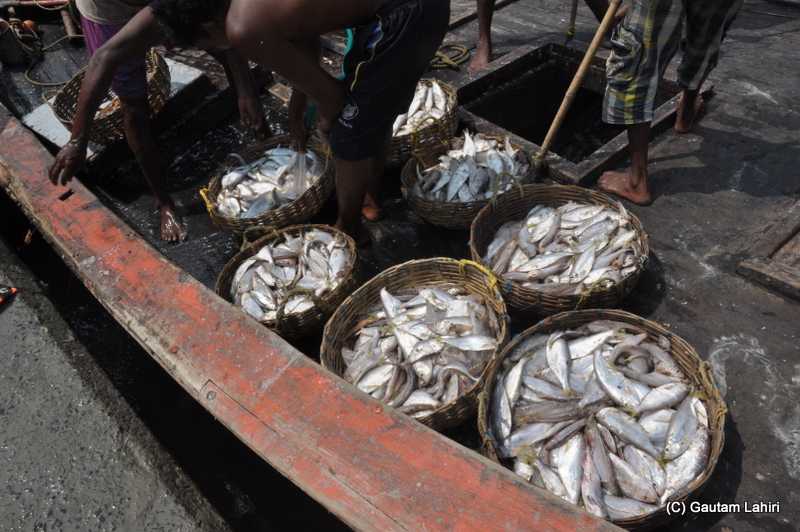
hull of the fishing boats
Jambudwip, a boatride
We were glued to the fish world and looked on, and only when a long “toot” broke our stupor, we realized that a big steamer had berthed.
Yes, the one we were waiting for to visit the far away “Jambudwip”.
The boat which we were looking at and was supposed to take us looked right out of a history book.
Probably, forty years old, with hardly any maintenance. The boat already listed on its port side by 10 degrees. It came back from one trip and about a hundred or more passengers were disembarking.
We waited for our turn. I was skeptical of the seaworthiness of the vessel we saw.
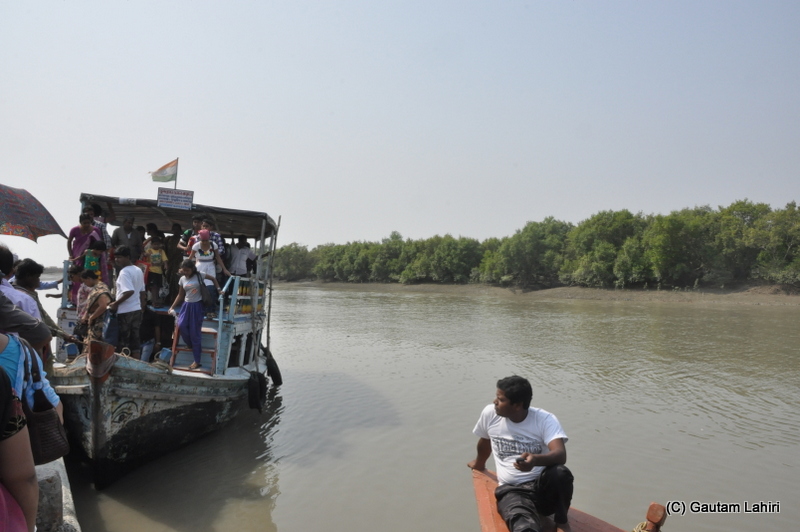
load as the next lot waited. We were too excited and
the fear of this boat capsizing mid-sea had evaporated
With a prayer to the all mighty, we boarded the rickety floating mechanical device that looked like a steamer.
She turned on her port side, a full 180 degrees, and headed out to the sea.
I scanned the boat for some life-saving devices and found a torn tire, probably ten or more years old, so securely tied to the boat that if this goes down, the tire will go down too.
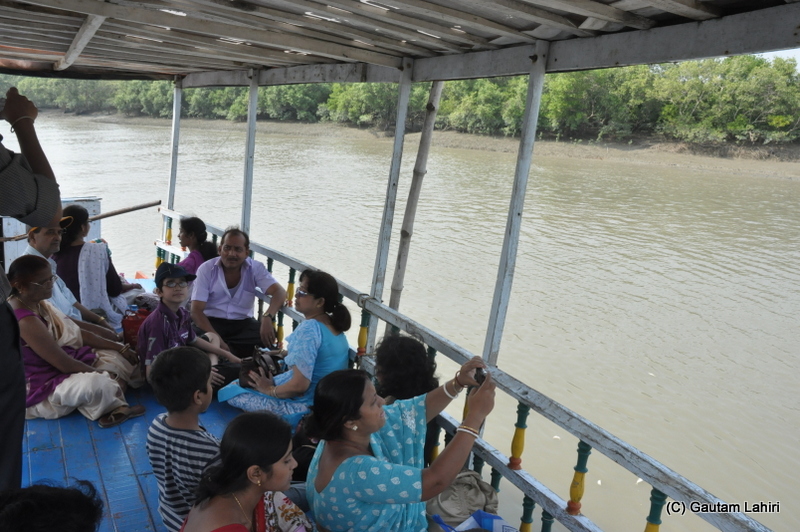
to catch the passing mangrove forest
About 30 mins on, the boat had reached the “mohona” or the point where the creek met the sea, mouth of a river.
Both, the sea and the river looked placid and only the throbbng of the diesel engine could be felt as the boat surged through the greyish muddy water.
Click the ‘Play’ to see our boat ride to Jambudwip
to Jambu dwip for a spin over the Bay of Bengal
Seagulls in large numbers were flying around us. A few of them were diving around the wake of the boat, to pick some of the jumping fishes.
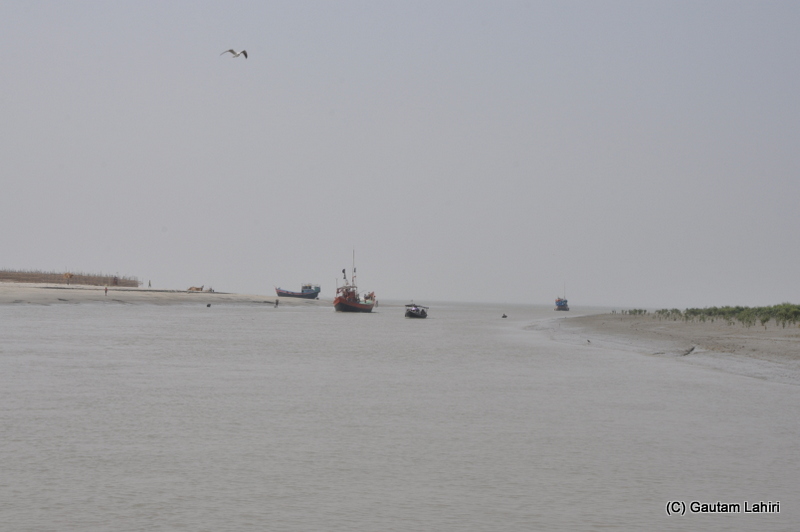
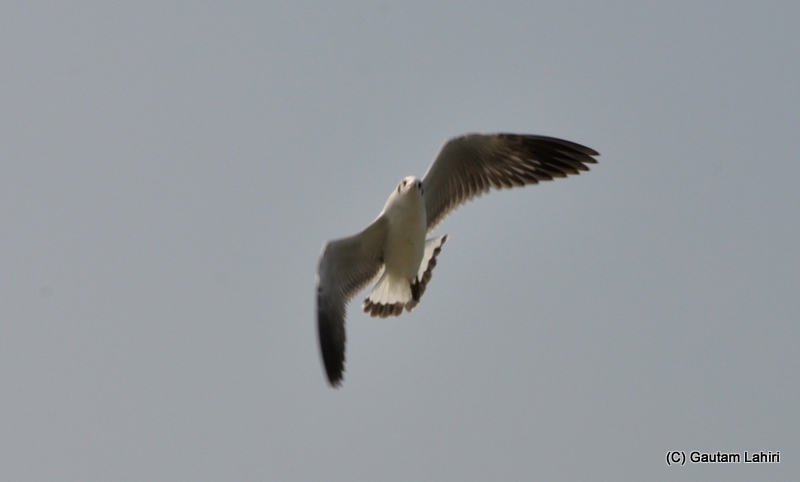
closed in fast to check the city inmates
onboard the slow-moving vessel
The Bay of Bengal looked extremely calm and we overtook a lone fishing boat which eventually caught up with us at the Jumbudwip where we circled twice.
We approached the mouth of the river in our ramshackle vessel, confident to battle the sea waves which the boat, I am sure was accustomed to; however, a numbness persisted with mixed excitement.
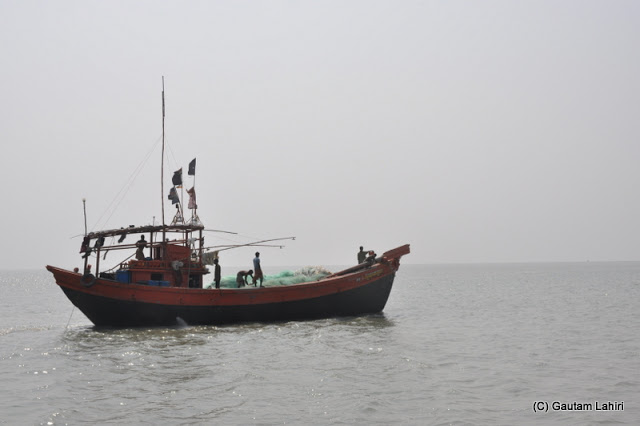
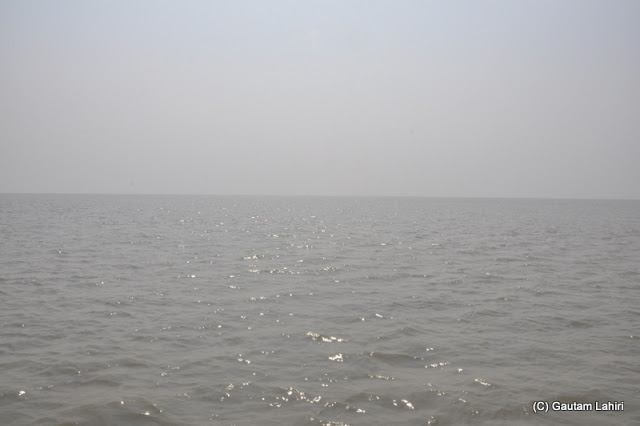
We had kept our eyes peeled for any sea creatures that may suddenly leap out of the sea.
The boat’s front end slashed through the calm waters and soon enough, the Jambudwip loomed in the distance.
When you are at sea, and all you hear the slap of seawater on the boat hull, and a constant hiss of the salt-laden wind that hits square off the face, the beating sun, the nature for a moment feels harsh.
Surprisingly, it also puts you in a meditative state. You seem to be completely alienated from the present world where you belonged. The sublime feeling was forcing my eyes to get shut as serenity prevailed.
The Jambudwip
The rhythmic beat of the engine, at the rear, was only one human connection that kept me awake as I looked on at the straight line all around us.
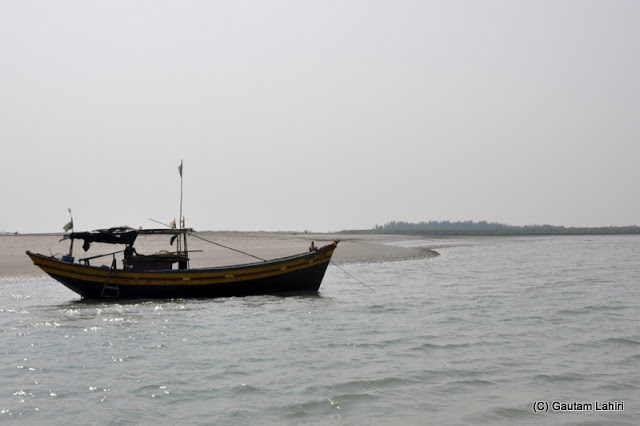
Nothing exceptional happened in the 30 mins sea ride. The tiny island was a wavy to flat sandy one, with zero human habitation.
All we saw were millions of red crabs and in the distance, a long line of casuarina tree-lined land mass. We visited an island, crafted by nature and turned back.
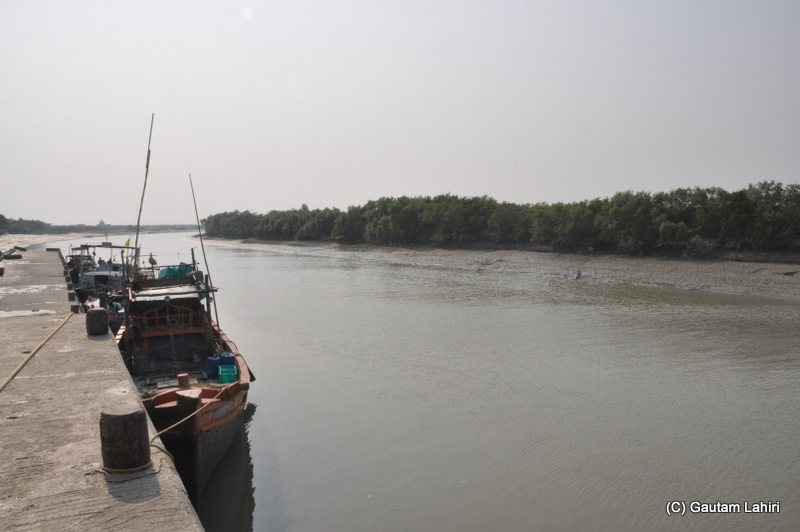
their engines to start and head out to the
sea for their next catch
Even then, the delight inside was palpable. Everyone was happy. The pure bliss of nature.
We, humans, take so much pain to come near to the nature; but by Joves, this pain is far relishing than the nagging one we feel, when walking into a meeting room in a corporate plush surrounding and talking the same management claptrap which slowly saps us within.
The Return
With full confidence, the listing age-old boat brought us back to the fishing harbor from where we had started. It was almost after 1 pm in the afternoon and we saw a few fishing boats neatly parked, and all the morning activities had subsided.
A memorable sea tour for us. We saw firsthand the fishing community and their daily toil for which we can eat daily, the deliciously cooked, and neatly served lip-smacking fish cuisines.
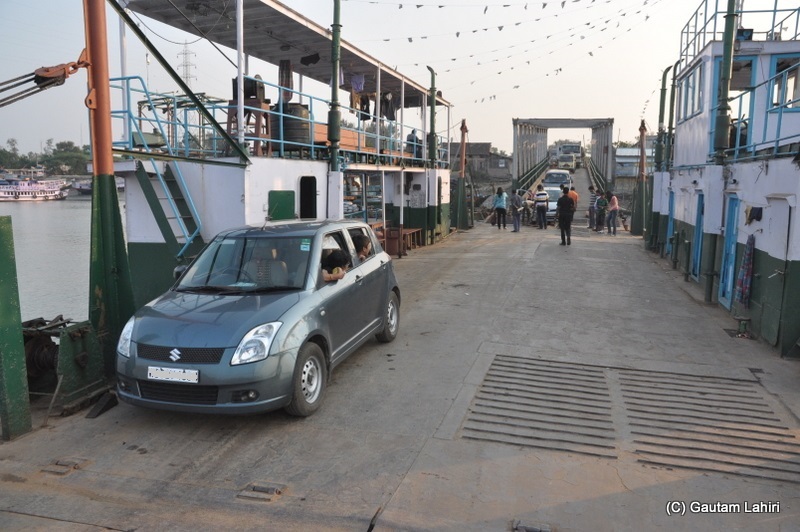
edge of the barge that took us to the mainland
We drove through the sedate countryside and reached Hatania-Doania ferry covering the 23 Kilometres of excellent road, climbed the barge and touched the mainland that took us back to Kolkata.
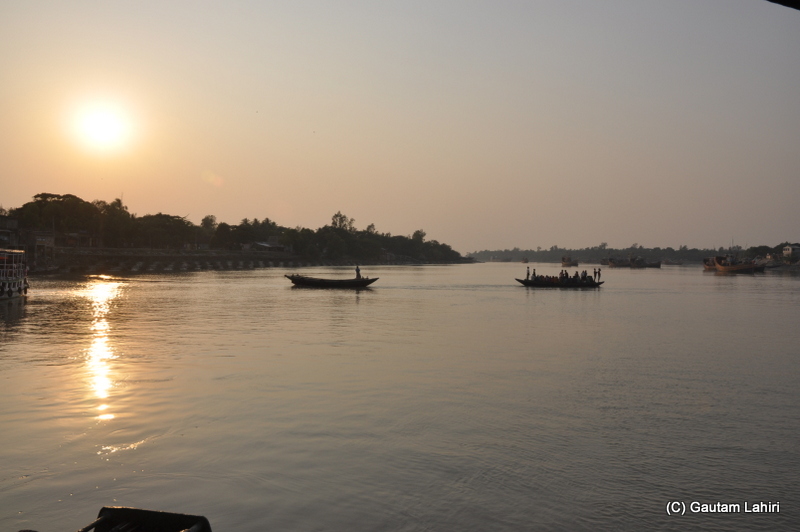
After crossing, we waited till the last of the fading rays of the setting sun could be seen reflecting off the creek water.
Click the ‘Play’ to see our car cross the river
crossed the eight minutes journey
Filled with real “fishy” memories, we settled fast, secured the seat belt and hit the NH117 Northbound highway.
Namkhana faded away into a dot as I looked at the rear-view mirror.
Inference
- A perfect getaway for one night two days from the maddening city crowd. You will experience a world very different, that of fishermen, their boats, the daily chores and the socio business setup that exist on the seafront.
- A winter trip will be far comfortable than the one we made in late September. The sweltering weather is a killer.
- Amble across the beach in the morning or late afternoon.
- Sit under the shade of a tree to hear the waves washing the beach.
- Make sure you keep fish in all your menus. Fresh fish tastes so divine.
| Distance from Kolkata to Bakkhali | 123 Kms |
| Car used | Maruti Swift Diesel 1.2 L |
| Total distance traveled, diesel used | 306 kms, 10 liters of diesel |
| Best time to travel | End November to early February |
| Tourist places to visit | Bakkhali beach, Frasergunj, Jambudwip (boat ride) |
| Food to eat | Sea fishes, prawns, fried fishes, Bengali sweets |
| Pocket pinch | Rs.900 to Rs.1100 (fuel), Rs.500 to Rs.800 per night per room (standard hotels), Rs.350 per person (local restaurants) |


 SPITFIRE GAUTAM