

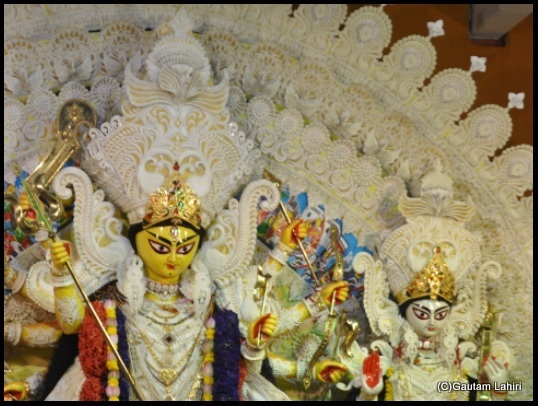
Well, in Bengal, when you utter the word “Durga Puja”, the state’s inhabitants droll with love, affection and continue to skitter animatedly for the five day festivities.
In course of the five day festival, millions visit thousands of these beautiful scaffoldings or pandals as locally known, to see the goddess in her absolute splendor.
We too had walked miles into the night just like others.
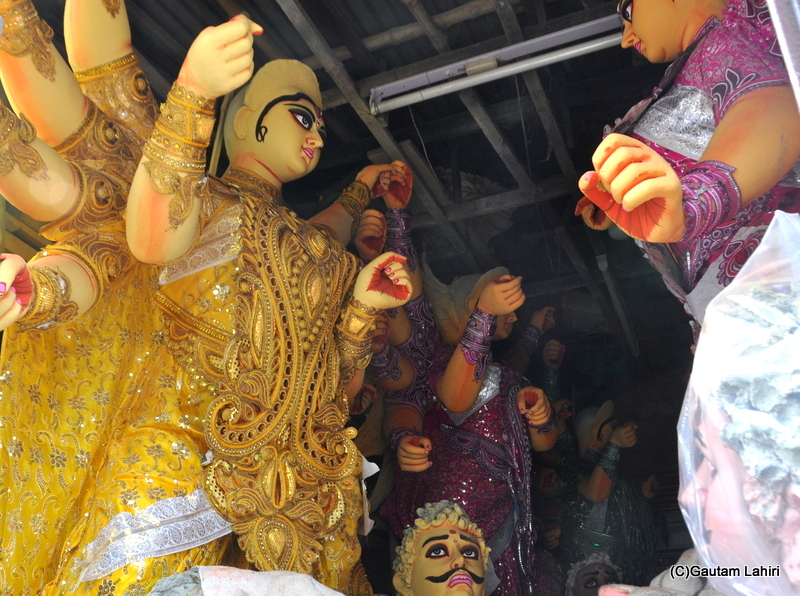
Who creates them?
I was utterly enticed to learn the backend story of the Durga puja- Where do these idols come from? Who makes them to instill such life in them?
We are all set to take you to the hub where these idols of the goddesses, as popularly known as ‘Pratima’ are made.
Kumortuli is the nucleus within the city of Kolkata where the timeless creativity unleashes like a laser on a steel sheet.
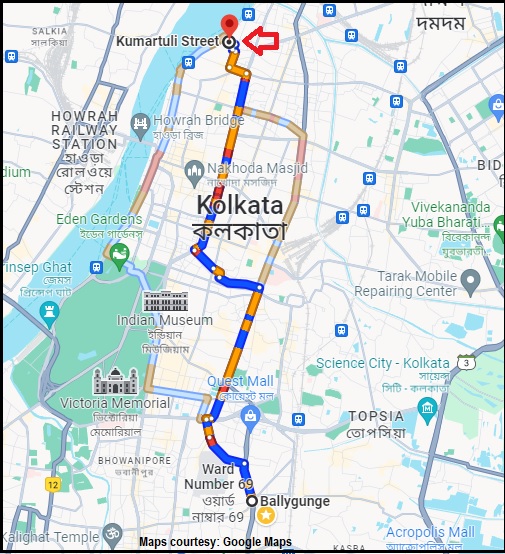
Where is Kumortuli?
We will provide a brief history of the idols that embellish these pandals.
Readers can hop into a car, or a bus, and make a beeline for a place called “Kumartuli”, located near the eastern bank of Hooghly river that washes the Central-Northern sections of Kolkata.
This is a two to three kilometers stretch where families of potters stay. Potters are known as “Kumars”; the word, “Toli” signifies the area.

entrapped with a Peepal tree as old as the house
On a sultry Sunday of September, about a month before the celebrations, my Swift took about forty five minutes to drive us down through the older parts of the Kolkata city.
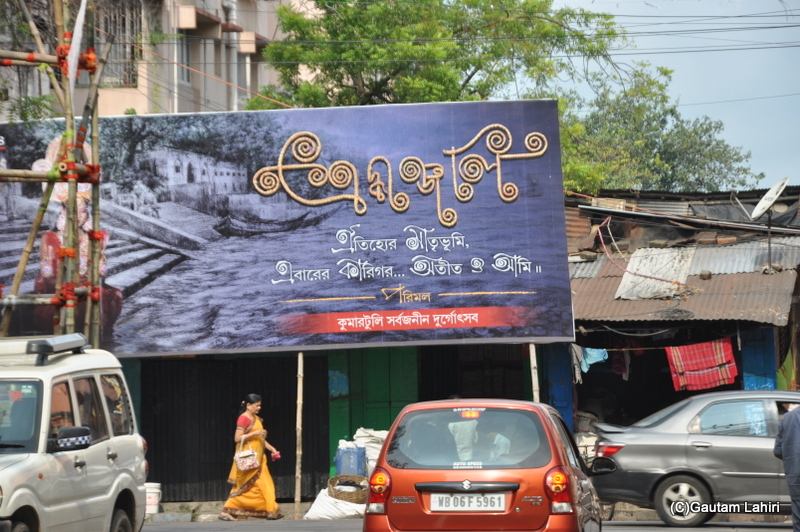
Parking was a challenge as the Chitpur road was narrow and all the modes of transport remained parked at will.

feasting near the old Chitpur road
The entire area was a labyrinth of extremely interconnected narrow roads, or perhaps lanes would be more appropriate as you may get to see a same layout in Benaras or Varanasi, in the state of Uttar Pradesh, India.
World of idol making

and the Chitpur road around which the industry thrives
Kumartuli sits between the two very old localities of Sovabazar and Ahiritola of Kolkata city.
As we moved from one shade to the other, in our quest to see the artistic fabrications, we soon found that the complete auxiliary support industry to the idol makers too existed in the Kumortuli area.
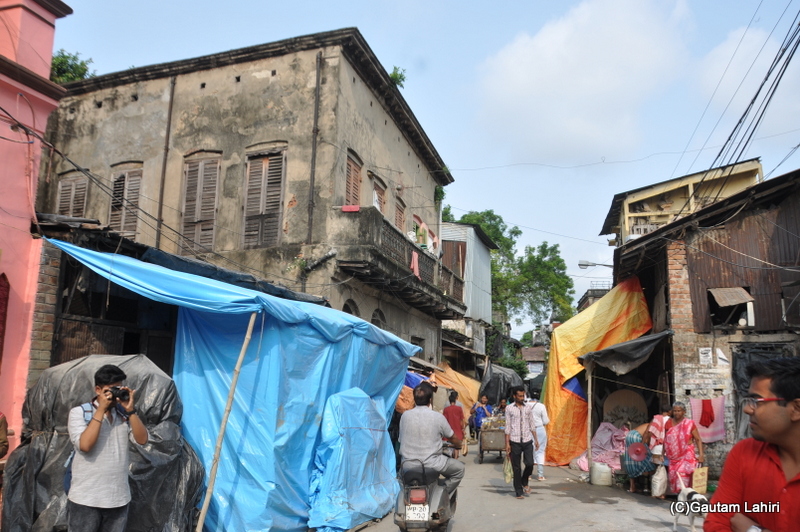
the metaled kiosks of creativity
As you will find out that idols, are heavily decorated with a sea of equipment – bangles, necklaces, colorful crowns, saris or dresses.
All of them co-existed and incredibly promoted the massive effort of idol assembly.
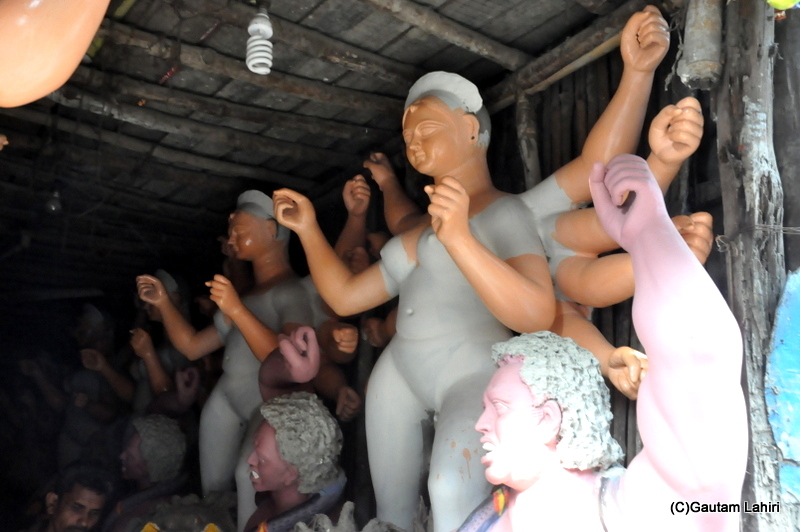
Origins of Kumartoli
I tried meeting the experienced and senior potters and unearthed a vast history that existed behind the idol industry.
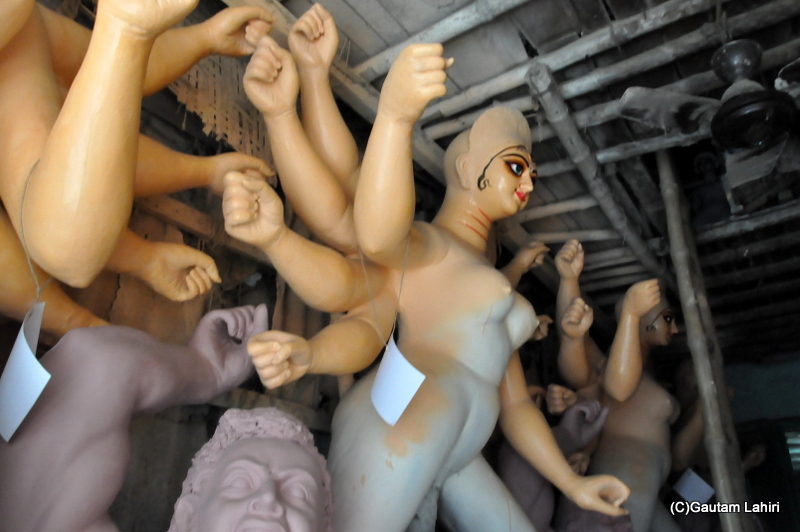
paint as the idols get prepared
The idol making dates back during the foundation of the British rule in India.
Following the defeat of Siraj-ud-Daullah, the then nawab of Bengal in 1757 by Lord Clive, at Plassey; the Englishman wanted to pay his homage to the Goddess, and was advised by an influential British sympathizer, Sri Nabakrishna Deb of Sovabazar to offer prayers at the Durga puja held at his palace.
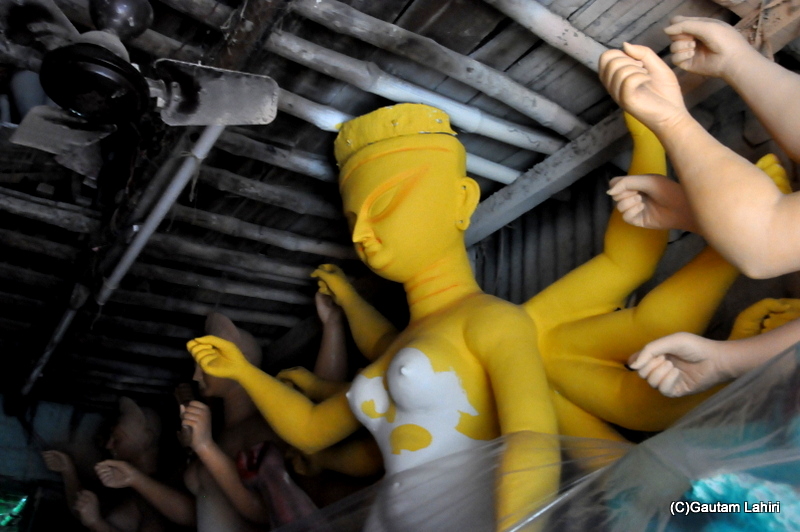
These idols initially hailed from a place called, Krishnanagar, in Bengal. Clay was used as the main ingredient, taken off from the river banks.
Later on, the potters migrated to Kumartoli and ever since 18th century, they have lived and blossomed for generations.
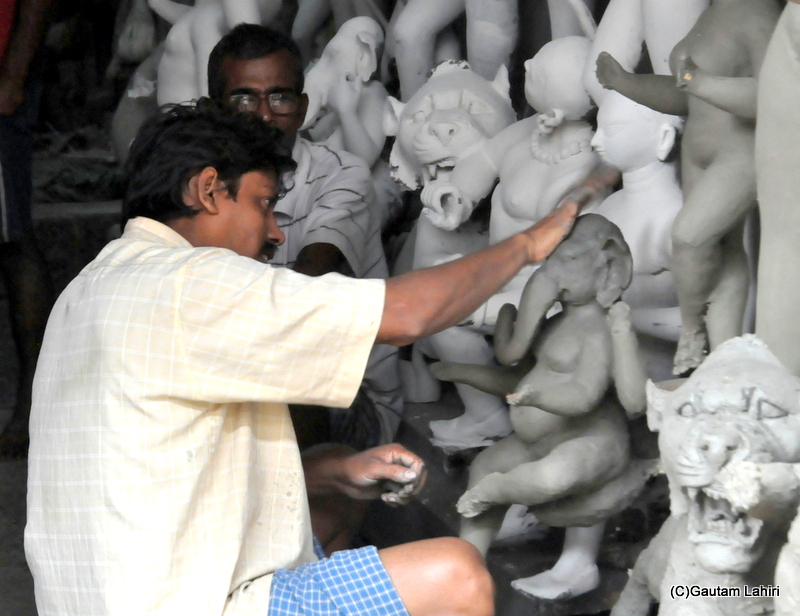
with his dexterous hands
These potter families were supported by the local noblemen or, ‘zamindars’ as they were called in the olden days.
Back in those days, an intricate social structure existed between the idol making endeavors and the nationalism, that overtook the British supremacy by the mid-20th century.
Drawing boards to idols

at the base of the Durga idol
There are stages that these potters religiously follow – It all starts with an incredible story –
The potters with the help of priests visit the nearby prostitute quarters.
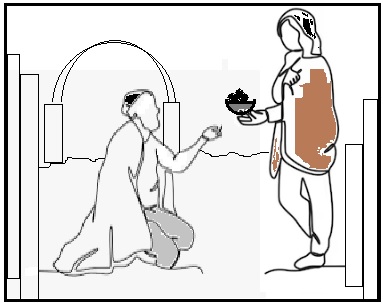
a prostitute for the idols to begin
They ask for the clay or the top soil, mud from the porch or courtyards of their quarters’. They accept the clay only when the lady willfully agrees to gift it and is known as sacred clay.
I was moved to know that prostitutes remain largely respected and made inclusive in the Durga puja celebrations.
Is n’t that amazing!
Next, comes the bamboos ferried by boats, and trucks that are intertwined and made to form the assembly that helps the idols stand erect.
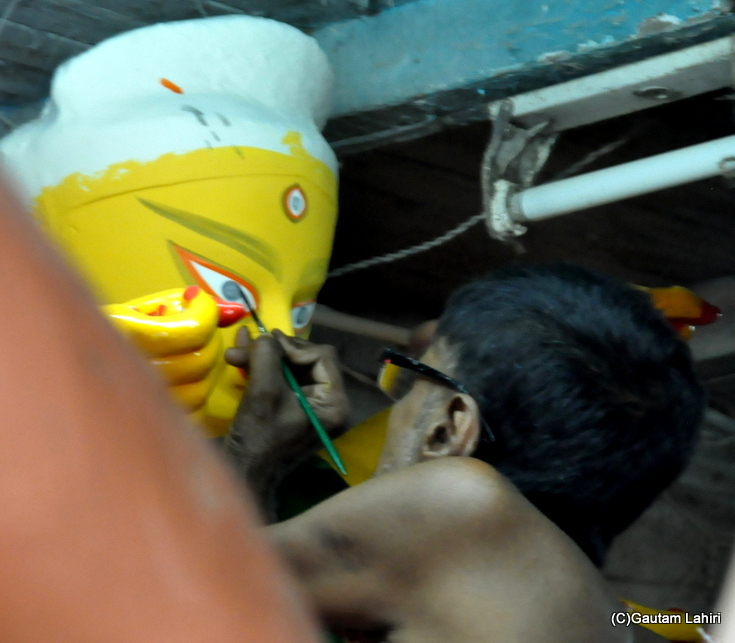
On the first day of the 15-day period, “Mahalaya”, the potters draw the eyes of the goddess.
The succeeding stages include, using dried straw that gives the figure of goddess’s body parts, like the limbs, main body.

the shape before the paint comes over
They are then painted with various colors.
Predominantly, I saw white and yellow standing out. Pink, red, were also used.
The entire model when completed, is dried in the sun. The last stage includes, putting dresses, ornaments, weapons, and are ready to ship.

Kumartoli evolves
I was surprised when I wanted to take pictures, the potters asked for money.
They were not really happy that the Durga Puja festival had ,of late, started attracting corporate support for the pandal makers. But no such support came their way.
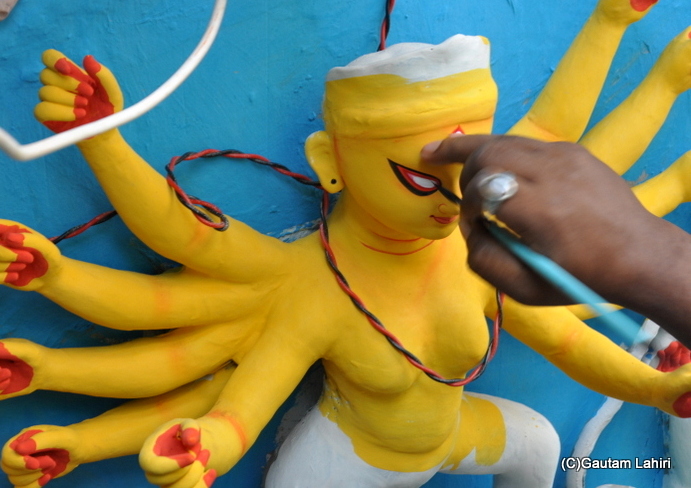
The brilliance and extraordinary “pandal” creations that we see now a days meant, that the creators are handsomely remunerated, whereas the potters do not make money.
This challenge has made a shift in the interest levels of the youngsters of these potter families.
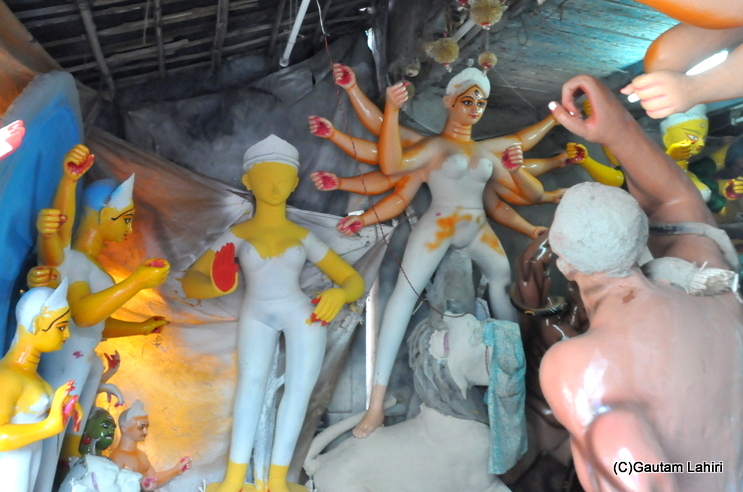
of its development at Kumartoli
They are departing from this age old trade. We did come across a few old craftsmen, their sorrowful eyes told us the pathos they held with the changing times.
This can only be addressed by today’s generation alpha who can bring these superb and timeworn skills to the forefront.
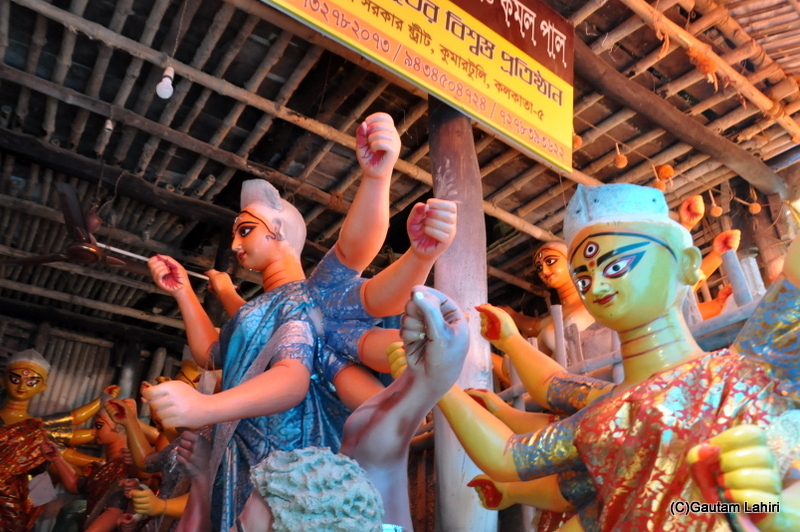
and ornaments at Kumartoli
As the day progressed, the sun became harsher by the hour. Drenched to the skin, we thought of pulling the curtains.
Mid-morning brunch

carvings – the beautiful Durga family
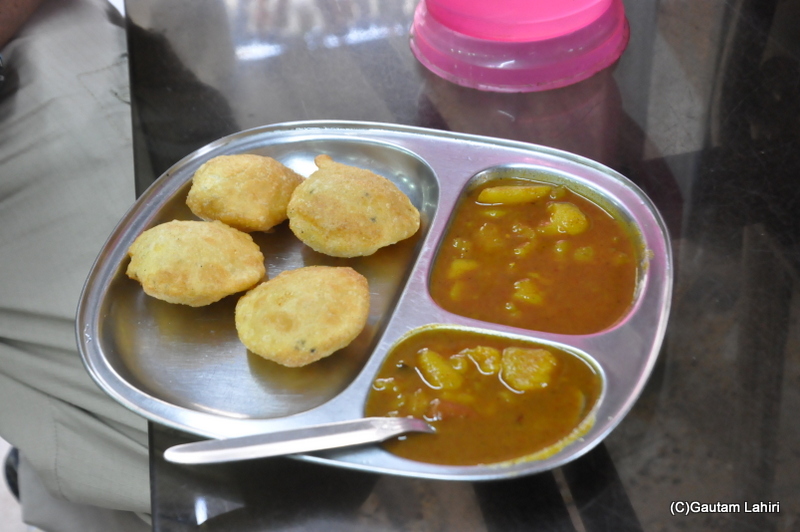
Northern parts of Kolkata have fabulous food joints, some of them are hundred plus years old, and spew out devastatingly tasty north Indian breakfasts.
A large part of the population here, are from Bihar, Uttar Pradesh and have settled for ages.
As the exciting excursion of historical proportions came to an end, we were famished beyond words.
We hopped in to our Swift and parked in front of one of the many restaurants that dot the Chitpur road.
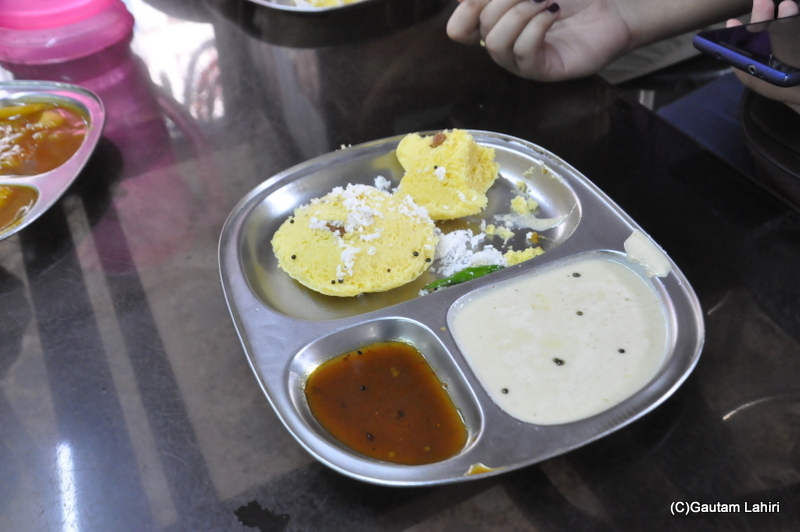
After a hearty meal, we drove home with the memories of the idols, the potters and the fascinating history that holds this intriguing place.
Inference
- Kumartoli is a historical location in the northern parts of Kolkata city, India
- You must visit in the months of August-September when the idols are created or finishing touches are given
- Prepare yourself for a very humid experience as the weather during that period is not friendly
- Start early to beat the heat
- Car used: Maruti Swift Diesel 1.2 L, Diesel used:.7 liter
- Pocket pinch – Rs.65 diesel, parking: Rs.20 per hour, Potter tips:Rs.500, Breakfast:Rs.350


 SPITFIRE GAUTAM