

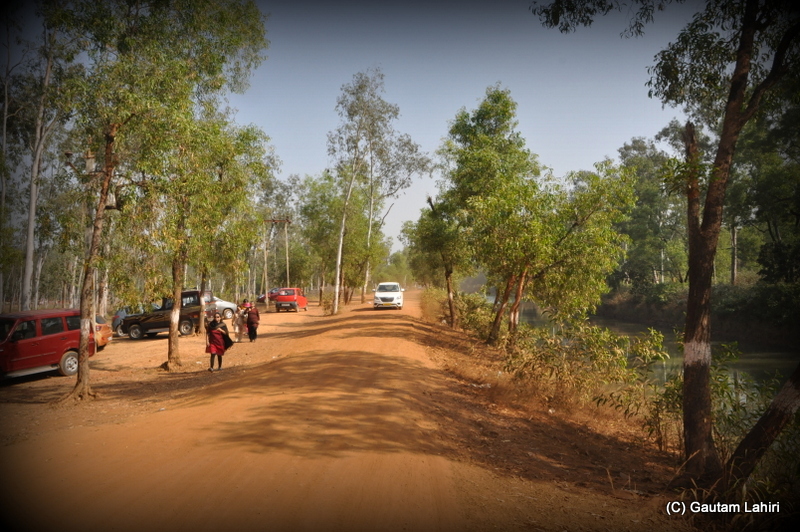
The crisp and pure air touched our faces. A lung full of fresh air did so well for both soul and body. A pungent aroma of woody smell surrounded the enclosure and when you look up, the ‘kolke’ flower tree which was swaying in the cool breeze in front masked the sun to and fro.
Driving around the suburbs
The winter sun was very bright without its harsh rays. The dazzling fireball hung low against the sky that was a perfect azure.
Lazily, we were sipping the steaming hot tea and the only thought that ringed in was how we would be spending the day outside the town of Santiniketan.
We started browsing the travel books we carried, and data sheets to identify places that we could visit around the town of Santiniketan across the day.
An ancient temple, Santiniketan
Our first stop was a temple site called ‘Kankali tala’, a revered Hindu temple very old and people in hundreds flocked it to worship. The local population always have fascinating stories to narrate. This one will immediately pull up any eager devout traveler to make a beeline for it.
We ambled across to an old person, sipping tea.
He started, “If you offer puja and take blessings of the goddess, one can get peace in life and all your inner desires get fulfilled.”
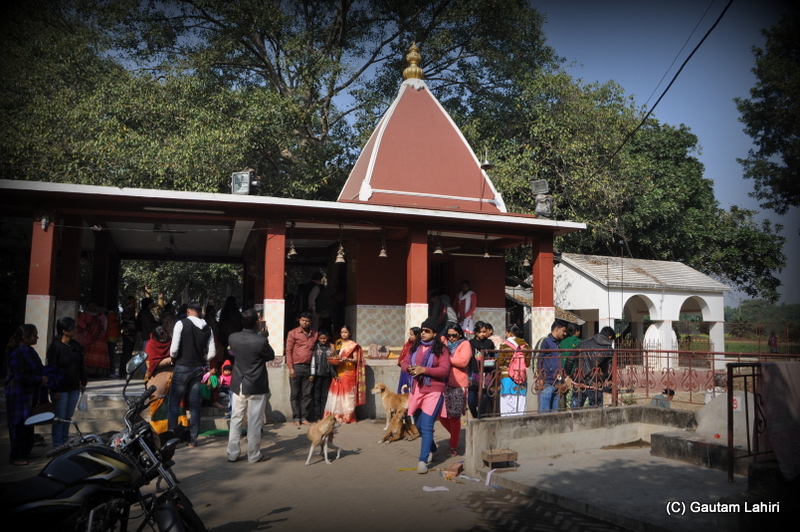
Now, who does not want that. There was more to this temple than what he told. This one is considered to be “Shakti Peeth“ of the 51 that are present across the country.
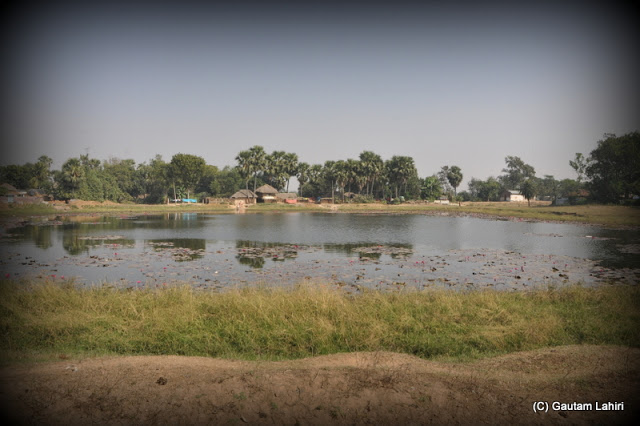
The temple is around 9-10 kilometers from Bolepur station and the road had a mixed surface of both totally broken asphalt and smooth village road meandering through a maze of paddy fields.
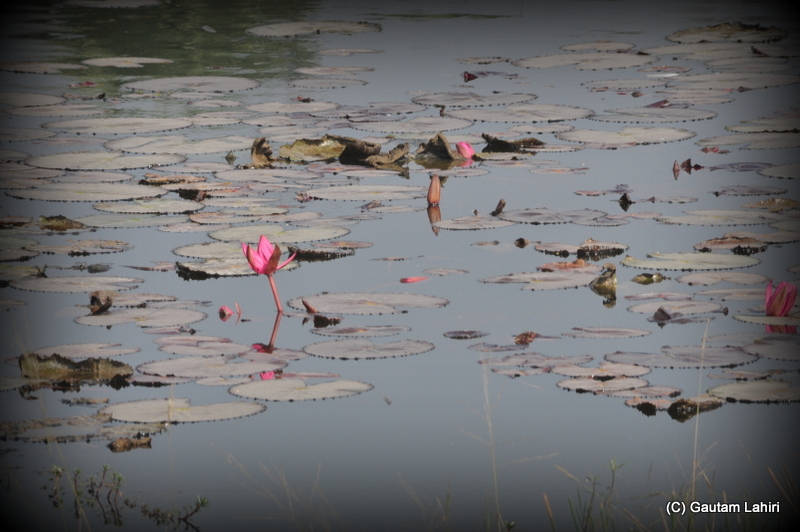
On either side, there were water bodies with water hyacinth and lotus bobbing up and down.
The wide road slowly narrowed down and through an arched entrance, we reached the parking lot of the temple.
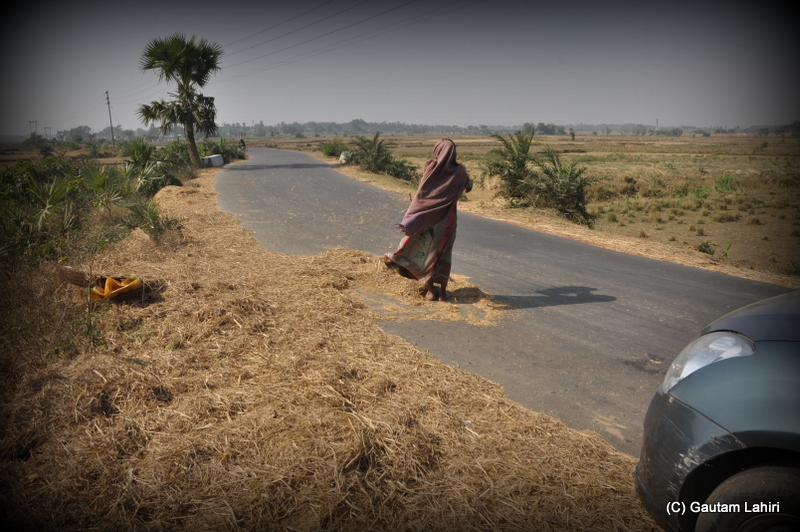
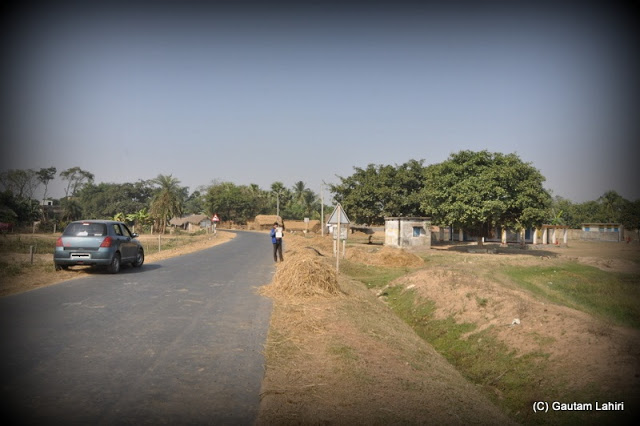
On our way in, we saw a village lady holding a flat container, shaking it, and dusting the paddy to separate out the rice from the husk and kept most of her load on the road itself.
The passing vehicles were driving over them and in turn separated out the rice with their speed and weight.
A unique and effective way with zero cost to do the job.
Imagine the simple innovation !
The Village fair, Santiniketan
On both sides, scores of handicraft stalls were present and as the day progressed, the crowd gathered around them to buy.
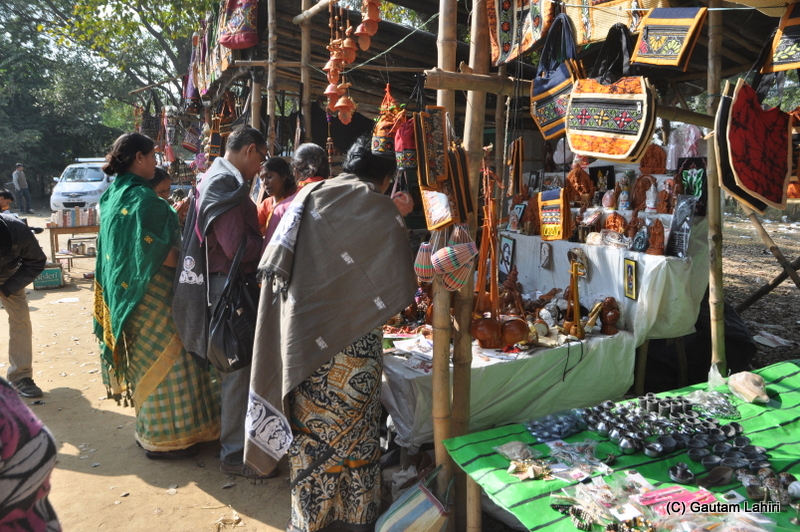
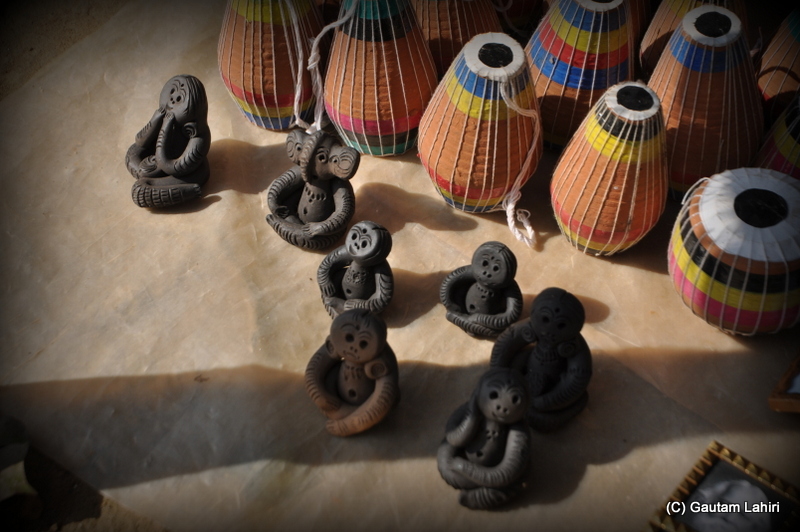
The stalls had everything you wanted to see – ‘ektaras’, single wire musical instruments, miniature drums, crockeries and plates made of tin, earthen pots, colorful jute bags, photo frames and the list was endless
Country breakfast
Walking exploration across the stalls made us hungry for a breakfast.
We were on the lookout for the local food the people ate and found a few of the whole in the wall outfits that offered the quintessential Bengali breakfast – fresh ‘luchis’ or ‘puris’ along with ‘ghugni’, a boiled lentils ‘look alike’ which had a balanced ‘masala’ with a judicious use of chili powder, the concoction was indeed mouth watering.
We went inside and sat on a stool and with haystack as the roof, the area was quite cozy and comfortable. We munched happily as we happily doused our early morning hunger.
We ended it by gulping down another cup of hot tea and got inside the car.
Famous Baul song, Santiniketan
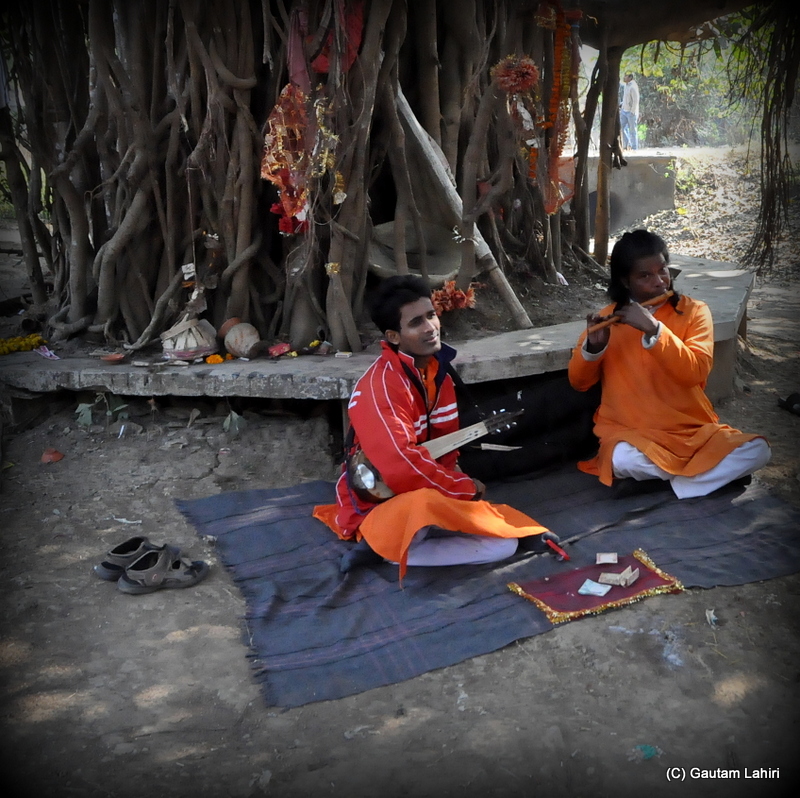
As we were deliciously munching away, a very sweet baul song washed over us. The song was being sung by a young boy so we jumped with joy to catch a glimpse.
A young lad with his father (baul family) was singing outside the temple premises just under a peepal tree.
His resonant voice with perfect control over the songs, captured the attention of the crowd as the sweet strumming ektara made everyone spend about an hour listening to the music.
The ‘Khoai fair’, Santiniketan
With a good meal, we headed for our next stop, which was a good 12 kilometers drive to a place called ‘Khoai’, a tree laden landscape beside the Khoai river.
The uneven road was a deep to light orange as it bounced the vehicles as they rode with a dust trail blanking the trees and river.

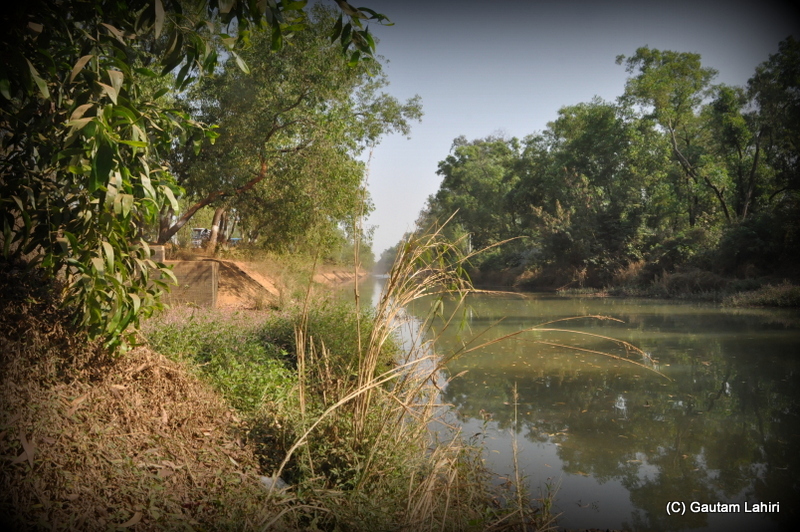
On our left was this narrow river with trees all around it and on the right was a land filled with Eucalyptus trees; they gave way to an opening which held the weekly handicrafts fair on Saturdays.. called the ‘Khoai fair‘.
The Khoai fair had attracted people in large numbers and with the sun shining brightly in a winter sky, everyone visited and was glued to the market and buying to their heart’s content.
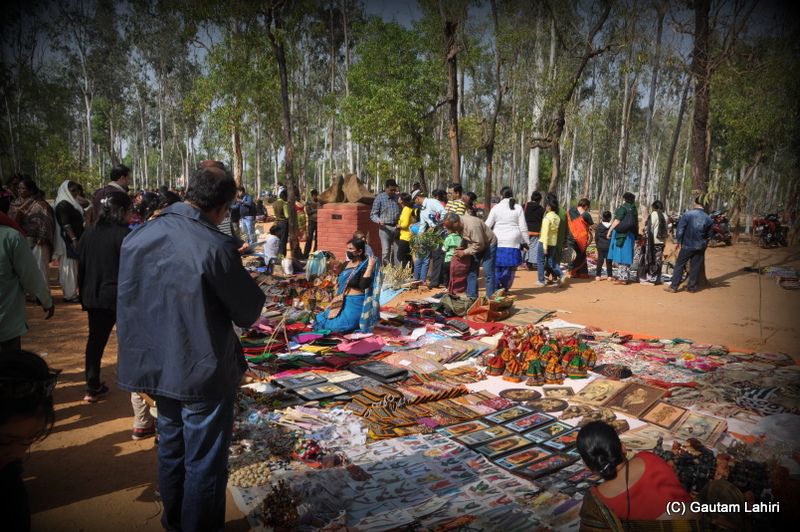
The earth below was orange and with a dash of red as this part of West Bengal is famous for having laterite soil.
This has been used by many rulers in India to build monuments and structures for its great properties to withstand the elements of nature.

We were moving from one stall to the other, all laid over the ground and everyone had some unique handicrafts in various forms – dolls, musical instruments, pictures made of copper wire, mud baked items which attracted all the visitors.
Scattered were a few Baul singers and happily singing away.
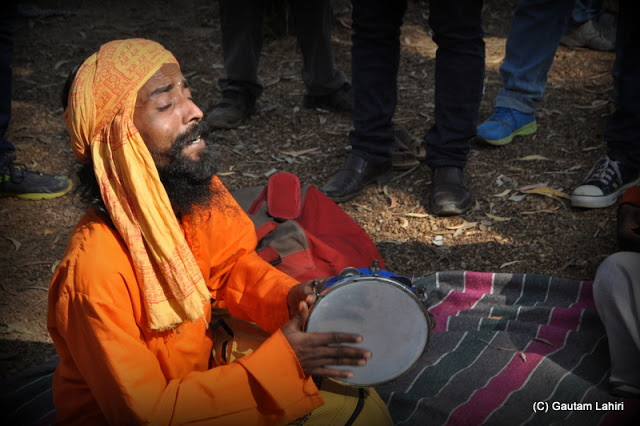
It was past mid-day and the sun was beating down and even with winter around, the atmosphere made us explore the area with increasing energy that is usually devoid in a big city.
We picked up a few items as souvenirs and drove north and came to a building that was quite interesting. Known as ‘Prakriti Bhavan‘ which meant, a “House of nature”.
Exploring Prakriti Bhavan, Santiniketan
A large building with museums on either side could be seen and on the ground around it, various forms of stone pieces were placed with a caption for each.
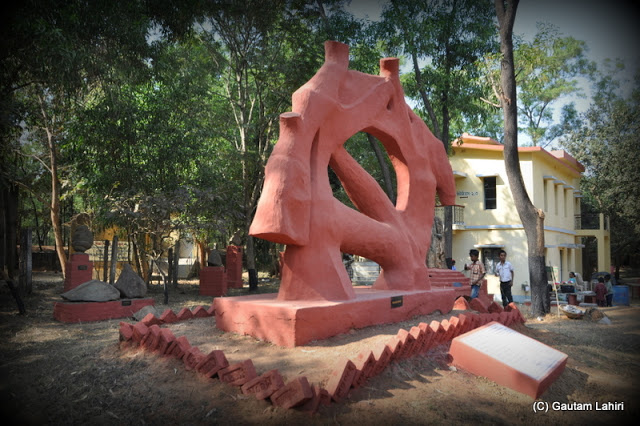
Each stone structure was unique in its design depicting a situation in life.
We went inside the museum to have a peek at the sculpture of rock and wood on display.
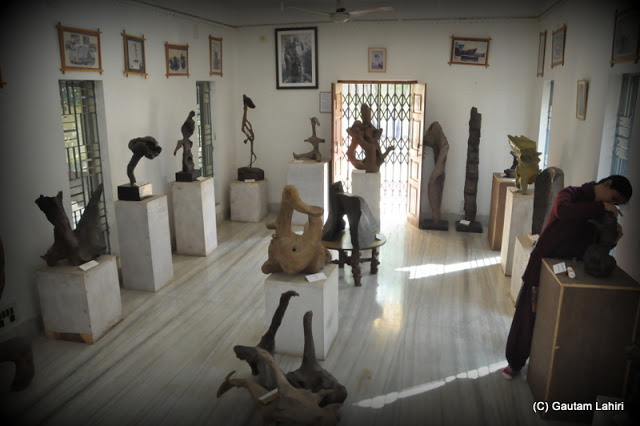
Song and music of Santiniketan
Once we completed our view of the place, the unmistakable sound of drums caught our attention and we hurriedly made our way to the open piece of land …yes, on the platform under a makeshift stage, a group of men and women from the tribal area of Santal district, were dancing and singing away.
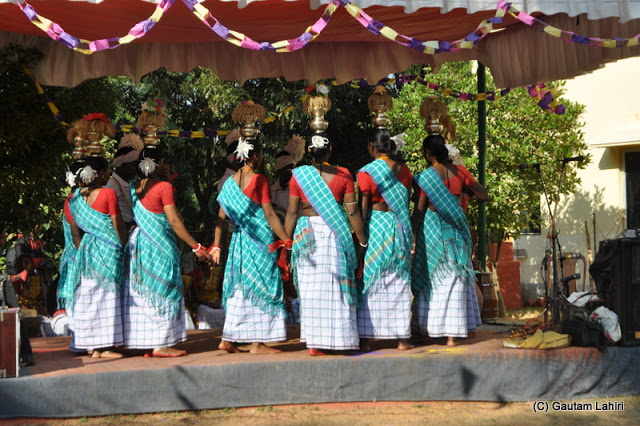
As the tribal dance ended, an interesting piece of an on-stage performance could be seen up front.
Drama on stage, Santiniketan
With a fully painted face, an actor started his show, enacting “Mahishasura‘, Asura from Hindu scriptures, He was depicting the entire scene with natural elegance.
The on stage play
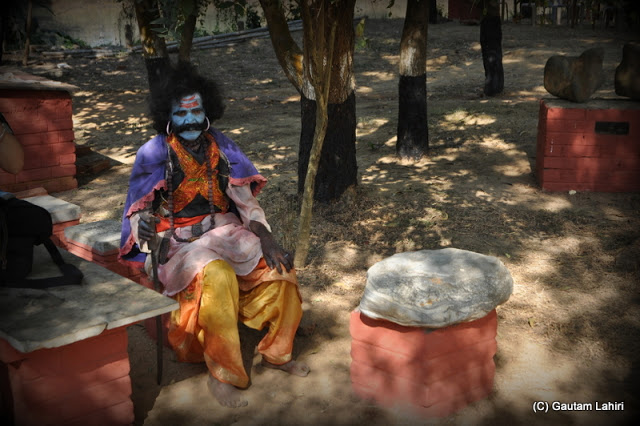
The drumbeats accompanied by their simple and natural dance kept us galvanized as we explored the grounds.
A whistle to remember, Santinieketan
The clock hands had passed 3 pm and we were weary travelers and started our drive back towards ‘Prantik’ station to catch a spot of lunch.
Far away we could hear the ‘tooot’ of a passing train, and I increased the speed of the car to catch the train.
My childness getting the better of me. Will that be a goods or a passenger train?
We came to a railroad crossing and was in luck as the train approached.
Right from my childhood days, a passing train always interested me as the heavy iron wheels clanked as they rolled and bounced over the fish plates, a typical ‘trainish’ smell of iron, diesel, and dust all rolled into one wafted with the gust of wind the train’s passage brought.
As if the world stood still for this great machine of the industrial revolution to pass.
Within minutes, the last carriage rattled away. All the sounds died, the dust settled and I was standing all alone looking at the receding black dot until it vanished over the two converging flashing rails.
Inference
- The short drive we had around the town of Santineiketan taught us how simple the life of the village and the town were.
- The mad rush of a city life was absent.
- We smelt the intoxicating fragrance of the woods, flowers and pure dust whipped up by the feet and tires.
- We danced to the heady tune of ‘Tamuk’ and “Tumdak”, the drums of the santhals.
- We tasted the most natural snacks, without the heavy condiments of a plush hotel.
- We saw villagers sitting by the ponds, fishing and enjoying the afternoon sun and the breeze.
Returning back, we soaked in the memories of a village drive.
Do you feel the same as we did?
For a full travel experience of the Santiniketan town and its famous annual fare, I would love you to visit “Part 1 – Tagore’s Poush mela at SANTINIKETAN”
Part 3 – Lucid music of Baul singers – The heartbeat of Bengal’s folk song SANTINIKETAN, India is bound to offer, all the music and song lovers, a delightful experience of Bengal’s folk songs.


